
Mintel Sustainability Barometer 2021: A Guide to Making Sustainability Profitable

The most intriguing buzzword in the business world right now is “Sustainability”. Every corporation that is trying to bet on the future is focusing on developing a sustainable business model. The strength of the trend lies in the fact that- people perceive a sustainable company as to be tech-oriented, trustworthy and “Fit for the Future”. So, being sustainable no longer remains an expression of charitable intention, rather it has evolved into a tool to strengthen your brand image. However, just putting the word “Sustainability” into your mission and vision statements is not going to mean much to the consumers. The practical questions are- what type of sustainability do consumers care about? And how should we communicate our environmental impact to consumers meaningfully?
Mintel, one of the world’s leading market intelligence agencies, has recently conducted a study to generate new insights into this topic. As part of this study, 500 internet users aged 16/ 18+ from 16 different countries around the globe were surveyed. The results of the survey brought forward many new insights regarding consumer perception on sustainable business practices and their impact. The results of this study have been summarized into the report “Mintel Sustainability Barometer 2021”. This report can serve as a guiding map for brands that are trying to integrate sustainability practices that really resonate with their customers.
Consumers Don’t Compromise
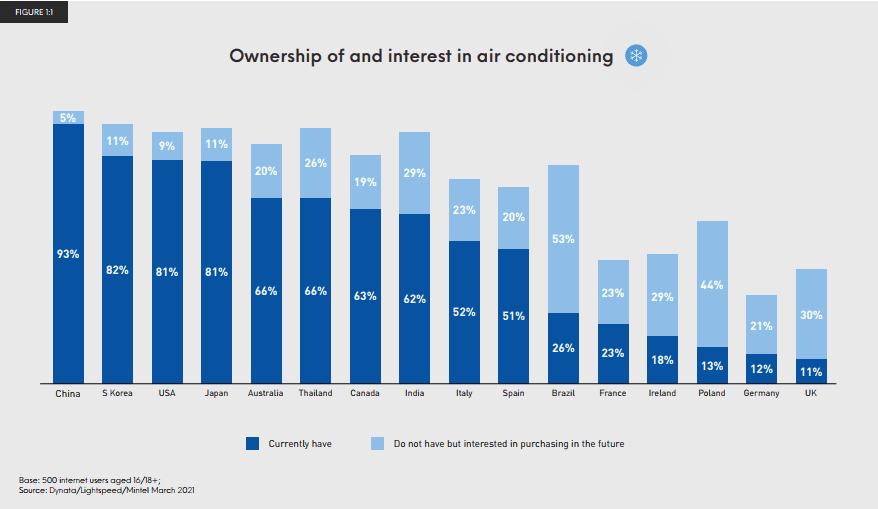
One of the key findings of the study conducted by Mintel is that- people’s interest in buying air conditioners and air purifiers is increasing day by day. 86-91% of the respondents from hot tropical countries like- India or Australia showed interest in buying an air conditioning unit. 41-82% of the respondents, even from cold countries like the UK or Canada, indicated that they have already purchased or will purchase an air conditioning unit. In the same study, 36-92% of participants across different countries revealed an interest in buying air purifiers. These insights have a hidden significance that meets more than the eye. High proportions of consumers buying air conditioners and air purifiers indicate that people are affected by the adverse effects of climate change and air pollution, yet they are buying products that would only increase the problem in the long run. This establishes the first rule of sustainable business- consumers will always prioritize their short-term well-being over anything else. A company cannot compromise in the values that they deliver to their customers in order to integrate sustainable practices. They have to somehow make sure that both consumer and environmental interests are upheld.
We See Light at the End of the Tunnel
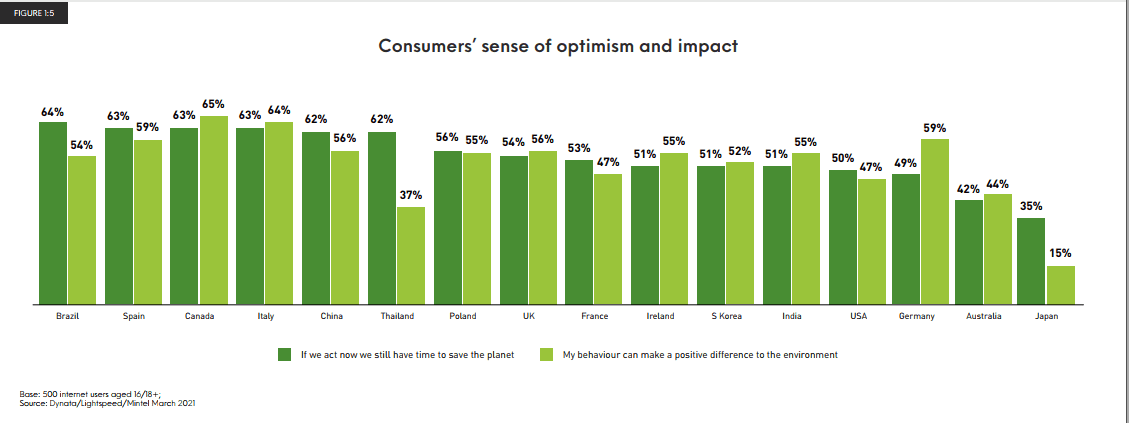
Another key finding of the “Mintel Sustainability Barometer 2021” is- consumers still believe that the world can be saved from pollution through responsible business practices. Even in developing countries, consumers are still optimistic. For example, 64% of surveyors in Brazil think that we still have a chance to fix the environment if we act now. Moreover, 55% of respondents from India believe that people’s individual actions could make a significant impact on the environment. By being sustainable, companies can align themselves with these hopes and dreams of the people.
Key Drivers of a Sustainable Attitude
Sustainable behavior is usually driven by two types of intention- trying to be frugal or trying to be healthy.
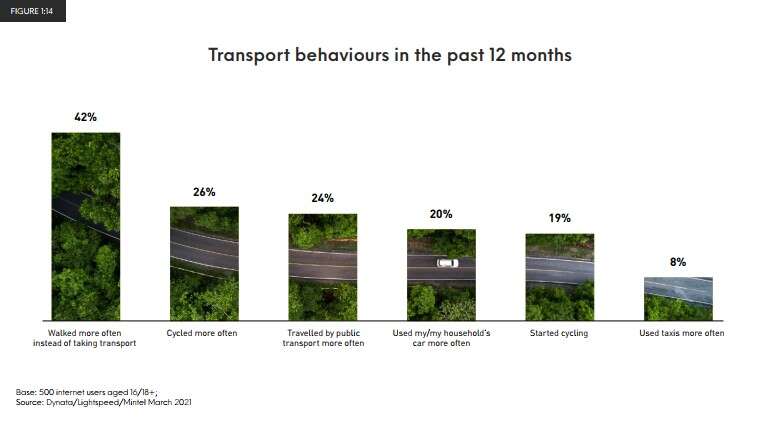
The study shows that consumers interested in sustainable business are more inclined towards leading an active lifestyle. This is probably due to the fact that consumers who act on sustainability, are basically driven by the urge of self-preservation- that is protecting oneself by protecting nature. 42% of the respondents walked more often and 26% cycled more often for short distance travelling. As part of their sustainability strategy, companies could introduce micro-transportation or zero emission methods to resonate with this intention. For example- using bicycles for product delivery in the locality might be a good sustainable strategy. Besides, companies can also appeal to the frugal attitude of their customers by introducing recyclable-package returning policy.
Who Is Responsible for Upholding Sustainability?
Consumers hold commercial companies responsible for reducing air pollution, increasing recycling practices and ensuring fair wages, in some cases, even more responsible than the government.
Consumers think passenger transport companies, household product manufacturers and packaged meat, poultry or fish manufacturers are the main sources of environmental pollution. They are more or less right to do so as carbon emissions from industry and the road transport sector alone generated 36.1% of global GHG emissions in 2016. Another 18.4% of GHG emissions come from agriculture and forestry-based industries.
Top Concerns of Responsible Customers
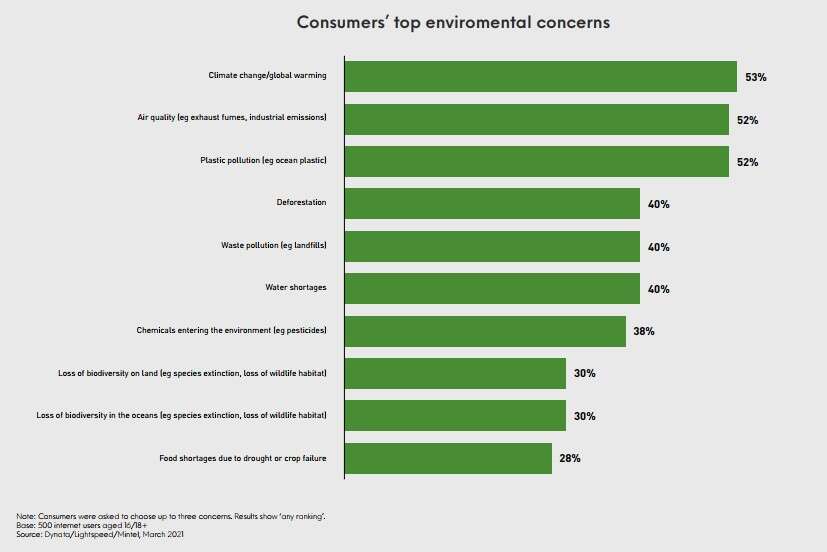
Consumers are more concerned about the issues that are more tangible, visible and directly harmful to one’s health. Climate change, air pollution and plastic pollution are environmental issues that match all of these criteria. These are the top 4 environmental concerns according to more than 50% of the survey respondents. Other concerning issues include- deforestation, landfill overflow, water shortages, chemicals entering the environment, loss of land and marine wildlife, shortage of food caused by drought etc. However, consumers of every geographic and socio-economic level have different opinions and concerns.
Practices that Really Matter to the People
Tangibility and locality- are the two key aspects of identifying environmental concerns that really concern a particular group of consumers. Businesses should integrate these aspects in their sustainability solutions.
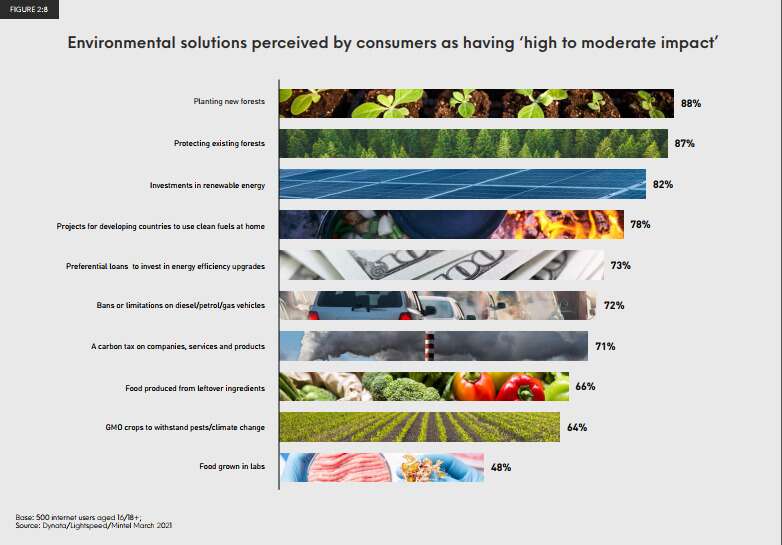
Planting new plants and protecting existing forests, investing in renewable energy- are the solutions most admired by the global consumer community. More than 82% of survey respondents identified these as the most impactful sustainable activities. These solutions have a tangible impact and they directly impact the lives of local people. Implementing projects to ensure clean fuel at home, providing loans to energy-efficient projects, bans on diesel run machines, imposing carbon tax are also perceived as good measures, more than 70% of survey respondents perceive them as effective. Producing food from leftovers, promoting GMO crops and lab grown food etc. are considered moderately sustainable practices. More than 50% of survey respondents provided a favorable opinion towards them.
How to Win with a Sustainable Brand Image
“Mintel Sustainability Barometer 2021” suggests 4 basic steps for companies to follow to turn themselves into meaningful sustainable brands:
- Know the Customer Touchpoints
Besides being sustainable, your products must appeal to other “non-sustainable” attitudes of the customers, for example- early adoption of technology, community bonding, identifying with the locality, desire for healthy lifestyle, desire to stand out etc. Among the survey respondents, we see that- EV ownership increases by 4% among those who claim to be early technology adopters but stick to a budget for purchasing. Maybe the fact that EVs have been proven to be a successful business idea is because it can deliver on all customer touchpoints, sustainable and unsustainable, simultaneously.
- Make Them Aware of Your Impact
Sustainable companies have to educate their customers about the existing environmental issues to make them realize the value delivered by the company. Even in industrial countries like Brazil, Italy, Spain, France, Japan or Australia- only 30% of the respondents agreed that their countries contribute toward climate change. Whereas, these countries are among the top GHG emitting countries in the world. So, the general consumers need to be educated for them to realize the current extent of the situation.
- Explain the Science behind Sustainability
Brands have to explain the science and processes behind their sustainable activities to make them meaningful. This will create credibility and trust with the consumers.
- Use the Language that They Understand
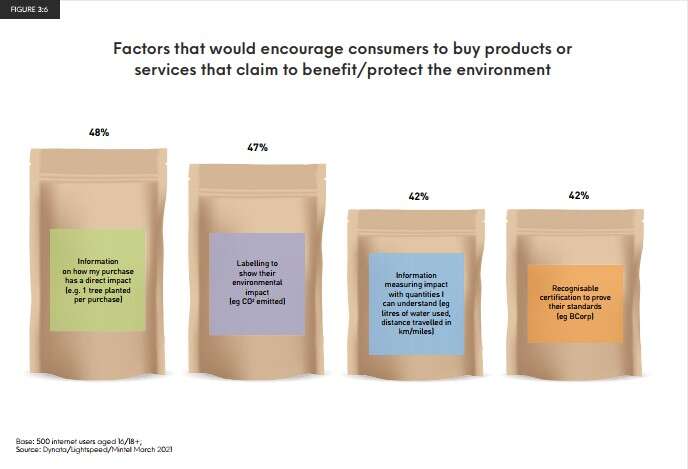
Companies should use simple metrics to define the impacts of their sustainable business model. Brand messages should contain simple, trendy terms and lexicon so that customers can really understand them. The survey conducted by Mintel shows that consumers want companies to deliver their sustainability information through product packaging. 48% of the respondents wanted to know how their purchase has an impact on the environment through package information. Moreover, 42% want recognizable certification to prove their standards etc.
In short, it is high time that business corporations started taking steps in the right direction and started giving back to nature. It is elating to see that many businesses are adopting sustainable practices nowadays. But this trend will not last if companies do not derive any profit out of this strategic positioning. To make their sustainable positioning resonate with the people, brands need to follow the strategies described in the “Mintel Sustainability Barometer 2021”. Both the parties, businesses and consumers, will be better off that way.
By Ezaz Ahmed