

‘I’m not Adventure Barbie, I’m Stereotypical Barbie!’
Margot Robbie in pink might’ve channelled stereotypical Barbie on screen, but the journey Greta Gerwig’s Barbie offers worldwide has been nothing less than an adventure. Off to a record-breaking start, Barbie has been stellar during the season, both in its on-screen production and off-screen advent. The movie, marking the biggest opening by a female director on record, has made the world cheer ‘Hi, Barbie’ in pink outfits. But the road to liberating Barbie as it is today was not simple. From its controversial emergence to its grossed commercial success, Barbie, which started as a trendsetter, is still holding its reign.
Growing up, my go-to toy was a kitchen set and a doctor’s set. I played simultaneously with both, never shy of forcing my parents to tea parties or health checkups. My experience with such toys wasn’t unheard of; rather, it was the reality for many growing up well into their 20s. But that wasn’t the case back in the 19s. Ruth Handler, the creator of Barbie, noticed that her daughter was playing with paper dolls, imagining them in an adult role. In 1959, when most dolls were baby dolls or child figures, Handler saw an opportunity in her child’s play. That opportunity was Barbie. Originally modelled after an adult doll and marketed as a teen fashion model, Barbie came on the market on March 9, 1959. Named after Handler’s daughter, Barbara, the doll was a stereotype-breaking product, challenging the prevalent industry of child-like toys catering to young girls. But after the initial scepticism, the doll was a sales success, earning Mattel the title of the world’s leading toy maker.
I was not a Barbie girl. But I recognised Barbie as a blonde female figure with blue eyes. As a South Asian growing up, Barbie was nothing in which I found my reflection. And the feeling was mutual in other parts of the world. The lack of diversity and inclusion in Barbie’s design was one of the main backlashes that it has faced for decades. In a society that was more inclusive of positive body image and cultural differences, Barbie stood as a role model for young girls with only Caucasian representation and unrealistic body proportions. This uniformity spiked the fear that Barbie was spreading an obstructive image and endorsing stereotypes to the young generation. Hence Barbie took its first step toward inclusivity with ‘Colored Francie’, the first Barbie of colour. But it was not till 2015 that Barbie made it their purpose to be more inclusive when they found their customer base shrinking as Barbie was losing its relevance. But the escape from diversity controversy did not stop Mattel from running into trouble. From questions of sustainable production practices to declining stock prices, the Barbie-owning company has been in rough seas for quite a while since Nasdaq reported its 54% decline in stock back in 2017. Even though the sales projections are yet to be revealed by Mattel, this on-screen Barbie of 2023 outperforms it all, giving Mattel the satisfaction of the last laugh on Wall Street.
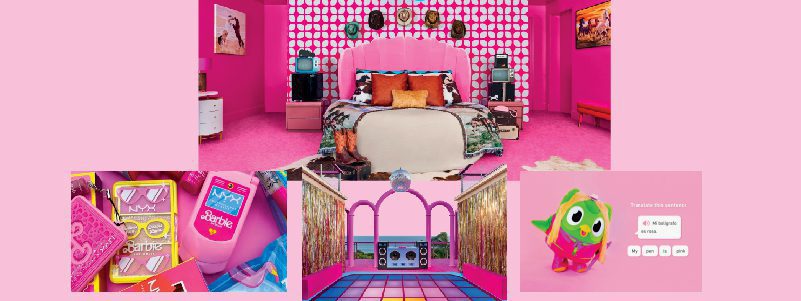
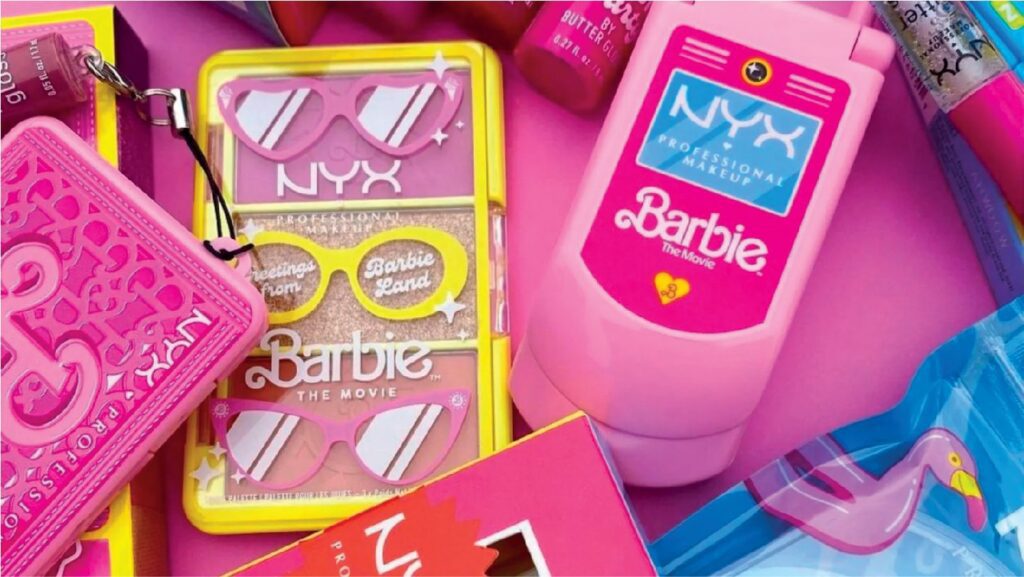
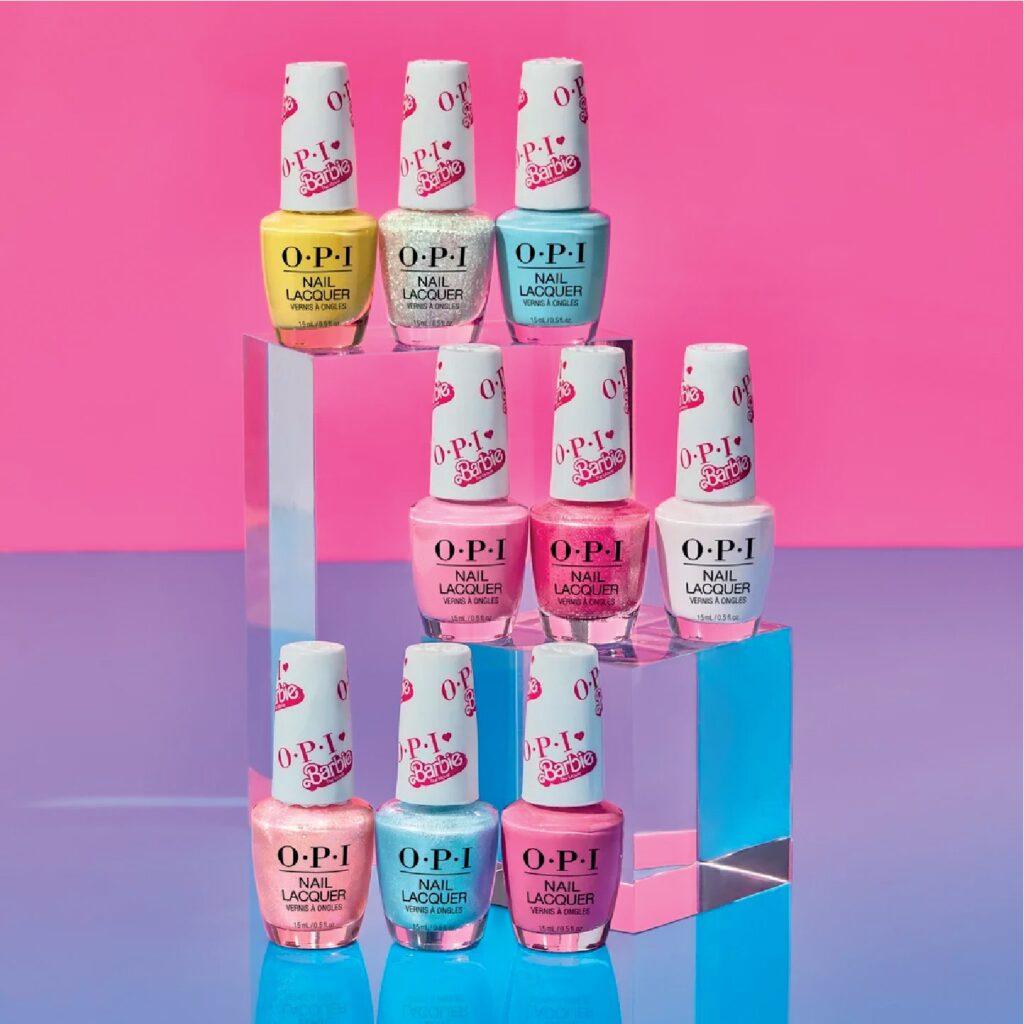
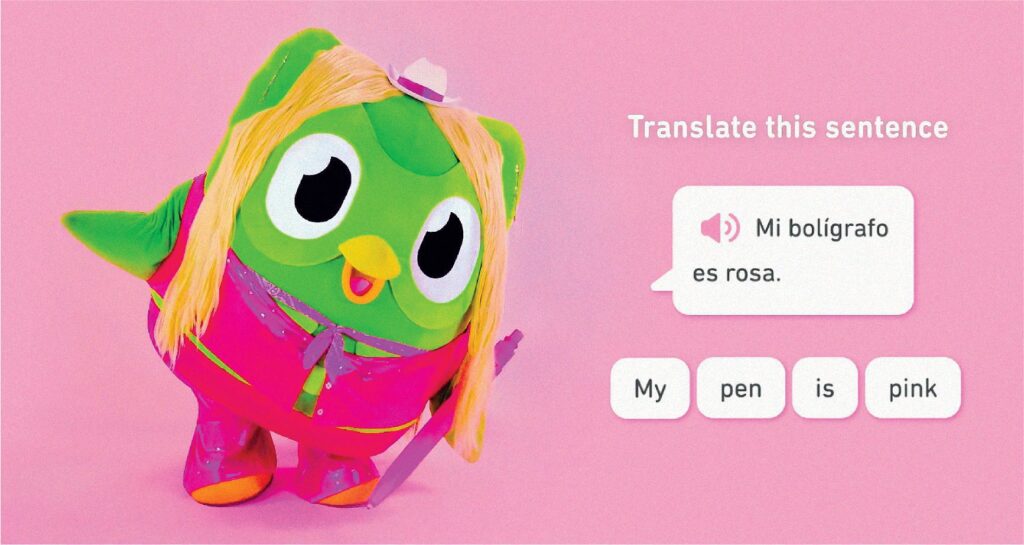
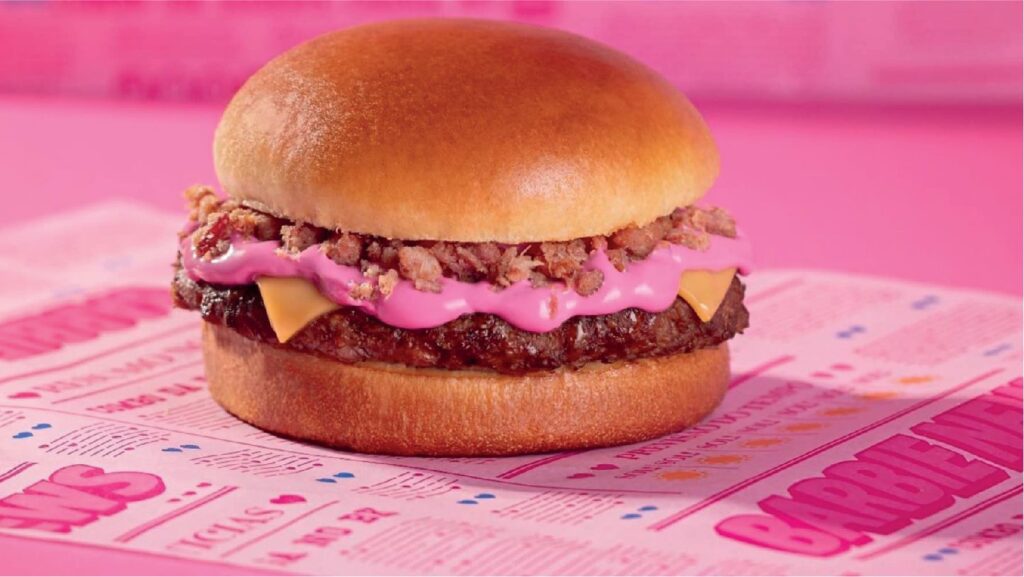
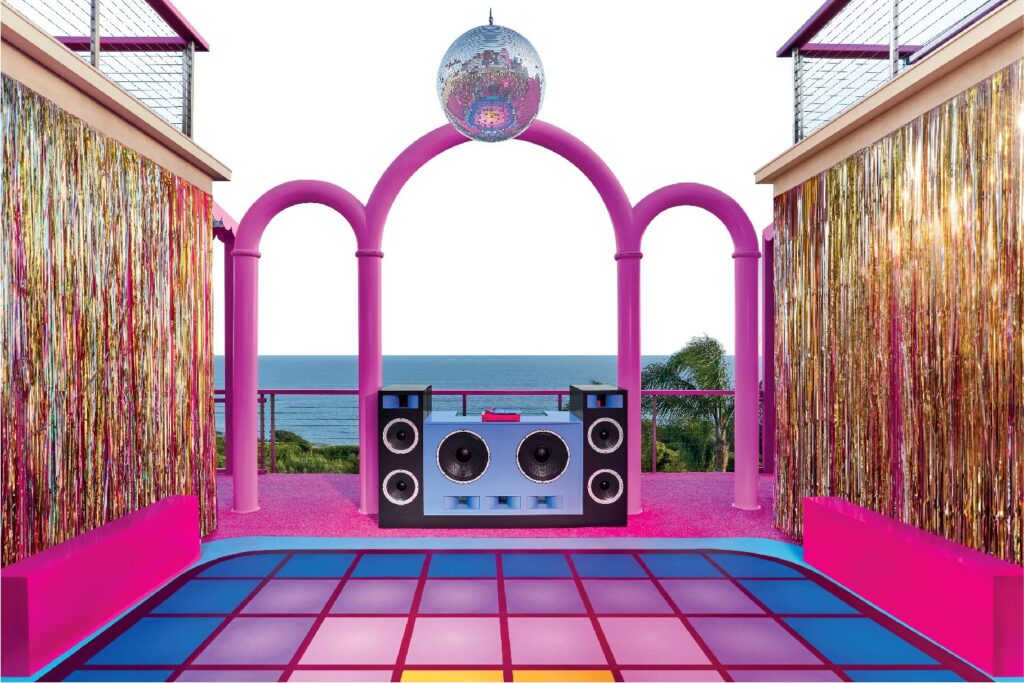 To save itself from the financial downturn and customer crunch, Mattel has taken the means to strategise and venture into new routes. Today there are hardly any roads left in The US that are not featuring Margot Robbie as Barbie. There is almost zero chance of you scrolling through your social media without popping any Barbie references. And the frenzy has lit up pink flares in every corner of the world. In numbers, there are more than 100 different Barbie collaborations, from clothes to carpets to spending a night at the Barbie Dreamhouse through Airbnb. While some collaborations, like a clothing line with Zara and cosmetics with NYX Cosmetics –come off as a no-brainer, a deal with Burger King Brazil for a burger with hot pink sauce or the Barbie-inspired home insurance deal shows off the creativity behind achieving the movie’s commercial success. Barbie’s marketing has been a revolutionary move, enough to cite it as a masterpiece. The smashing hit of this summer was an unexpected success. It broke records redefining audience and marketers’ perspectives on movie promotions and marketing. In many ways, Barbie connected its audience with nostalgia and emotions. That appeal led to the question-
Is Barbie a kid’s movie?
This was one of the most Google-searched questions ahead of Barbie’s release. Where in most films, the filmmakers do not need to define their target audience as it counts as a given, but Barbie sets it apart. With its adult cast and one movie fits all marketing, Barbie gave away the tradition of an obvious audience. And most of this credit goes to the tremendous marketing plan that this movie set. The elaborate creative marketing with spectacular production value is another appreciation of the movie bags. Even without integrating the IMAX technology, the movie has contributed to creating a new dimension in brand marketing and upgrading brand values. With its astonishing production success, Mattel sees new opportunities to dominate the silver screen.
The trademark song of Aqua cheered ‘I’m a Barbie girl, in a Barbie world’. But Greta’s Barbie Margot made the world realise that you don’t necessarily need to be a girl to be in the Barbie choir. For decades, what has been a toy for young girls has made people line up pinks, selling out theatres in minutes. From humour on Mattel to subtle jokes and innuendos, Barbie has been a light but fun watch. The critics are applauding the marketing, tabloids are calling it a revolution, and the audiences are returning to theatres, making it all up for the pandemic. In all appropriateness, Barbie is again breaking stereotypes, inaugurating an era. And the world is just simply loving it!
Author- -Subeh Tarek