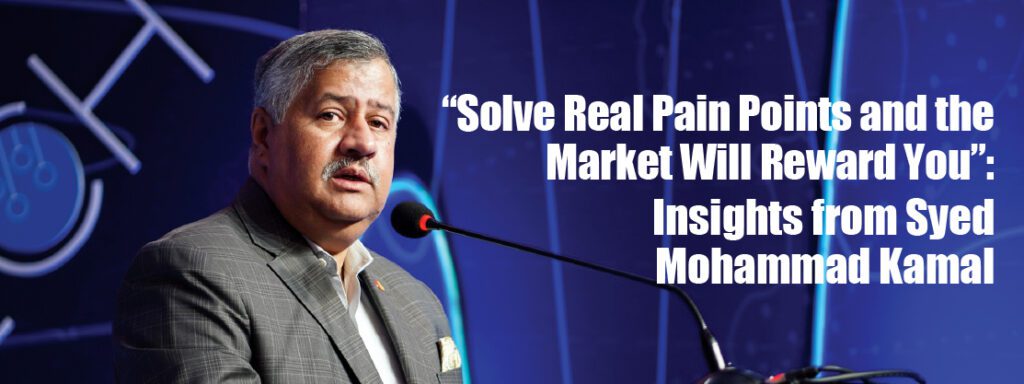
Syed Mohammad Kamal is the Country Manager of Mastercard Bangladesh, leading the company’s efforts to expand digital payment acceptance and financial inclusion in the country. He has more than 25 years of experience across financial services, FMCG and digital ecosystems, having worked with organisations such as Western Union and global brands before joining Mastercard in 2013. At Mastercard, he has driven partnerships with banks, fintech firms and merchants to promote secure, inclusive and innovative payment solutions. Kamal is actively involved in industry bodies, including the American Chamber of Commerce in Bangladesh and plays a role in shaping policy and ecosystem development for digital finance in the country.
Bangladesh Brand Forum spoke with him during the Bangladesh Fintech Summit 2025, where industry leaders, regulators and innovators gathered to discuss inclusion, data, AI-driven financial products, and the future of digital banking. In this conversation, he reflects on fintech’s opportunity in Bangladesh, the gaps that still limit scale, and how leadership and technology must align to unlock long-term value.
BBF: What do you see as the biggest opportunity for fintech in Bangladesh?
Syed Mohammad Kamal: Bangladesh is a large, fast-growing consumer market with a rising base of financially eligible adults. Add to that a massive youth base—students who will soon enter the financial system. Traditional brick-and-mortar banking cannot reach everyone, especially in remote areas. That is where fintech becomes an enabler.
Despite progress, nearly 70 percent of transactions are still cash-based. That leaves huge room for digital payments, new products, and investment. Anyone who can solve a real consumer pain point will find a massive growth runway here.
BBF: What is the core challenge holding fintech back?
Kamal: Too many players launch without a proper business case or a clear problem to solve. Many operate closed-loop systems that limit scale. Bangladesh needs more open-loop platforms—what we call “super apps”—that aggregate services, support multiple payment options, and offer real utility.
BBF: Where does Mastercard position itself in this ecosystem?
Kamal: Globally, four out of five fintechs work with Mastercard. More than 4,000 have gone through our Start Path program. We support partners with APIs, onboarding support, and compliance knowledge.
In Bangladesh, we have already enabled the first real-time companion prepaid card with a major PSP and are building more SME-focused products. As digital banks come, card networks like ours will play a critical role in access and usability.
BBF: What role will AI play in Bangladesh’s fintech journey?
Kamal: Fintech is technology-first, and AI is now central to lending, underwriting, KYC, investment recommendations, and credit products.
Bangladesh still lacks enough specialized talent in fintech. AI can help select the right people for the right roles, but more importantly, AI will help institutions analyse the huge volumes of data already sitting with banks, MFS players, and PSPs. Turning data into decisions will define the next phase of fintech.
BBF: What mindset should leadership adopt as AI and finance converge?
Kamal: Leadership needs to prioritise capability—both technological and human. It is not enough to automate. Leaders must understand risk, trust, and data responsibility. AI can accelerate growth, but people must direct purpose.
BBF: How do you see digital banks expanding financial access?
Kamal: Digital banks will push banking to underserved segments. Policy today mandates virtual cards, which is good—but rural customers still want physical instruments. Allowing both will help adoption. Ultimately, a digital account must translate to daily utility—transport, groceries, bills, payments.
BBF: Where should regulators focus next?
Kamal: Bangladesh Bank has been open-minded about PSPs and PSOs. More clarity, particularly around interoperability and settlement, will unlock scale. The faster we move to open systems, the faster fintech will deliver value.
BBF: What is Mastercard’s long-term ambition for Bangladesh?
Kamal: We want to help build a connected, interoperable fintech environment. That means supporting founders, aligning with banks, creating usable digital products, and ensuring the last mile can transact confidently. We have been doing it globally—we will continue that momentum here.