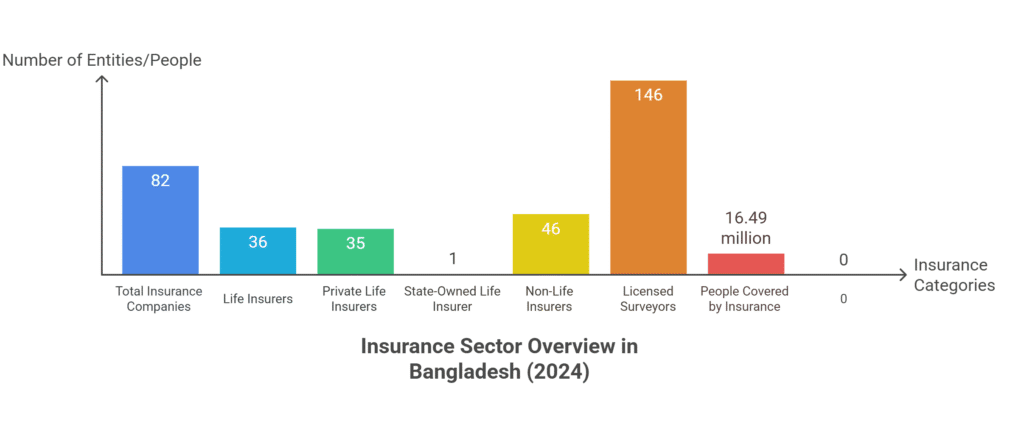
The insurance industry serves as a crucial safety net and financial safeguard, yet it remains significantly underutilised in Bangladesh. According to the latest annual report published by the Insurance Development and Regulatory Authority (IDRA) in September 2024, the sector comprises 82 insurance companies, including 36 life insurers, 35 private and one state-owned, and 46 non-life insurers, following a similar ownership structure. The industry is supported by 146 licensed surveyors tasked with evaluating claims and risk profiles. Despite its long-standing presence, only around 16.49 million people were covered by insurance policies as of the end of 2024, highlighting a substantial gap in insurance penetration relative to the country’s population. Although there have been efforts to improve digital systems and strengthen regulations, major problems still exist. One of the most serious issues is that over one-third of life insurance claims were still unsettled in 2024, raising important concerns about trust, transparency, and accountability in the industry.
A Worrying Decline in Claim Settlements
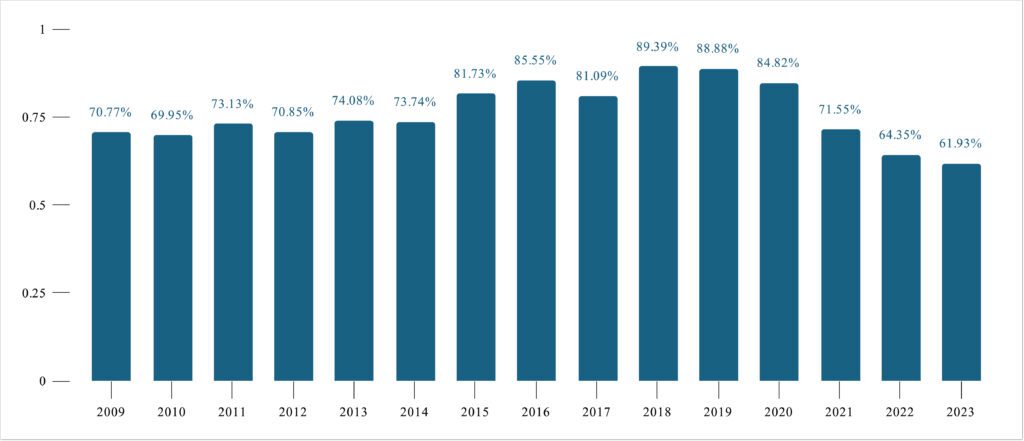
Bangladesh’s life insurance industry is facing a serious credibility challenge. In 2023, only about 62% of all insurance claims were settled, down sharply from previous years. Life insurers performed slightly better, but still paid out only around 65% of claims, down from 72% in 2021. This left nearly one-third of claims unresolved.
In financial terms, insurers disbursed Tk 9,476 crore against Tk 16,484 crore in total claims filed, leaving Tk 7,008 crore unsettled. The trend marks a steady decline from earlier years: 66.97% of life claims were settled in 2022, while 2020 saw a much healthier 85% settlement rate.
Compared globally, the current payout rate of 62% falls far below international norms. Life insurers in countries like India routinely settle over 97% of claims. No similar crisis has been reported in neighboring countries. By the end of 2024, Bangladesh’s outstanding life insurance liabilities stood between Tk 4,300 and Tk 4,600 crore. Experts warn that this growing backlog is undermining consumer trust in the entire insurance sector.
Regulatory Oversight: A Late Push by IDRA
Under the Insurance Act 2010, companies must settle valid claims within 90 days of receiving all required documents. Although the Insurance Development and Regulatory Authority (IDRA) has the power to investigate and penalise firms, enforcement has long been weak.
That changed in 2024–2025 when IDRA began taking stricter action against the worst offenders. Six life insurers—including Baira Life, Fareast Islami Life, Sunlife, Sunflower Life, Padma Islami Life, and Golden Life—were flagged for settling less than 10% of their claims. IDRA demanded corrective action plans from their leadership.
Further investigations were launched, with IDRA appointing external auditors to review 15 underperforming insurers covering the years 2022 to 2024. Early findings indicated these firms had over Tk 4,600 crore in pending claims but had paid out just Tk 635 crore, exposing major gaps in financial discipline and governance.
In some cases, IDRA allowed struggling firms to sell assets to raise funds. The authority also drafted amendments to the Insurance Act and introduced new solvency rules. However, it still lacks key powers, such as the ability to replace insurer boards or access real-time financial data, limitations that make proactive oversight difficult. Critics argue that while recent steps are welcomed, they remain too reactive and narrow in scope to bring lasting change.
Company Spotlight: Strong Performers vs Chronic Defaulters
High Performers
A few insurers continue to show strong performance. MetLife Bangladesh paid Tk 2,895 crore in claims in 2024 and maintained a settlement ratio of nearly 98%. Meghna Life Insurance also posted over 99% settlement, while Alpha Life and LIC Bangladesh reported 100% claim fulfillment. These companies credit their success to strong fund management and digital claims processing, with several able to resolve valid claims within 3–5 days.
Poor Performers
At the other end are companies with consistently poor records. Firms like Baira Life and Fareast Islami Life had settlement ratios below 5% in 2024. Golden Life’s operations have nearly collapsed, leaving around 18,000 policyholders unpaid, while Padma Islami Life has paid just Tk 5 crore out of Tk 226 crore in claims over five years. Sunlife Insurance settled only about half its claims in 2024 and topped the complaint list with over 9,000 grievances.
These struggling insurers often share similar problems: low liquidity, poor asset management, and weak internal controls. Investigations have revealed illegal fund withdrawals, overinvestment in risky assets, and serious shortfalls in their required life funds.
Causes Behind the Crisis
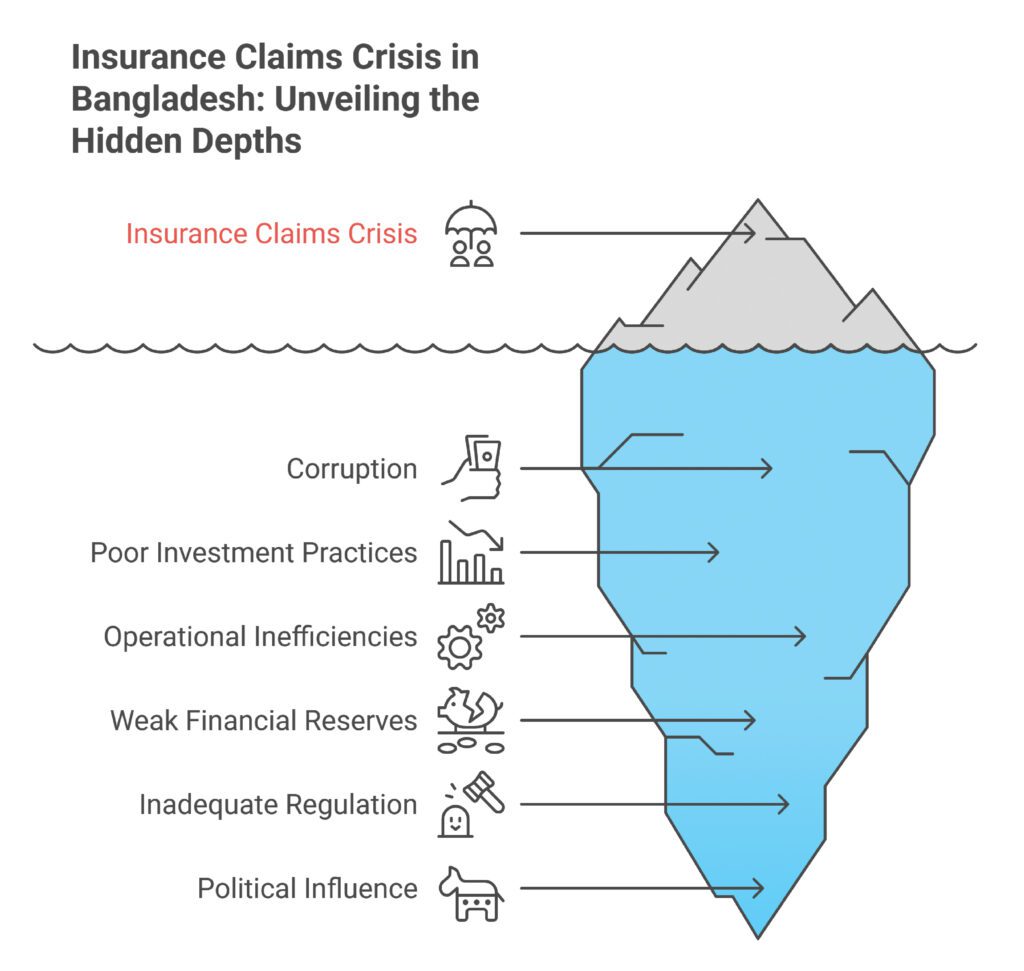
Corruption and Misuse of Funds
Widespread mismanagement and corruption have been major drivers of the claims crisis. Some insurers misused customer funds, diverted investments into non-compliant assets, or delayed payments intentionally. These practices drained financial reserves and created liquidity shortfalls that made timely claim payments impossible.
Poor Investment Practices
Many insurers failed to follow prudent investment guidelines. Some placed a large share of funds into volatile stock markets or underperforming financial institutions, in violation of rules. As markets declined, so did the value of their life funds, reducing their ability to meet policyholder obligations.
Operational Bottlenecks
Even when insurers had the resources, slow internal processes delayed settlements. Paper-based systems, missing documents, and limited customer service capacity led to unnecessary backlogs. Though some companies have adopted digital claims systems, many still rely on outdated practices that frustrate customers and prolong waiting times.
Weak Financial Reserves
Frequent policy lapses, especially after the first year, hurt long-term premium income and weakened fund reserves. Some insurers even borrowed against their paid-up capital—a violation of regulations—further reducing their solvency. IDRA estimates that the total life fund in the country now stands at just Tk 34,000 crore, insufficient for the growing volume of claims.
Inadequate Regulation
Structural weaknesses in regulatory oversight have allowed these issues to grow unchecked. Unlike the central bank’s oversight of banks, IDRA lacks real-time data access and cannot dissolve company boards. Although regulatory reforms are being drafted, enforcement remains inconsistent and underpowered.
Political Influence and Licensing Gaps
Many struggling insurers were licensed not on merit but due to political connections. This has resulted in poor governance at the top levels, enabling widespread mismanagement and contributing to today’s crisis.
International Comparison
In contrast to Bangladesh, neighboring countries report far stronger performance in life insurance claim settlements. India consistently posts claim settlement ratios of 96–98%, while Sri Lanka averages around 85–90%. No major issues have been reported in Pakistan or Nepal. These comparisons suggest that Bangladesh’s high level of unpaid claims is driven by internal problems rather than regional or economic factors.
Expert Perspectives
Regulators, academics, and industry professionals all acknowledge the severity of the crisis. IDRA officials have linked low settlement rates directly to corruption and poor governance. Academics argue that firm action is needed to rebuild public trust, while industry leaders emphasise the role of technology and transparency in restoring confidence.
Executives from leading insurers, such as MetLife and Guardian Life, stress the importance of fast and reliable service. They believe digital claims systems and strong compliance policies are key to maintaining high settlement ratios and rebuilding customer trust.
Consumer Impact and Trust Deficit
The fallout from the claims backlog is being felt most by consumers. In the first 10 months of 2023, 14 life insurers received over 24,000 complaints, of which only 14% were resolved. The vast majority related to unpaid benefits.
This has led to a slowdown in policy sales, with 2024 showing only 7.3% growth in premiums—a three-year low. Many households are becoming more cautious, avoiding new policies and shifting to other forms of savings.
For families, life insurance is often seen as a financial safety net. The failure of insurers to honor claims is pushing many to rely on personal savings or government schemes instead.
While life insurance remains an important financial tool, buyers in Bangladesh must exercise caution. Consumers are advised to check an insurer’s claim settlement history, prefer companies with digital claim processing, and ensure accurate documentation at the time of purchase.
Policyholders should also stay informed through official notices and reports. IDRA’s annual reviews provide useful insights into insurer performance and financial health.
Finally, experts recommend treating insurance as just one part of a broader financial plan. By diversifying savings and investments, households can protect themselves from the uncertainties still affecting parts of the life insurance market.
Until stronger reforms are fully implemented, choosing a reliable and transparent insurer is not just smart—it’s essential.