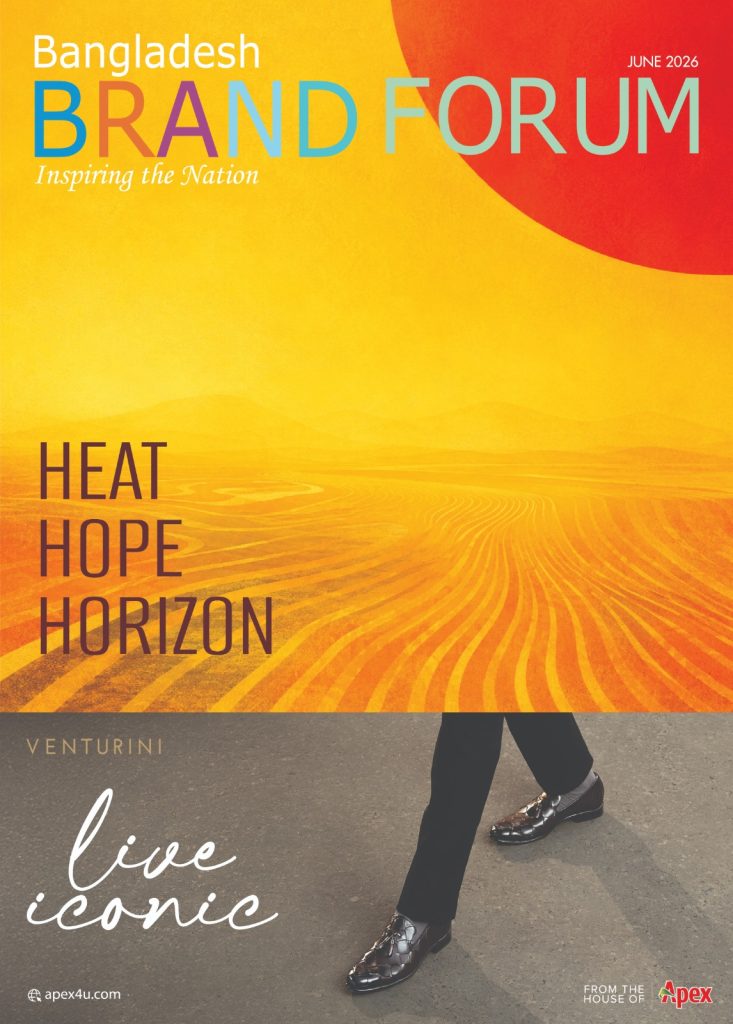
The June 2026 edition of BBF Monthly opens with its cover story on Bangladesh’s garment sector, examining how automation could reshape the future of 4.4 million workers. As smart factories become a growing reality, the issue explores whether Bangladesh can prepare its workforce, production systems, and policy environment for a transition that may define the next phase of industrial competitiveness.
The edition then moves into the changing landscape of marketing, creativity, and consumer engagement. It explores the rise of micro-dramas in modern marketing, the shift from promotion to AI-powered prototyping, and the evolving responsibility of CMOs in balancing human creativity with artificial intelligence. The issue also examines why brand purpose now needs measurable business accountability, and how brands can use the FIFA World Cup to build emotional connection at scale.
Workplace transformation forms another major focus of the issue. From managing internal talent markets to building adaptive learning systems through five-minute micro-learning, the edition looks at how organisations are rethinking talent, capability, and culture. It also questions whether AI, despite its speed and efficiency, can truly build trust and workplace culture.
On the business and strategy front, the issue captures how side projects are becoming serious ventures, how aesthetic identity is emerging as a business decision, and how changing consumer behaviour is expanding the world of Buy Now, Pay Later. These stories reflect a broader shift in how businesses create relevance, design experiences, and respond to evolving customer expectations.
The issue also looks beyond the organisation to examine larger economic and environmental realities. It highlights rising investor optimism across emerging economies, the growing impact of extreme heat on business operations, and the increasing importance of resilient, human-centred design through the lens of biophilic homes.
Together, the June edition presents a timely view of how businesses are navigating change across automation, marketing, leadership, workplace culture, consumer behaviour, and environmental resilience. It captures a world where speed, intelligence, and technology are becoming essential, but where human judgment, creativity, and emotional connection remain central to sustainable growth.