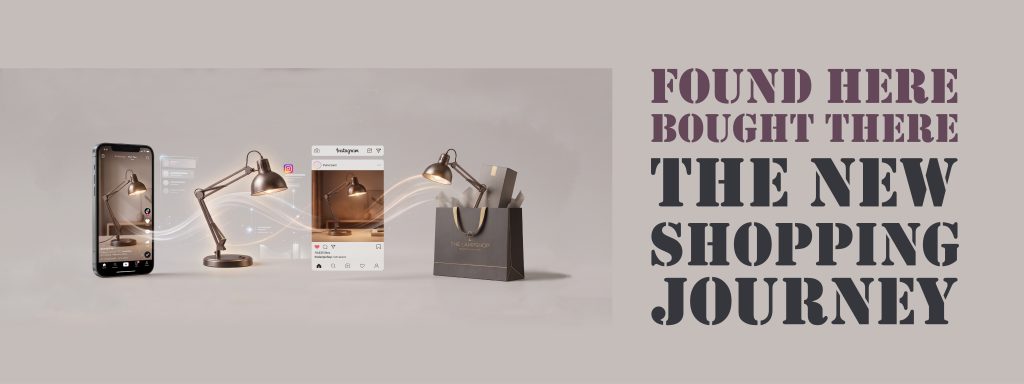
You are scrolling through TikTok late at night when something catches your attention: a minimalist LED desk lamp that somehow turns an ordinary workspace into something out of an architecture magazine. The video is short, casual, and convincing. You were not looking for a lamp. In fact, you were not thinking about buying anything at all. Yet, suddenly, you want it.
You watch the video again, check the comments, and browse the creator’s profile. Then you do something interesting: you leave TikTok. You open Instagram, search for the brand, inspect its profile, read customer comments, and perhaps visit the website before finally completing the purchase.
Nothing about this journey feels unusual anymore. In fact, one of the most important changes in modern commerce is that discovery, evaluation, and checkout no longer happen in the same place. Consumers increasingly discover products on one platform, validate them on another, and complete the transaction somewhere else.
Call it the Discovery–Checkout Split.
For years, marketers viewed the customer journey as a funnel: awareness, consideration, and purchase. But today’s consumer rarely moves in a straight line. The journey now resembles a network of touchpoints, where each platform plays a different role.
This shift begins with discovery. Shopping used to start with intent. People needed something, searched for it, and bought it. Social media changed that logic. Today, products often find consumers before consumers find products.
A creator demonstrates a skincare routine. Someone reviews a pair of headphones. A designer transforms a workspace with a simple desk lamp. The consumer was not searching for these products, yet interest emerges naturally through content.
TikTok has become particularly powerful in this process. According to TikTok, 61% of users discover new brands and products on the platform, while half use it to research products before purchasing. More recent research found that 93% of surveyed daily users would use TikTok as part of their buying journey. These figures reveal something significant: people are not only shopping on social media; they are discovering products while doing something entirely different.
That is the power of algorithmic discovery. Instead of asking, “What are you looking for?” the feed asks, “What might interest you next?”
But discovery alone does not complete a sale.
As consumers move closer to a purchase, their psychology changes. At the discovery stage, curiosity, entertainment, and novelty matter. At checkout, trust becomes more important.
Is the seller legitimate? Are the reviews real? Can I return the product? Is payment secure? What happens if something goes wrong?
The question shifts from “Do I want this?” to “Can I trust this?”
This explains why people move between platforms. One platform may create desire, another may build confidence, and a third may facilitate payment. Instagram, for example, often functions as a digital storefront where consumers examine a brand’s visual identity, customer interactions, and social proof. A website or marketplace may then provide detailed information and a familiar checkout experience.
The important point is not that one platform is better than another. It is that consumers assign different jobs to different touchpoints.
This creates a challenge for brands because every transition matters. Someone sees a product on TikTok, searches for it on Instagram, visits the website, and eventually buys. Each handoff is an opportunity to build trust or lose it.
If the product name changes across platforms, the customer becomes confused. If the creator promises free delivery but hidden charges appear at checkout, trust declines. If the social profile looks active but the website appears outdated, hesitation grows.
Consumers do not think in channels. They think in experiences. This is why consistency has become more important than platform perfection. A brand does not need to look identical everywhere, but it must feel recognizable. TikTok may reward spontaneity. Instagram may favor visual curation. Websites require clarity and detail. The personality can adapt. The promise cannot.
Research supports this growing importance of trust. A 2025 Akeneo consumer survey found that 64% of respondents had purchased products based on influencer recommendations, while 70% were influenced by customer feedback and reviews. The same research found that 66% had abandoned purchases because of hidden or inaccurate pricing.
These numbers reveal an important truth: influence creates interest, but transparency converts it.
This also changes how brands should measure success. If a consumer discovers a product on TikTok on Monday, researches it on Instagram on Tuesday, and buys from the website on Wednesday, which platform deserves the credit?
Perhaps all of them.
The traditional idea of attributing sales to a single channel no longer reflects reality. Consumers move fluidly between content, creators, search engines, social media, websites, and physical stores.
As Hitesh Bhatt, Director of Marketing and Communications at the Retailers Association of India, observed: “Discovery, influence, and purchase now happen through content, creators, conversations, and stores, often in the same journey.”
That may be one of the simplest descriptions of modern commerce. For brands, this means shifting from platform strategy to journey strategy. The question is no longer, “Which platform should we invest in?” A better question is, “What should happen after someone discovers us?”
The TikTok video creates curiosity. Instagram builds confidence. Reviews reduce doubt. The website removes friction. The product experience determines whether the customer returns. Each touchpoint contributes something different.
The future of commerce, therefore, may be less about owning the transaction and more about orchestrating the journey.
The Discovery–Checkout Split is not a problem to solve; it is a behavior to understand. Consumers are telling brands something very clearly: I will decide where I discover, where I evaluate, and where I buy.
Brands do not need to control every step. They need to make every step worth taking.
Because sometimes the video creates the desire. Sometimes the profile creates the confidence. Sometimes the review closes the doubt. And sometimes, the sale happens somewhere else entirely. The smartest brands will stop asking, “Where did the customer buy?” They will start asking, “What happened between discovery and checkout?”
Author: MD. Nadim Ahmed
M.A. in English Language Teaching
Jahangirnagar University
Email: nadim@bangladeshbrandforum.com