“Accusing China is business. Buying in China is life,” Chinese Consul General Zhang Zhisheng wrote on X.
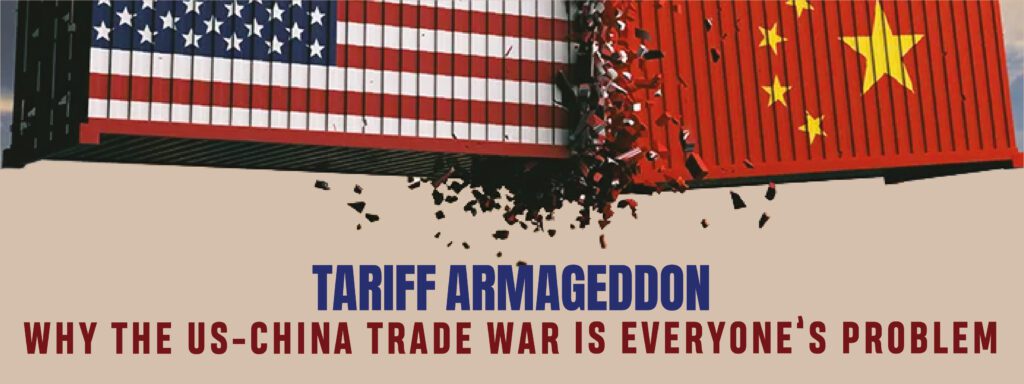
The proverbial “hammer” has finally dropped on the anvil that is US-China trade relations. The world’s two largest economies have imposed massive tariffs on each other that will surely disrupt trade between the two sides.
The pace of escalation has been nothing short of stunning, with each country increasing its import charges multiple times in a tit-for-tat. Over the course of a week, Trump’s tariffs on Chinese imports increased from 54% to 145%, adding to the previous levies he had imposed before his second term. China responded in kind, imposing additional punitive tariffs on all US imports at a rate of 125%.
For now, the US and China are locked in a high-stakes game of chicken. The showdown creates a historic split that will not only harm both of these closely connected economies but will also introduce significant friction to their geopolitical competition.
TARIFF TURMOIL IN US
Shipments at the Port of Los Angeles, which, along with the Port of Long Beach, receive nearly 40% of all Asian imports, fell 10% last week compared to the same period a year ago. That number is projected to continue to shrink. “It’s my prediction that arrivals will drop by 35% in two weeks,” Port of Los Angeles executive director Eugene Seroka told the Los Angeles Board of Harbour Commissioners on April 24.
A recent analysis from the Los Angeles County Economic Development Corporation provided grim new data on the effects of President Trump’s trade war. They claim that the tariffs threaten $500 billion in income for the area and endanger 2 million local jobs. “The World Trade Organisation estimated that if this trade war with China continues, they’re expecting the U.S. and China trade to decrease by approximately 80%,” Stephen Cheung, CEO of LAEDC, told reporters.
Major retailers and small businesses alike are warning that customers may soon suffer inventory shortages due to tariffs. Goods that do make it to shop shelves may face price increases once “tariff surcharges” are applied. According to Axios, the CEOs of Walmart and Target privately warned President Trump last week that his sweeping tariff proposal, if implemented, may result in retail shelf shortages. Target also noted in a press release that it “had a productive meeting with President Trump and our retail peers to discuss the path forward in trade, and we remain committed to delivering value to American consumers.” Both companies have previously warned the public that charges might result in increased consumer costs.
Logistics companies are also reporting significant decreases in freight exports from China.
According to Vizion, a container tracking service, booking volumes from China to the United States fell by 45% in the week of April 14 compared to the same time a year ago. Freightos, a freight booking website, reports that carriers are cancelling sailings from China at a rapid pace because they are unable to fill their ships with cargo. Ocean container rates for a conventional 40-foot container have plummeted from $8,100 in July 2024 to around $2,327, according to the association.
Many importers are delaying shipments until they have a better understanding of President Trump’s tariff plans. According to a Freightos poll of 195 small importers, 33% want to stop shipments in reaction to duties.
CHINA’S COLLAPSE OR COMEBACK?
China’s economic growth is expected to fall to 4.5% in 2025, down from 4.9% in 2024, according to a Reuters poll. The newly imposed US tariffs, which reach up to 145% on certain Chinese products, have led to a significant decline in export orders. Manufacturers are witnessing reduced output, order cancellations, and employee furloughs. Chinese firms, particularly small and medium-sized companies in industrial regions such as Guangdong, are cutting back or shutting down completely, resulting in massive job losses. The job market is under strain, with rising unemployment among manufacturing workers and new graduates, as well as increased social tension as laid-off workers return to rural regions.
These trade tensions have also accelerated the restructuring of global supply chains. To mitigate tariff concerns, multinational corporations are increasingly adopting a ‘China+1’ strategy, which involves diversifying their production bases by relocating some of their manufacturing operations from China to other countries such as Vietnam, India, and Indonesia. As a result, China’s ports are seeing lower activity and a drop in logistical income. Financial institutions are also feeling the impact—HSBC, for example, has upped its estimated credit losses by $200 million, bringing the total to $900 million for the first quarter of 2025. Investor confidence has decreased, and domestic stock markets have seen periods of turbulence, necessitating intervention from state-owned entities.
In response, the Chinese government has launched a series of stimulus measures, including a record 5.66 trillion yuan deficit and more lenient monetary policies, to stabilise the economy. Policymakers are also stepping up attempts to increase local consumption and lessen reliance on Western markets through the ‘dual circulation’ policy. This policy, introduced in 2020, aims to boost domestic demand and reduce China’s dependence on foreign markets. At the same time, there is a strong drive for innovation and technical self-sufficiency in fields such as semiconductors, artificial intelligence, and renewable energy. While these measures try to mitigate the consequences of US economic pressure, they will take time to produce benefits.
TIKTOK VS. TRADITION
Chinese social media erupted with footage of factory workers and shopkeepers accusing luxury companies in Europe and the United States of labelling their items as “Made in the US” or “Made in Italy.” A popular TikTok video from the account Senbags2, which claimed that 80% of luxury bags are produced in China, gained over 10 million views before being banned, and the poster’s account was later deactivated. Sen Bags is back in action, leading the discussion. Factories are now selling straight to worldwide audiences via livestreaming, skipping the intermediaries that are often part of luxury brands’ supply chains.
The trend resonates with Gen Z’s appetite for transparency and value, fueling the rise of “dupe culture” and challenging the mystique of luxury. Most luxury houses claim to manufacture their goods in Europe. Chloé, Valentino, Tom Ford, Bvlgari, Mulberry, and Stella McCartney (among others) produce in Italy, while Goyard and Delvaux are based in France. Others, such as Mulberry and Anya Hindmarch, are based in the UK.
For legacy brands, the message is clear: customers will readily trust price and transparency claims. The flood of viral TikTok movies from Chinese manufacturers does not expose Western luxury production secrets, but it does reposition China as a centre of high-quality craftsmanship. In these films, workers show off skilfully constructed goods that are identical to those of high-end companies, calling into question the quality and provenance of “Made in China’ products. These movies reflect an intriguing and changing customer psyche: wary of brand markups, hungry for access, and willing to bypass luxury gatekeeping.
It may be common knowledge, but the fact that these luxury businesses continue to generate enormous profits demonstrates that rich Westerners have yet to recognise that they have been duped by a marketing gimmick as old as time. And, while it’s evident that the Chinese producers pointing this out are attempting to steer shoppers their way, “Senbags2” presented a fascinating breakdown of how much it costs to build a Hermes handbag, or one that looks the same without the post-production embellishments. “But why is Hermes charging you $38,000 per bag? “That is because more than 90% of its price is paid for its logo,” he explained. “From our factory, it only costs $1000.”
Hermes has since announced that it will raise its pricing in the United States, effective May 1, to offset the additional 10% import tariff imposed by the United States.
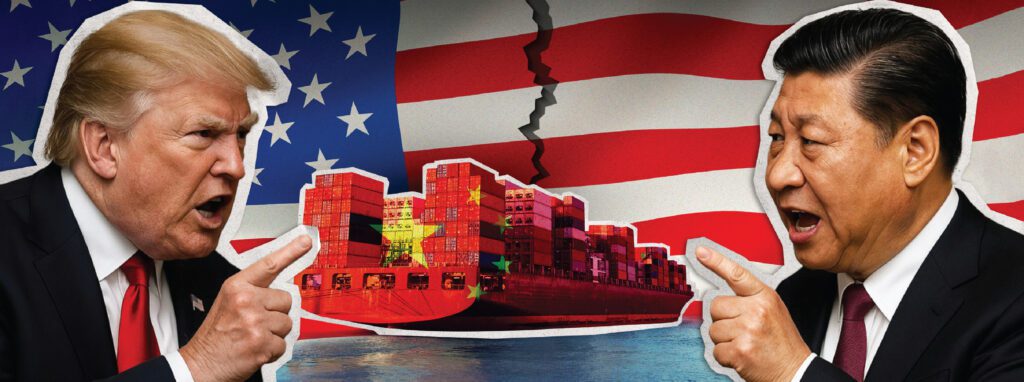
Chinese President Xi Jinping, China’s most powerful leader in decades, sees no way for his country to just give in to what he calls America’s “unilateral bullying.” And he’s playing to the crowd, pushing other countries to defy the US and join China in trade. As millions of firms endure the pain of the tariff war, Chinese producers are resisting the consumer-driven environment that benefits Western brands enormously. Beijing has publicly stoked nationalism in response to its reprisal, as part of a campaign it has been discreetly developing for more than four years, since Trump’s last term in office.
While China has long stated that it wants to talk, Trump’s quick escalation appears to have reaffirmed for Beijing that the United States does not. According to analysts, Xi intends not just to fight back, but also to utilise Trump’s trade upheaval to bolster his position. In recent weeks, Beijing has also engaged with nations ranging from Europe to Southeast Asia to broaden economic cooperation and outperform the United States by winning over American friends and partners who are upset by the on-again, off-again trade spat.
However, it has been bracing for US trade tensions since Trump’s first trade war and campaign against Chinese tech behemoth Huawei, which served as a wake-up warning to Beijing that its economic growth might be reversed if it was not prepared. Experts believe China is now better positioned to withstand a larger trade dispute. Compared to 2018, it has strengthened its trade contacts with the rest of the world, lowering the proportion of US exports from around one-fifth to less than 15%.
China has also expanded its supply chains for rare earths and other vital minerals, enhanced its manufacturing technologies with AI and humanoid robots, and strengthened its sophisticated technology capabilities, including those in semiconductors. Since last year, the administration has also attempted, with mixed effectiveness, to address concerns such as low consumption and rising local government debt.
As much as Washington doesn’t want to admit it, when China says you can’t contain China economically, they have a point.
Author: Abrar Rahman