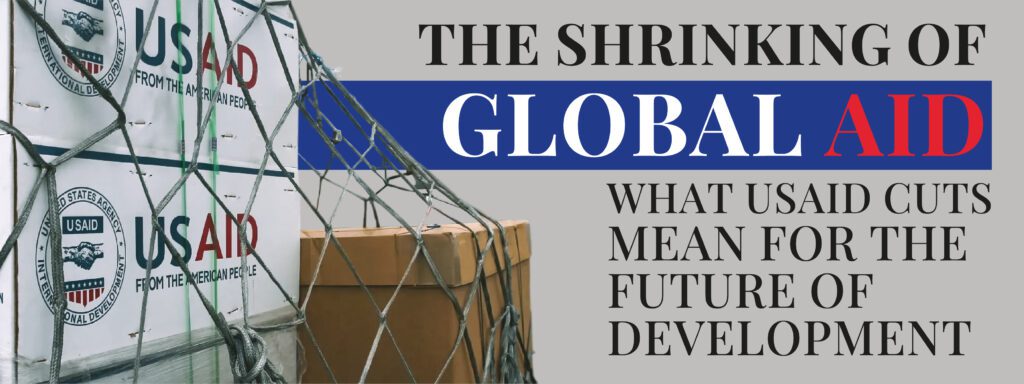
Outside the Qah refugee camp in northern Idlib, a buildup of garbage has created foul odours and raised concerns about potential disease outbreaks. This foul smell serves as a sign of the worsening conditions for families living in tents since the cessation of support from the Green Hands project, known as Al-Ayadi Al-Khadraa. This grassroots initiative is one of many that have been impacted by the mass termination of contracts from the US Agency for International Development (USAID) during President Donald Trump’s administration, resulting in turmoil within the development sector.
The Green Hands project was responsible for providing clean water, sanitation, and waste management for Qah, a makeshift camp in northern Syria that shelters some of the 14 million people displaced since 2011 due to ongoing violence. The deteriorating environment has left many residents anxious about new financial responsibilities they will need to bear. Many of the displaced individuals have witnessed their homes destroyed by conflict and rely on humanitarian organisations for medical care, food supplies, and heating resources.
As these projects continue to diminish or disappear entirely, the health and lives of these individuals are endangered.
This year is likely to be remembered for unprecedented upheaval in the global development landscape. On January 20, President Trump signed an executive order suspending foreign aid programs for a 90-day review. Within weeks, thousands of agency personnel were put on leave, which led to ongoing complications in US federal courts. On February 26, court documents revealed that government officials had concluded their review of foreign aid and planned to terminate around 10,000 USAID awards—approximately 90 percent of the agency’s operations.
For some, the disbanding of USAID represents a victory of “America First” ideology. Trump referred to the agency, created by John F. Kennedy in the 1960s, as a “left-wing scam,” and accused it of wasting billions while promoting anti-American sentiments. Elon Musk, who played a role in the agency’s closure, went a step further, likening it to “not an apple with a worm in it, but just a ball of worms.”
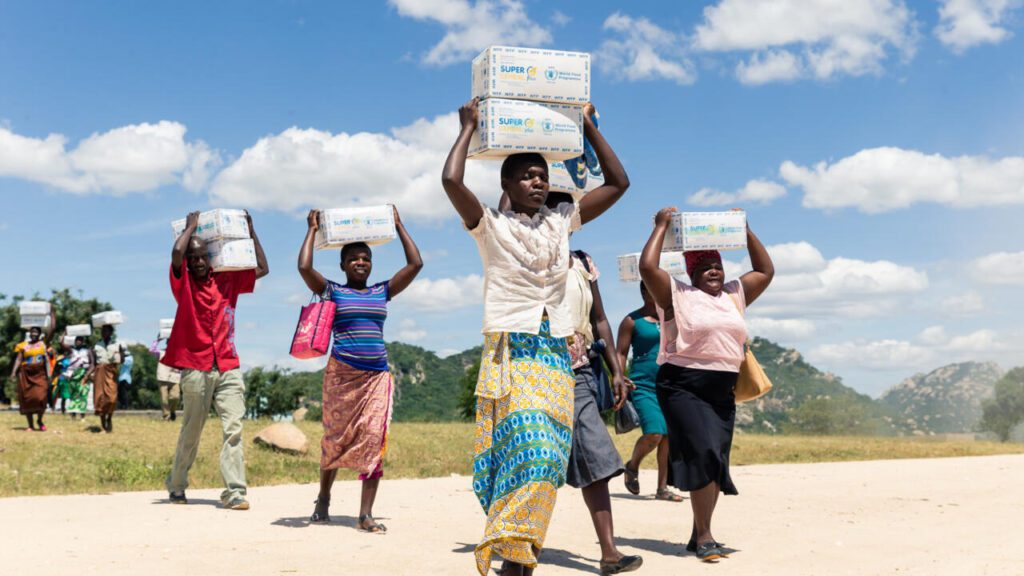
In Syria, the US is the largest donor, providing nearly $1.2 billion for the humanitarian response in the 2024 fiscal year and more than $18 billion since the onset of the 13-year crisis, according to the US State Department. Since the executive order was enacted, around 200 humanitarian organisations in Syria have shut down, leaving many workers jobless. Their monthly salaries of $400 to $500 were essential for making a living in a country with limited alternatives.
Following the disbanding of USAID, the British government reduced its aid budget to reallocate funds for defence. Under similar pressures to support Ukraine and strengthen military capabilities, other European donor nations are making similar cuts. Meanwhile, developing nations and international organisations are urgently trying to address substantial funding deficits that jeopardise vital assistance efforts worldwide.
UK Prime Minister Keir Starmer recently declared that the UK would increase defence spending by lowering its aid budget from approximately 0.5% to 0.3% of gross national income. His development minister, Anneliese Dodds, resigned in protest over the extent of the cuts. The recent reduction is part of a series of aid cuts the UK has made since 2020, bringing its aid budget to a decades-low level, significantly affecting long-term recipients and humanitarian crises. The UK is not alone in this trend; France and Germany have also lowered their aid budgets in recent years.
These developments pose crucial questions about the future of international development. As traditional donors recede, how will low-income nations and aid organisations obtain the resources necessary to combat poverty, enhance infrastructure, and provide essential public services like healthcare and education? Furthermore, how can the global development framework—the entities, professionals, and partnerships built to achieve these aims—adapt to this challenging new context?
It’s essential to note that historically, most countries have financed their development independently, with foreign aid serving a relatively small, though pivotal, supportive function. Even in the poorest nations, foreign aid constitutes only 10-30% of public expenditure. In middle-income countries, aid rarely exceeds 5% of government budgets, with most public services and investments funded by taxes on trade, value-added goods and services, income, and natural resources. Additionally, non-traditional funding sources, including China, the Gulf states, and Turkey, are gaining prominence alongside traditional aid providers such as the United States, Europe, and Japan.
However, we are at a critical juncture where official development assistance levels are likely to decline, and governments in developing countries will increasingly need to enhance domestic revenue, especially in sectors that have traditionally depended on external funding, including health and education. Unsustainable debt levels severely limit these nations’ capacity to offset lost aid through borrowing. The International Monetary Fund reports that over half of the world’s low-income countries face or are at significant risk of debt distress. Moreover, progress on debt restructuring has been sluggish, hindered by disagreements among major creditors, including China. For the world’s poorest countries, their options are severely restricted.
CONSEQUENCES FOR BANGLADESH
Bangladesh is beginning to feel the consequences of the USAID suspension. Although the Rohingya response program is not affected by the sanctions, enabling continued aid for displaced communities, the reduction in funding has resulted in the shutdown of many US-funded initiatives throughout the country. USAID, the fourth-largest development partner in Bangladesh after the World Bank, Asian Development Bank, and JICA, executes over 100 projects across diverse sectors like health, education, democracy, and governance. The discontinuation of these projects reveals significant setbacks in our sustainable development, with the agency providing nearly $500 million to Bangladesh in the 2023 fiscal year alone. Moreover, in September, USAID allocated more than $202 million for the current year.
A key example is the International Centre for Diarrheal Disease Research (ICDDRB), which has cut over 1000 positions of employees working on infectious disease research backed by USAID. These layoffs highlight the vital importance of these roles in specialised areas such as public health. USAID funding accounts for 20% of ICDDRB’s total budget, which means its operations, especially in combating infectious diseases, are significantly impacted. In the event of a diarrheal outbreak in the near future, it may struggle to offer the critical support it previously provided.
Like ICDDRB, other contractors dependent on USAID programs are also facing instability, leading to contract terminations or unpaid suspensions for their employees over the next three months. These unexpected interruptions in the development sector are likely to increase the number of literate, yet unemployed, individuals in the nation.
Additionally, Bangladesh is struggling with a worsening tuberculosis (TB) crisis that threatens years of progress in controlling the disease. TB remains a major public health issue in the country, with Bangladesh listed among those with the highest TB burdens worldwide. Tackling the disease heavily depends on donor-funded initiatives that supply essential diagnostic tools, medications, and educational campaigns.
Beyond the immediate job losses, funding cuts fuel public distrust in development programs. Communities that once benefited from health, education, and climate adaptation services are now facing the sudden end of these crucial operations. When a donor-funded maternal health program ceases to deliver essential medications or a climate resilience initiative stops construction prematurely, those affected begin to lose faith in these programs.
Bangladesh has made significant progress in reducing poverty, improving healthcare, and expanding educational access, largely due to foreign aid. However, this reliance on external funding means that any withdrawal of donor support could hinder or even reverse these advancements. The ongoing crisis raises pressing questions: Should Bangladesh continue to rely on foreign aid for its vital development initiatives? What measures can the government and civil society take to create more sustainable financing models that avoid such setbacks in the future? The instability in development employment and the decline in public trust demand immediate action. Firstly, transitioning towards sustainable financing models is vital, including boosting domestic resource mobilisation and fostering partnerships with the private sector to support essential development programs. With a growing economy, Bangladesh needs greater self-reliance, even as donor assistance remains considerable, to achieve long-term stability.
Secondly, organisations involved in development must push for enhanced employment protections for local personnel. This effort should include providing longer-term contracts, building financial reserves to counteract unforeseen funding shortages, and diversifying the donor base to lessen dependency on a single funding stream.
Lastly, development agencies need to improve transparency about funding uncertainties. Instead of framing projects as guaranteed outcomes, they should candidly disclose financial risks and outline contingency strategies for both staff and beneficiaries. This strategy would help alleviate the feelings of betrayal that often accompany sudden program terminations.
The USAID funding crisis reveals a difficult truth: Development jobs in Bangladesh are less secure than they once seemed. Thousands of skilled workers are seeking new opportunities, while communities that benefited from these programs are losing faith in the systems established by these initiatives. The rising tuberculosis crisis and recent layoffs at ICDDRB further highlight the dangers of excessive dependence on donor funding within the health sector. Without continuous financial backing, essential research, disease prevention, and treatment programs risk facing severe setbacks, leading to long-lasting health consequences.