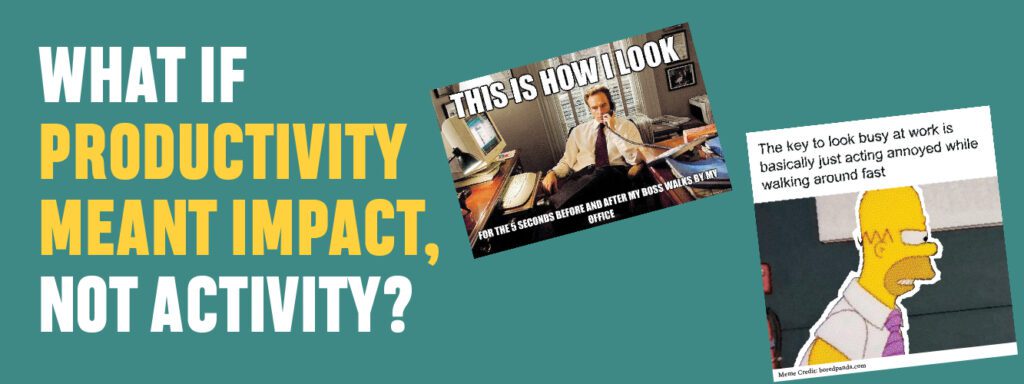
In modern workplaces, productivity performance is now nearly as significant as actual productivity. Employees are increasingly feigning busyness in both remote and office settings—not because they are lazy, but rather in reaction to more serious problems in the contemporary workplace. According to recent statistics, 58% of employees frequently pretend to be involved at work, while another 34% acknowledge doing so sometimes or out of habit. This practice, known as “ghostworking,” is getting increasingly widespread.
This tendency is not just a case of laziness; rather, it is a sign of a more serious structural issue: unclear expectations, a dearth of worthwhile or quantifiable work, and the need to constantly be “present” in a performance-driven workplace culture. Whether working from home or in a regular workplace, distractions are unavoidable and frequently intensified in this setting. Employees have transformed productivity into theatre as a coping mechanism.
Some give the impression that they are on a mission by carrying notes and moving quickly across the office. To pretend to be involved, some people keep spreadsheets open or type haphazardly on keyboards. Others pretend to be involved by holding phones to their ears, setting up fictitious meetings, or perusing pointless material on social media. Remote workers are not excluded either. They may face various obstacles, such as noisy roommates, unruly dogs, or family members who disregard limits, but the result is always the same: a last-ditch effort to look productive.
Furthermore, claiming to be busy extends beyond keeping up one’s status at one’s present employment to include job seeking. Often, ghostworking serves as a pretext for looking for greater chances elsewhere. According to the report, 92% of workers have looked for alternative employment while at work. Many use work computers to modify their resumes, apply to job openings, and even answer calls from recruiters while in the workplace. The data indicates that job-hunting while working is a common occurrence rather than an uncommon exception, even if only a small percentage of people have attended interviews during working hours. For many, it’s more about survival than rebellion; insecurity, fatigue, and career stagnation drive employees to discreetly look for a way out.
It’s interesting to note that the transition to remote and hybrid work has changed the types of distractions and their locations. Employees at offices report a variety of interruptions, including technological difficulties, excessively lengthy coffee breaks, frequent social gatherings, chatty coworkers, and spontaneous supervisor check-ins. In the meantime, remote workers frequently have to deal with unreliable internet, noisy homes, interruptions from family members, issues in the home, and unforeseen guests or delivery trucks.
These trends imply that distractions are ingrained in the design of our workplaces and are not only an issue of geography. Instead of just dictating where workers must work, companies would gain by knowing how time is wasted and concentrating on results rather than hours worked. Support should be customised for each environment, whether that means improving remote work tools or fostering more transparent office communication.
Digital monitoring is one of the more controversial alternatives being considered. Despite first appearing intrusive, screen monitoring has unexpectedly gained popularity among employees. The study shows that 69% of respondents think that tracking their screen use will increase their productivity. Many people view monitoring as a means to maintain concentration, even though 19% believe it wouldn’t affect their behaviour, and another 10% would seek out other distractions. However, fundamental problems like uncertainty, hesitation, or poor communication cannot be resolved by observation alone.
Establishing a work environment where pretending is no longer required is a greater problem for organisations than identifying individuals faking their job. Companies must rethink productivity in terms of effect rather than activity, rather than imposing a culture of appearances. Reducing the need for ghostworking altogether may be achieved by giving clarity, autonomy, and results precedence over face time.
In the end, ghostworking is a reflection of a system that has to be rebalanced, not only a sign of disengaged employees. Employees are reacting logically to ambiguous incentives and antiquated expectations; they are not inherently uninspired or uncaring. Busyness may help you get through the day, but it’s a symptom that we need to change the way we think about time, value, and labour in general.
Author: Sabrina Hassan