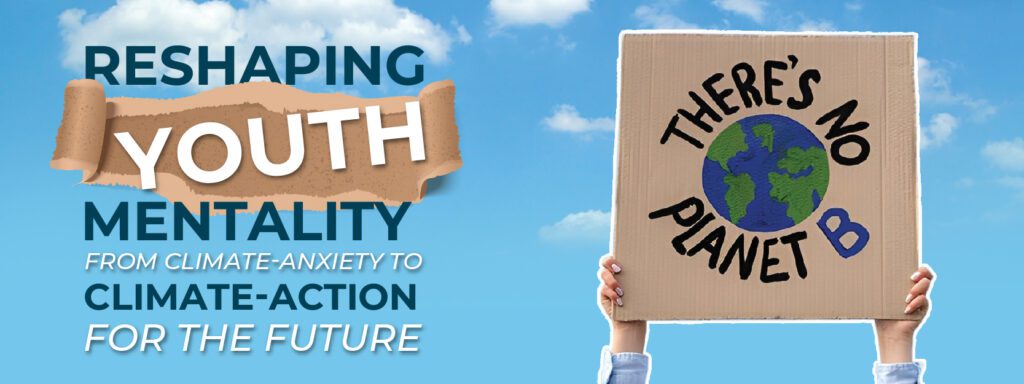
Climate is probably the most widely talked-about issue of the 21st century. However, it is no longer a far-fetched topic in textbooks or magazines anymore. It’s the harsh reality of the current generation. From devastating floods in Bangladesh to frequent wildfires across America, the youth are experiencing it. This has caused a dramatic increase in climate anxiety among people, and the youth are the worst sufferers as the future lies in their hands. Although the younger generation is more informed and more vocal on the issue of climate than ever before, many feel discouraged and hopeless in the face of the magnitude of the problem. This is why we need climate action to restore the future of both the youth and the planet.
UNDERSTANDING CLIMATE ANXIETY
It’s not wrong to be scared of the climate crisis, and climate anxiety is a rational reaction to the reality of the threat of global warming. A 2021 survey conducted in ten countries by The Lancet revealed that 59% of young people aged 16-25 were extremely concerned about climate change, and 45% indicated that their concerns had an impact on their day-to-day life and functioning. The fear is even more real in the low-lying and vulnerable nations such as ours.
The Gen Z and young Millennials are raised in the shadow of the ecological apocalypse, unlike the older generations. Each social media scroll presents the news about a new climate catastrophe: melting glaciers, extinct species, or political disagreement. The stories can be daunting, and it is understandable how this can lead to despair.
However, the problem is not only on the outside. There is even a psychological weight of being told that the fate of saving the planet now lies on the shoulders of this young generation. It is too much to bear by any person, let alone teenagers who are yet to discover their identity in a world that is becoming less stable.
HOW ACTION IS THE CURE TO ANXIETY
Climate anxiety is definitely real, but it’s not the end of the story. Psychologists and climate educators are constantly reminding us that collective awareness and community actions are one of the best means to cope with climate-related issues.
Acting does not have to be in the form of creating a global movement, as Greta Thunberg did. It may be planting trees in the neighborhood, advocating sustainable policies in school or university, or even just using environmentally friendly tools to navigate day-to-day life. It is all about the shift between passive doom-scrolling and action.
Indeed, behavioral research has demonstrated that individuals with climate-positive actions indicate less anxiety and better well-being. Action makes people feel like there is a purpose and control again, two aspects that climate anxiety is likely to take away. The carbon footprint of past generations cannot be erased easily, but even doing the bare minimum for now can help heal the future.
BRIDGING THE GAP BETWEEN ANXIETY AND ACTION
Eco-anxiety is not uncommon anymore; it is becoming the norm. The message that people should simply do something about climate change is missing the systemic alignment of education and awareness. We must bring change to the education system, mental health, policy, and public engagement to really make climate action worth it.
Climate education tends to be too apocalyptic, giving people little hope or inspiration. It’s crucial to spread the message of climate resilience. Science should still be taught in schools, but demonstration of what works, what the actual success stories and what the practical solutions are should also be included. Finland and Costa Rica are already doing it by integrating sustainability and resilience into daily learning.
There are lots of young people who believe that their personal efforts do not count. That is why we should have additional tools and places that allow connecting their efforts to something larger. Communities and schools must provide a platform where the youths can discuss their fears and get advice on how they can make a difference, rather than just letting it happen. Small steps can become group achievements with the help of apps, such as Earth Hero, or local youth-led climate councils, and provide students with practical involvement opportunities. The mental health support must change to fit this occasion.
THE CHANGE HAS ALREADY BEGUN
Today’s youth are hopeful. All over the world, young people are rewriting the story. In Uganda, Leah Namugerwah is fighting for climate justice on the African continent. In the USA, Isra Hirsi co-founded the US Youth Climate Strike. Urban sustainability in Dhaka is being transformed with student-led clean-up initiatives and rooftop farming initiatives. A change is happening – but it has to be supported, structured, and amplified.
The future is not something that is being passed on to the young generations; it is something they are constructing, brick by sustainable brick. Climate crisis can be overwhelming, but it’s important that the youth care. The idea is to put it to use for planting trees, community organising, political advocacy, and innovation.
Author: Jarin Subah Turaba