Introduction
In May 2025, Bangladesh embarked on a bold macroeconomic experiment transitioning from a crawling peg system to a floating exchange rate system. This decision, spurred by external pressure and internal imbalances, has sparked a vigorous debate among economists, policymakers, and the public. While some hail it as a step toward market efficiency and transparency, others view it as a risky move that could undermine economic stability. This article explores the rationale, early outcomes, and ongoing uncertainties of Bangladesh’s floating exchange policy, using empirical evidence and economic theory.
From Crawling Peg to Floating: Why the Shift?
Until recently, Bangladesh followed a managed exchange rate regime, informally pegging the taka against the U.S. dollar. This system offered short-term stability but masked underlying distortions:
Persistent overvaluation of the taka discouraged exports and remittances through official channels.
Foreign exchange reserves were steadily depleted due to central bank interventions aimed at defending an artificially strong currency.
Multiple exchange rates (official, kerb, and unofficial market rates) distorted resource allocation and eroded market confidence.

Under growing pressure from the International Monetary Fund (IMF), which had paused disbursements from a $4.7 billion loan package due to noncompliance with exchange rate reform conditions, the Bangladesh Bank allowed the market to determine the taka’s value on May 8, 2025
The Mechanics of a Floating Exchange Rate
In a floating exchange rate system, the value of a country’s currency is set by supply and demand in the market. If people or businesses need more foreign currency, like for importing goods or repaying loans, the value of the local currency (like the taka) goes down. But if more foreign money comes in through exports or remittances local currency gains value.
Bangladesh’s new system no longer fixes the exchange rate every day. Instead, the market sets the rate. However, the central bank can still step in if things get out of control. So technically, this is called a “managed float.” It mostly follows market rules, but the government still watches over it and can act if needed.
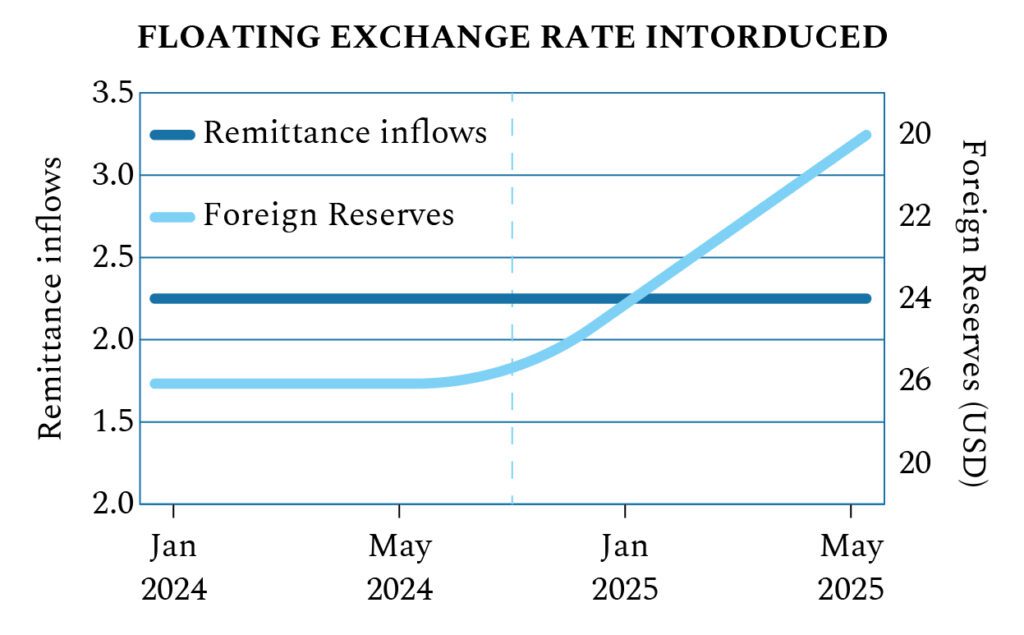
A dual-axis chart comparing remittance inflows and foreign exchange reserves.
- X-axis: Time (January 2024 – June 2025)
- Left Y-axis: Remittance inflows (USD billions)
- Right Y-axis: Foreign reserves (USD billions)
Insights:
- A sharp rise in remittances occurred after May 2025. This reflects incentives created by a market-driven exchange rate, where senders receive better returns via formal channels.
- A steady recovery in foreign reserves (approximately $6 billion growth) followed, fueled by remittance inflows and reduced need for the central bank.
Policy Outcomes: Wins and Warnings
- Positive Developments
- Improved Transparency: A single unified rate reduced distortions and enhanced credibility with international financial institutions.
- Boosted Remittances: Formal channels became more attractive as the exchange rate reflected true market value, closing the gap with the unofficial rate.
- Reserve Accumulation: Central bank data shows reserves climbing after months of decline, restoring short-term liquidity buffers.
- Investor Sentiment: Ratings agencies such as Moody’s noted that the reform improved macro-policy alignment with IMF frameworks, potentially reducing sovereign risk premiums.
- Challenges and Criticisms
- Volatility and Inflation Fears: Critics argue that a floating regime can trigger excessive volatility, affecting imported inflation and wage-price dynamics.
- Hybrid Reality: Despite official claims, there’s skepticism that the market is entirely free. Bangladesh Bank’s occasional liquidity injections and moral suasion tactics indicate a de facto managed regime.
- Market Manipulation Risks: Hoarding behavior by exporters and financial institutions may still limit forex availability, especially in the absence of deep capital markets.
- Public Misunderstanding: The word “floating” carries negative connotations among the public, often equated with loss of control and economic chaos complicating communication and policy buy-in.
Who Gains, Who Loses?
Beneficiaries:
- Remittance recipients now receive better exchange rates.
- Exporters are more competitive as the real exchange rate adjusts.
- The central bank gains breathing room, no longer required to burn through reserves daily.
Losers:
- Importers face higher costs, especially for essential goods like fuel, fertilizer, and industrial inputs.
- Consumers, particularly the urban poor, may experience price volatility, especially in food and transport.
- Politicians and bureaucrats lose a key lever of control, with market forces now setting a critical macroeconomic variable.
Theoretical Context
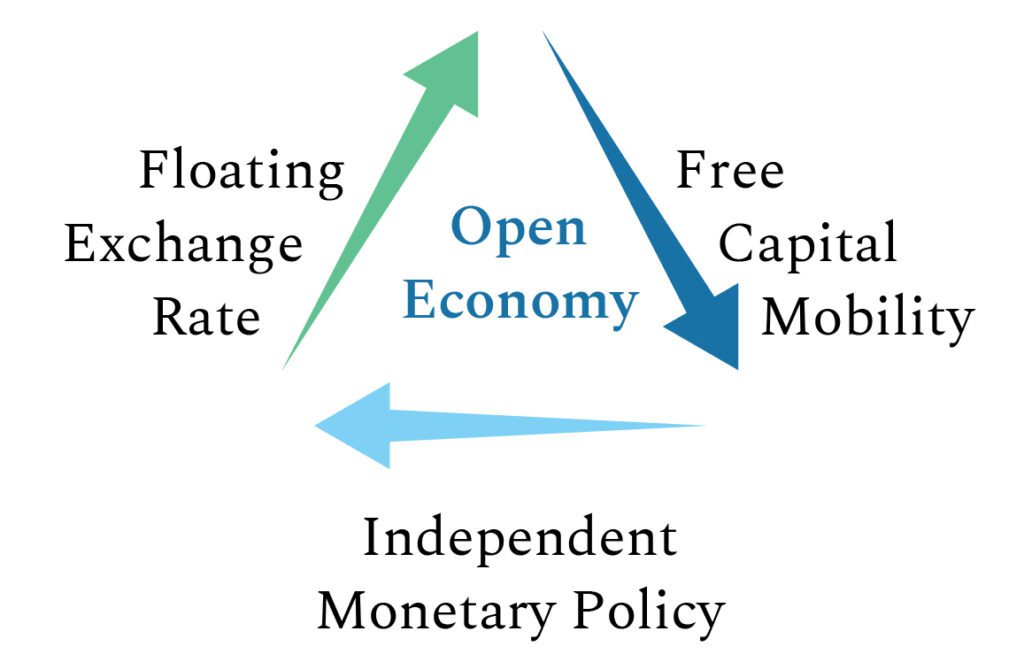
The Mundell-Fleming model, a classic framework in international economics, explains how countries can manage their economic goals, like inflation, interest rates, and exchange rates in an open, globalized world.
According to the model, when a country allows its currency to float freely meaning the exchange rate is set by the market it gains more control over its domestic monetary policy. That means the central bank can focus on keeping prices stable and supporting economic growth, without having to constantly defend a fixed exchange rate.
Bangladesh’s recent shift toward a floating exchange rate reflects this idea. It gives policymakers more flexibility to tackle inflation and respond to economic changes at home.
But theory doesn’t always play out smoothly in practice.
In many developing countries, including Bangladesh, financial markets aren’t very deep, and confidence in institutions can be fragile. As a result, governments often feel pressured to step in and stabilize the currency when it moves too much. This reluctance to let the market truly decide is known as “fear of floating.”
So, while Bangladesh now officially lets the market determine the exchange rate, the central bank still watches closely and may intervene if things get too volatile.
Lessons from Abroad
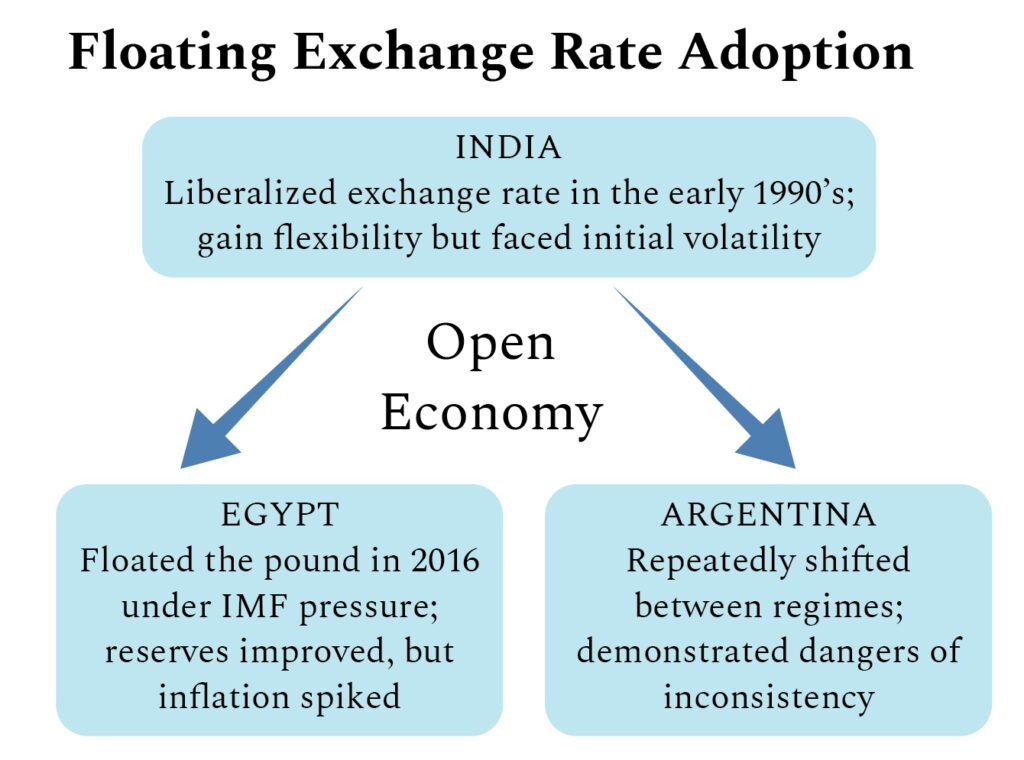
Bangladesh’s success will depend not just on the policy shift but on how consistent, transparent, and credible its implementation remains.
Next Steps and Policy Recommendations
- Strengthen Market Depth: Encourage interbank forex trading and diversify participants beyond commercial banks to include exporters, importers, and fund managers.
- Transparent Intervention Rules: Clearly define when and how the Bangladesh Bank will intervene, including thresholds and instruments.
- Improve Communication Strategy: Public confidence hinges on a clear narrative. Authorities must educate the public about why floating is being pursued and what outcomes to expect.
- Enhance Safety Nets: Expand targeted subsidies or transfer programs for lower-income households to offset inflationary pressures.
- Digital FX Platforms: Deploy technology to enable transparent, real-time exchange rate dissemination, reducing scope for speculation or misinformation.
Conclusion
The move to a floating exchange rate may be the most consequential monetary policy reform in Bangladesh since financial liberalization in the 1990s. While the early results, especially rising reserves and remittance inflows, are promising, sustaining these gains will require vigilance, reform continuity, and public trust.
Bangladesh now stands at the confluence of opportunity and uncertainty. How the country navigates this policy watershed may well define the trajectory of its macroeconomic stability for the next decade
Author: Abu Yousuf Abdullah