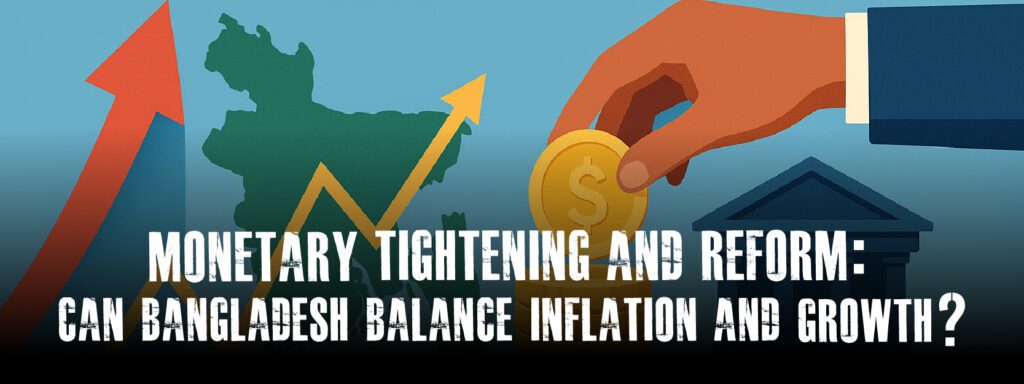
Inflation is a rise in the general price level of goods and services in an economy over time. When inflation is high, the purchasing power of money declines, affecting households, businesses, and the overall economy. To manage inflation, central banks often use a tool called monetary tightening, which involves raising interest rates and reducing the money supply to slow down spending and borrowing.
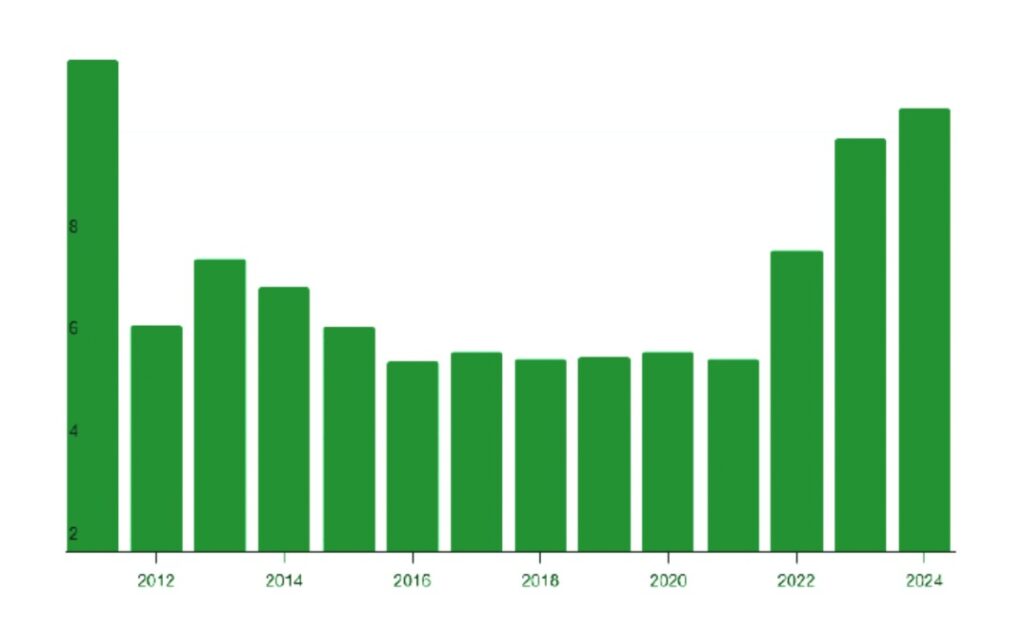
In Bangladesh, inflation has been a major concern in recent years. However, recent data shows a positive shift. In June 2025, headline inflation dropped to 5.7%, the lowest in nearly three years. This article explores how Bangladesh is managing inflation through monetary policy, the challenges it faces, and the outlook for the future.
Current Inflation Scenario in Bangladesh
Bangladesh has experienced high inflation due to several factors:
- Rising global commodity prices caused the rise in import costs.
- Depreciation of the Bangladeshi Taka.
- Supply chain disruptions.
However, recent efforts have shown results. According to the Bangladesh Bank, inflation fell to 5.7% in June 2025 (the Lowest in the past 3 years), down from over 9% in 2023. The central bank now aims to bring inflation down to 6.5% by June 2026.
This decline is attributed to tighter monetary policy, improved food supply, and better coordination between fiscal and monetary authorities.
Bangladesh Bank’s Monetary Policy Strategy
To control inflation, the Bangladesh Bank (BB) has adopted a cautious and disciplined approach. In its latest monetary policy statement for the first half of FY2025–26, BB decided to:
- Hold the policy rate at 10%, maintaining a tight stance.
- Keep the Standing Lending Facility (SLF) rate at 11.5%, which is the rate at which banks borrow from BB.
- Reduce the Standing Deposit Facility (SDF) rate to 8%, encouraging banks to lend more and improve liquidity.
This strategy is designed to prevent premature easing, which could lead to a resurgence of inflation. BB is also using repo operations to manage short-term liquidity in the banking system.
The central bank emphasised that inflation control remains the top priority, even if it means slower economic growth in the short term.
Balancing Inflation Control and Growth
While controlling inflation is essential, it must be balanced with the need for economic growth. Businesses have urged the central bank to lower interest rates to encourage investment and job creation.
However, BB has taken a cautious stance. Credit growth has slowed to 6.4%, the lowest in several years. This reflects reduced borrowing by businesses and consumers due to high interest rates.
BB’s message is clear: “Inflation first, stimulus later.” The central bank wants to ensure that inflation is firmly under control before considering rate cuts or expansionary policies.
This approach may slow down growth temporarily, but it helps maintain macroeconomic stability and investor confidence.
Structural Reforms and Policy Tools
In addition to interest rate adjustments, BB is implementing structural reforms to strengthen the financial system:
- Interest Rate Corridor: BB uses a range of rates (SDF to SLF) to manage liquidity and guide market interest rates.
- Banking Sector Reforms: Efforts are underway to reduce non-performing loans (NPLs), improve governance, and enhance risk management.
- Deposit Insurance Act and Bank Resolution Act: These laws aim to protect depositors and ensure the orderly resolution of troubled banks.
BB is also working closely with the government to align fiscal and monetary policies. For example, controlling public spending and improving tax collection can support inflation control.
Challenges in Monetary Transmission
One of the key challenges in Bangladesh is the weak transmission of monetary policy. This means that changes in interest rates do not always lead to expected changes in borrowing, spending, or inflation.
Reasons include:
- Coexistence of conventional and Islamic banking, which follow different principles.
- Underdeveloped capital markets limiting investment options.
- Poor governance and inefficiencies in the banking sector.
To improve transmission, BB needs to:
- Strengthen financial infrastructure.
- Promote transparency and accountability.
- Encourage competition among banks.
Global Context and Policy Stability
Global factors also influence Bangladesh’s monetary policy. Uncertainty in global markets, interest rate hikes by major central banks, and geopolitical tensions can affect inflation and exchange rates.
Compared to other emerging economies, Bangladesh has managed to maintain relative stability. BB’s commitment to data-driven and forward-looking policy has helped build credibility.
By avoiding abrupt changes and maintaining a consistent policy stance, BB has sent a strong signal to investors and markets.
Future Outlook and Recommendations
Looking ahead, BB will review its monetary policy in the second half of FY2025–26. The focus will remain on inflation control, financial stability, and gradual support for growth.
Recommendations:
- Strengthen monetary transmission by improving banking practices and financial literacy.
Example: India
- The Reserve Bank of India (RBI) improved banking practices by enhancing digital infrastructure, promoting financial literacy, and tightening supervision.
- Better transmission of interest rate changes to lending and deposit rates, helping control inflation more effectively.
- Enhance coordination between BB and the Ministry of Finance to align fiscal and monetary goals.
Example: Indonesia
- Bank Indonesia and the Ministry of Finance established a joint policy framework to align fiscal spending with monetary goals.
- Reduced inflation volatility and improved investor confidence during global shocks.
- Improve transparency in policy communication to guide market expectations.
Example: United Kingdom
- The Bank of England publishes detailed inflation reports, forward guidance, and minutes of policy meetings.
- Clear communication helps guide market expectations and reduces uncertainty, making monetary policy more effective.
- Diversify policy tools, including macroprudential measures and digital finance initiatives.
Example: South Korea
- The Bank of Korea uses macroprudential tools like loan-to-value (LTV) and debt-to-income (DTI) ratios, alongside interest rate policy.
- Controlled credit growth and housing market bubbles, while maintaining low inflation.
If these steps are taken, Bangladesh can achieve sustainable growth with low and stable inflation.
Bangladesh’s approach to inflation control and monetary tightening reflects a careful balance between discipline and flexibility. By prioritising price stability, the central bank is laying the foundation for long-term economic resilience.
While challenges remain, the recent decline in inflation and the cautious policy stance offer hope. With continued reforms and strategic planning, Bangladesh can navigate global uncertainties and build a stronger, more stable economy.
Author: Abu Yousuf Abdullah