Introduction
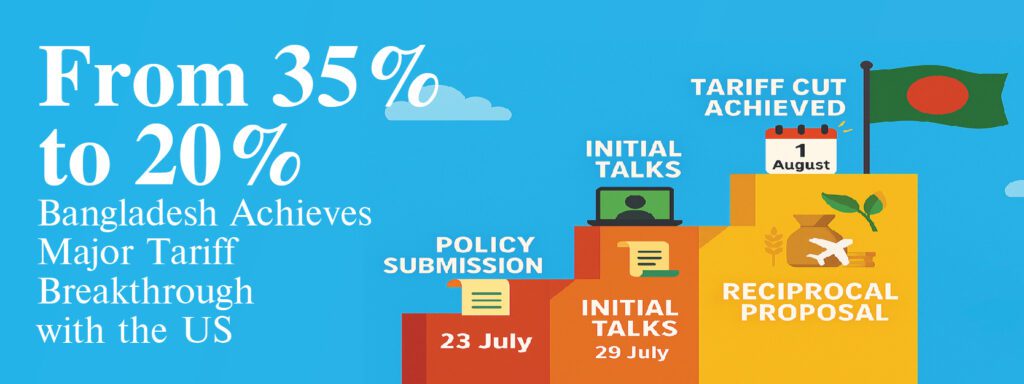
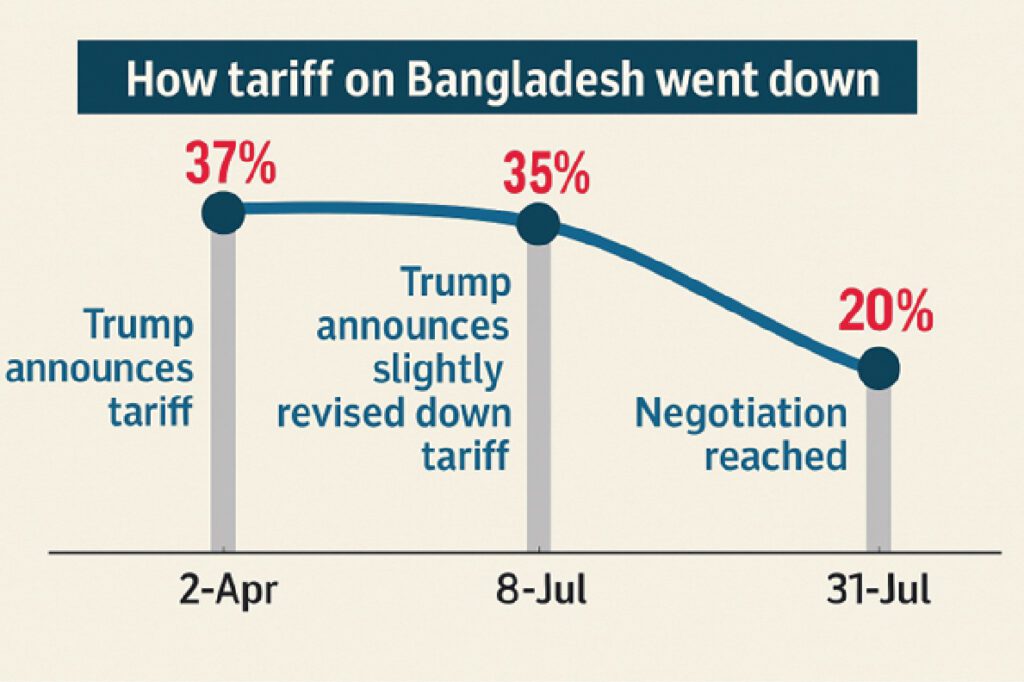
After months of uncertainty and diplomatic effort, Bangladesh has achieved a significant breakthrough in its trade relations with the United States. On 1 August, the US agreed to reduce tariffs on Bangladeshi imports from a steep 35% to a more manageable 20%. This development marks a turning point in Bangladesh’s international trade strategy, reflecting a more proactive and collaborative approach between public institutions and private stakeholders.
The tariff reduction is not just a technical adjustment; it signals a deeper shift in how Bangladesh positions itself in global trade negotiations. With rising competition from countries like Vietnam and India, Bangladesh’s ability to secure concessions from the US demonstrates its growing maturity in economic diplomacy and its willingness to engage in reciprocal trade arrangements.
Background and Build-Up to the Negotiations
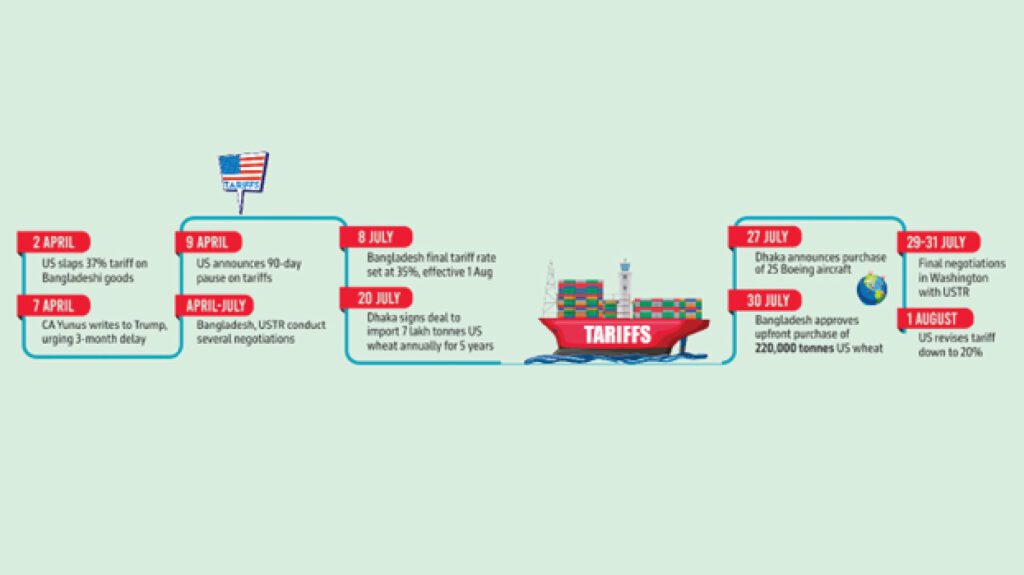
The journey to this breakthrough was far from smooth. Bangladesh had struggled to even secure a slot for the third round of trade talks with the United States Trade Representative (USTR). The situation began to change on 23 July, when Bangladesh submitted a detailed and persuasive position paper to the USTR. This document outlined Bangladesh’s readiness to engage in reciprocal trade and highlighted its strategic importance as a trading partner.
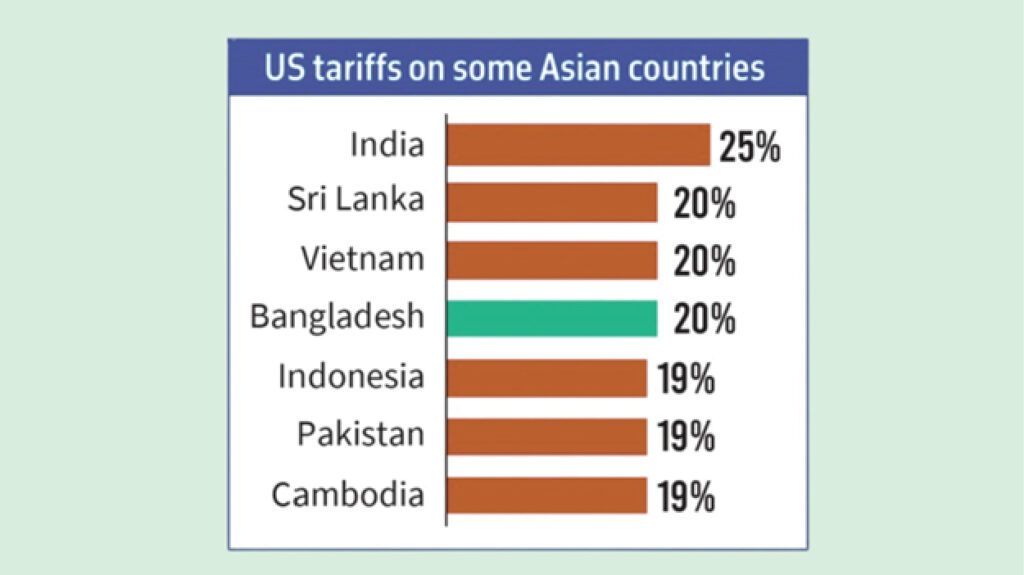
Until then, the US had maintained a high tariff rate of 35% on Bangladeshi goods, while offering more favorable terms to competitors like Vietnam, whose tariff was reduced to 20% around the same time. This disparity prompted Bangladesh to intensify its efforts, leading to a two-and-a-half-hour virtual meeting on 29 July. However, after reviewing the position paper, the USTR invited Bangladesh for a three-day in-person negotiation session, a clear sign that Washington was taking Dhaka’s proposals seriously.
Strategic Preparations by Bangladesh
The success of the negotiations was not accidental. It was the result of meticulous planning and coordination across various sectors. The commerce ministry played a central role, first by consulting with business leaders and economists to understand the broader implications of the tariff issue. Then, it held extensive meetings with ministry secretaries to prepare a list of US products that Bangladesh could import as part of a reciprocal trade package.
Commerce Adviser Sk Bashir Uddin led the charge, holding virtual meetings with top executives from major US companies such as Chevron and Excelerate Energy. He also engaged with trade associations like the US Soybean Export Council and the American Apparel and Footwear Association to gather recommendations and build goodwill.
This multi-stakeholder approach ensured that Bangladesh’s proposal was not only comprehensive but also aligned with the interests of both countries. It demonstrated Bangladesh’s seriousness and readiness to deepen economic ties with the US.
| US Reciprocal Tariff imposed so far | |
|---|---|
| Country | Reciprocal Tariff |
| Syria | 41% |
| Laos | 40% |
| Myanmar | 40% |
| Switzerland | 39% |
| Iraq | 35% |
| Serbia | 35% |
| Algeria | 30% |
| Bosnia and Herzegovina | 30% |
| Libya | 30% |
| South Africa | 30% |
| Brunei | 25% |
| Kazakhstan | 25% |
| Moldova | 25% |
| Tunisia | 25% |
| Taiwan | 20–25% |
| Malaysia | 19–20.5% |
| Philippines | 19.5% |
Key Components of the Trade Package
At the heart of the negotiations was a carefully crafted trade package that included several major import commitments from Bangladesh. These were designed to address the US’s concerns about its trade deficit while also benefiting Bangladesh’s economy.
Wheat Imports
The food ministry signed a deal to import 700,000 tons of US wheat annually. Additionally, the Cabinet purchase committee approved an extra 220,000 tons at a slightly higher-than-market price. This move not only supports US agriculture but also helps Bangladesh ensure food security.
Aircraft Purchases
Bangladesh committed to purchasing 25 Boeing aircraft, with deliveries staggered over 10–15 years. This long-term deal allows Bangladesh to modernise its aviation sector while spreading out the financial burden.
Energy and Agriculture
Bangladesh agreed to import liquefied natural gas (LNG) from US firms on the spot market. It also proposed importing cotton through government warehouses and increasing imports of soybeans and pulses. These items are crucial for Bangladesh’s textile and food industries.
Private Sector Engagement
Private businesses were actively involved in the final negotiations. For example, Meghna Group Chairman Mostafa Kamal signed a $130 million soybean import deal. Bangladeshi importers also contracted $30–35 million worth of US cotton. These deals reflect the private sector’s confidence in the new trade path and its willingness to invest in long-term partnerships.
The Final Round of Negotiations in Washington
The shift from virtual to in-person meetings was a critical moment in the negotiation process. It allowed Bangladesh’s delegation to present its case more effectively and build personal rapport with US officials.
The delegation included key figures such as Commerce Adviser Sk Bashir Uddin, National Security Adviser Khalilur Rahman, and Commerce Secretary Mahbubur Rahman. Their presence underscored the importance Bangladesh placed on the talks. The Bangladesh Embassy in Washington also played a vital role in facilitating the meetings and ensuring smooth communication.
Golam Mortoza, press minister at the embassy, highlighted the significance of the 45-minute meeting between the commerce adviser and USTR ministers. He noted that very few countries had managed to secure such direct access, praising the negotiation skills of the Bangladeshi team.
Trade Deficit and Reciprocal Tariff Strategy
One of the key factors influencing the US’s decision was its broader strategy to reduce its $1.3 trillion global trade deficit. Although its deficit with Bangladesh is relatively small, only $6 billion, the US was keen to apply reciprocal tariffs to balance trade relationships.
Bangladesh’s commitment to import an additional $3 billion worth of US goods within 18 months played a crucial role in securing the tariff reduction. By offering to buy more American products, Bangladesh positioned itself as a cooperative partner rather than a passive beneficiary.
This approach aligns with global trends where trade negotiations are increasingly based on mutual benefit rather than unilateral concessions.
Reactions and Reflections
Despite the success, the reaction from the Bangladeshi delegation was mixed. While the tariff reduction to 20% was seen as a positive step, the team had hoped for a deeper cut. Expectations were high, especially given the favorable treatment received by Vietnam.
Golam Mortoza acknowledged that the outcome was “manageable and competitive,” but not cause for celebration. The delegation recognised that while progress had been made, there was still room for improvement in future negotiations.
Finance Adviser Salehuddin Ahmed hinted that the trade package might include additional elements, possibly even military purchases, but declined to provide details until the commerce adviser returned.
Implications for Bangladesh’s Economy and Trade Policy
The tariff reduction and associated trade deals have several implications for Bangladesh’s economy and trade policy:
Boost to Export Competitiveness
Lower tariffs make Bangladeshi goods more competitive in the US market, potentially increasing export volumes and diversifying product offerings.
Strengthening Bilateral Ties
The negotiations have strengthened diplomatic and economic ties between Bangladesh and the US, paving the way for future cooperation in areas like energy, aviation, and agriculture.
Encouraging Private Sector Participation
The active involvement of private businesses sets a precedent for future trade deals. It shows that public-private collaboration can lead to meaningful outcomes.
Strategic Trade Planning
Bangladesh’s approach, combining economic analysis, stakeholder engagement, and diplomatic outreach, can serve as a model for other trade negotiations. It reflects a shift from reactive to strategic trade policy.
Bangladesh’s new trade path with the United States marks a significant milestone in its journey toward becoming a more influential player in global trade. By securing a tariff reduction and committing to reciprocal imports, Bangladesh has demonstrated its ability to negotiate effectively and align its trade policy with national interests.
The process also highlights the importance of preparation, collaboration, and diplomacy. While the outcome may not have met all expectations, it sets the stage for deeper engagement and future opportunities. As Bangladesh continues to navigate the complexities of international trade, this breakthrough serves as both a lesson and a launchpad for more ambitious economic partnerships.
Author: Abu Yousuf Abdullah