
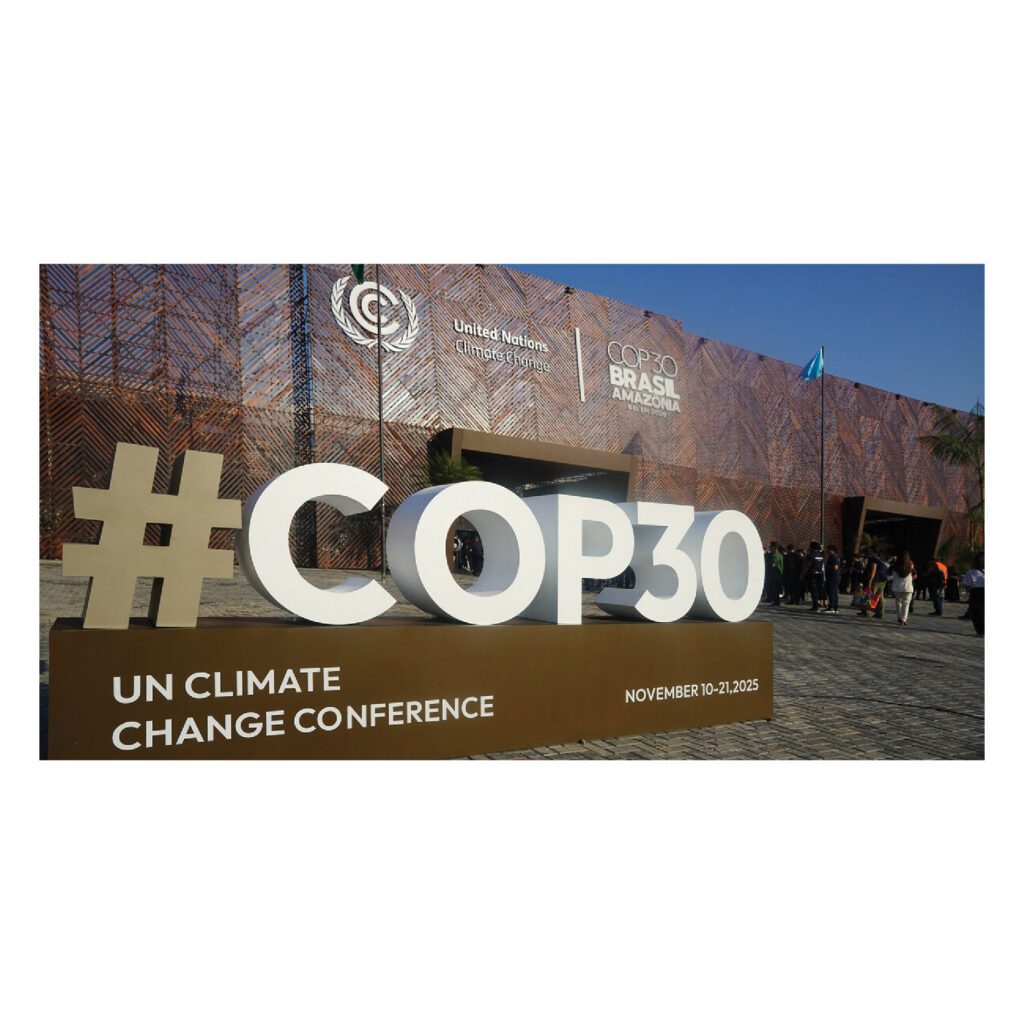
The first climate summit held in the world’s largest rainforest delivered a verdict as mixed as the ecosystem surrounding it. COP 30 convened in Belém, Brazil, November 10-21, 2025, producing 29 decisions in its “Global Mutirão” package—including historic wins on adaptation finance and just transition—while failing to advance binding fossil fuel phase-out commitments. With 42,618 in-person attendees and the United States conspicuously absent, the summit marked a pivotal shift in climate leadership toward China and the Global South.
President Lula framed Belém’s selection as bringing climate reality to the negotiating table. The symbolism was shadowed by hard truths: global emissions grew 2.3% in 2024, current NDCs deliver less than 14% of needed reductions by 2035, and the adaptation finance gap stands at $310-365 billion annually for developing countries alone.
A Vacuum in Washington Reshapes the Balance of Power
For the first time in three decades of climate negotiations, the United States sent no official negotiators. The Trump administration’s January 2025 withdrawal from the Paris Agreement—effective January 2026—and elimination of the State Department’s Office of Global Change created what observers called a “dangerous vacuum.” The administration fired its entire climate negotiating team in July 2025. Climate envoy Harjeet Singh accused Washington of abandoning “its responsibilities in the midst of a planetary emergency.”
China moved to fill the void. Its pavilion dominated the entrance hall. President Xi’s September 2025 announcement of China’s first absolute economy-wide emissions target—7-10% below peak levels by 2035—set the tone for Belém. Head of delegation Li Gao expressed hope that “some day in the future, the US will come back, because addressing climate change needs every country.” California Governor Gavin Newsom, attending unofficially, was more blunt about competitive implications.
Experts questioned whether China’s ambition matches its influence. EU Climate Commissioner Wopke Hoekstra assessed Beijing’s plan as falling “well short” of what science demands. China accounts for over 30% of annual global emissions—more than all developed nations combined. Its coal capacity expansion continues despite renewable commitments. The gap between diplomatic positioning and emissions reality defined Belém’s fundamental tension: leadership without commensurate action.
The US absence reverberated beyond official negotiations. American civil society, state governments, and corporate representatives attended in unofficial capacities, but their participation could not substitute for federal commitment. The delegation vacuum meant no US engagement on key technical negotiations, finance discussions, or coalition-building efforts that historically shaped outcomes. European negotiators expressed frustration at carrying increased burden with reduced leverage.
The $300 Billion Question Divides North from South
Climate finance remained the summit’s most contentious battlefield. The New Collective Quantified Goal agreed at COP 29 in Baku—$300 billion annually by 2035 from developed countries, with an aspirational $1.3 trillion target from all sources—arrived in Belém already under attack. India’s representative dismissed it as a “paltry sum.” Oxfam research revealed developing countries pay back $7 for every $5 received in climate finance loans—the debt trap dynamic undermining trust essential to multilateral cooperation.
The Loss and Damage Fund, operationalized at COP 28 with $766 million in pledges, illustrated the gap between rhetoric and reality. Only $261 million had been received by early 2025—against estimated annual needs of $100 billion. The fund holds less than 0.3% of what vulnerable nations require. The Heinrich Böll Foundation warned it risked becoming “a largely empty shell.”
Adaptation financing presents an even starker picture. The UNEP Adaptation Gap Report 2025 documented needs of $310-365 billion annually for developing countries by 2035. Current flows declined to $26 billion in 2023—a mere 7% of requirements. Only 6% of climate finance reaches adaptation. COP 30’s commitment to triple adaptation finance by 2035 offered progress, but without baseline clarity or binding schedules, developing nations remained skeptical. The finance gap threatens to undermine the entire Paris architecture: without adequate support, vulnerable nations cannot implement the very commitments the agreement demands.
NDC Ambition Falls Dangerously Short
The February 2025 deadline for updated Nationally Determined Contributions revealed incremental progress masking systemic failure. 108 countries covering 71% of global emissions submitted new targets. Only two—Norway and the UK—earned Climate Action Tracker’s “1.5°C compatible” rating. The collective shortfall: new NDCs close less than 14% of the emissions gap, leaving 24-28 gigatons of CO2 equivalent unaddressed by 2035. Major emitters submitted targets that would lock in warming well above Paris Agreement thresholds. The February deadline, designed to create momentum before Belém, instead revealed the persistent gap between political feasibility and physical necessity.
UNEP Executive Director Inger Andersen delivered a sobering assessment: “Nations have had three attempts to deliver promises made under the Paris Agreement, and each time they have landed off target.” Temperature trajectory under full NDC implementation: 2.3-2.5°C warming—an improvement from previous projections but still catastrophic for climate-vulnerable nations. The 1.5°C threshold will likely breach by the early 2030s according to UN Secretary-General António Guterres.
Net-zero pledges proliferated—1,935 entities now claim such targets, up from 769 in 2020—but credibility remains elusive. Climate Action Tracker found 63% of global emissions fall under net-zero targets with “insufficient” design. The renewable sector showed mixed progress: deployment broke records, but trajectories fall short of COP 28’s tripling commitment by 2030. G20 nations—responsible for 80% of emissions—showed particularly uneven ambition, with several major economies submitting targets weaker than 2020 pledges.
Fossil Fuel Politics Block Meaningful Progress
The summit’s most dramatic confrontation pitted over 80 countries demanding fossil fuel phase-out roadmaps against determined resistance from oil-producing states. Saudi Arabia, Russia, and the UAE led opposition, supported by the Arab Group of 22 nations and the Like-Minded Developing Countries bloc.
Over 1,600 fossil fuel lobbyists attended COP 30—outnumbering nearly all national delegations. Saudi Deputy Environment Minister Osama Faqeeha articulated the petrostates’ position: “The issue is the emissions, it’s not the fuel.” The final “Global Mutirão” text contained no mention of fossil fuels—retreating even from COP 28’s “transition away” language. The outcome: voluntary roadmaps outside the UN process, progress reports deferred to COP 31.
The private sector faces parallel pressure. Only 14% of financial institutions have credible fossil fuel phase-out policies. Article 6 carbon market development may widen this gap through poor-quality offset schemes unless robust standards emerge. The credibility gap between net-zero announcements and operational practices continues to undermine confidence in voluntary commitments. Financial sector claims of climate leadership increasingly face scrutiny against actual portfolio composition and financing decisions.
Brazil Demonstrates Leadership on Forests
Against this backdrop of gridlock, host country Brazil showcased meaningful action. Amazon deforestation under Lula reached 6,288 km² in 2024—the lowest in nine years, a 31% decline year-over-year. Environment Minister Marina Silva declared: “We have spent 33 years debating. Now there is only one path: implementation.” The reduction demonstrates that political will can reverse deforestation trends—a lesson with implications beyond Brazil’s borders.
The signature initiative: the Tropical Forest Forever Facility (TFFF), launched with commitments exceeding $6.7 billion from Norway ($3 billion), Germany (€1 billion), Brazil and Indonesia ($1 billion each), and France (€500 million). The mechanism pays $4 per hectare of intact forest while deducting $400 per hectare deforested—creating financial incentives for preservation that align economic interests with conservation imperatives for the first time at scale. 53 countries endorsed the historic launch declaration.
Indigenous participation reached historic levels—over 3,000 representatives attended, 900 in official negotiations. The TFFF guarantees 20% of funds flow directly to Indigenous communities. Yet warning signs emerged: first-half 2025 deforestation rose 27% year-over-year. Forest degradation increased 163% from 2022-2024. The 2024 fire season burned 2.8 million hectares—60% above the previous record. Deforestation and degradation operate on different timescales; the latter may be accelerating as the former declines. Criminal networks exploit enforcement gaps, setting fires to clear land that satellite monitoring increasingly detects. Brazil’s success depends on sustaining political will against economic pressures and enforcement challenges that outlast any single administration.
Policy Pathways Forward
The Belém outcomes suggest priorities for different actors. Developing country negotiators should leverage NCQG unity while building coalitions with progressive developed nations on specific deliverables. Converting engagement into binding sub-goals for public adaptation finance and loss and damage would mark genuine progress.
Developed country governments must close the credibility gap between pledges and disbursements. With only 6% of climate finance reaching adaptation and the Loss and Damage Fund holding less than 0.3% of estimated needs, current approaches undermine trust. Shifting from loan-heavy portfolios toward grant-based support would address the debt trap dynamic.
Private sector and financial institutions face pressure to translate net-zero commitments into fossil fuel phase-out plans. Only 14% have credible policies—a gap Article 6 carbon markets may widen without robust standards. The Just Transition Mechanism agreed at Belém offers a template for progress—acknowledging differentiated responsibilities while creating institutional pathways. Extending this model to technology transfer could unlock South-South cooperation bypassing traditional North-South impasses.
The Amazon Verdict
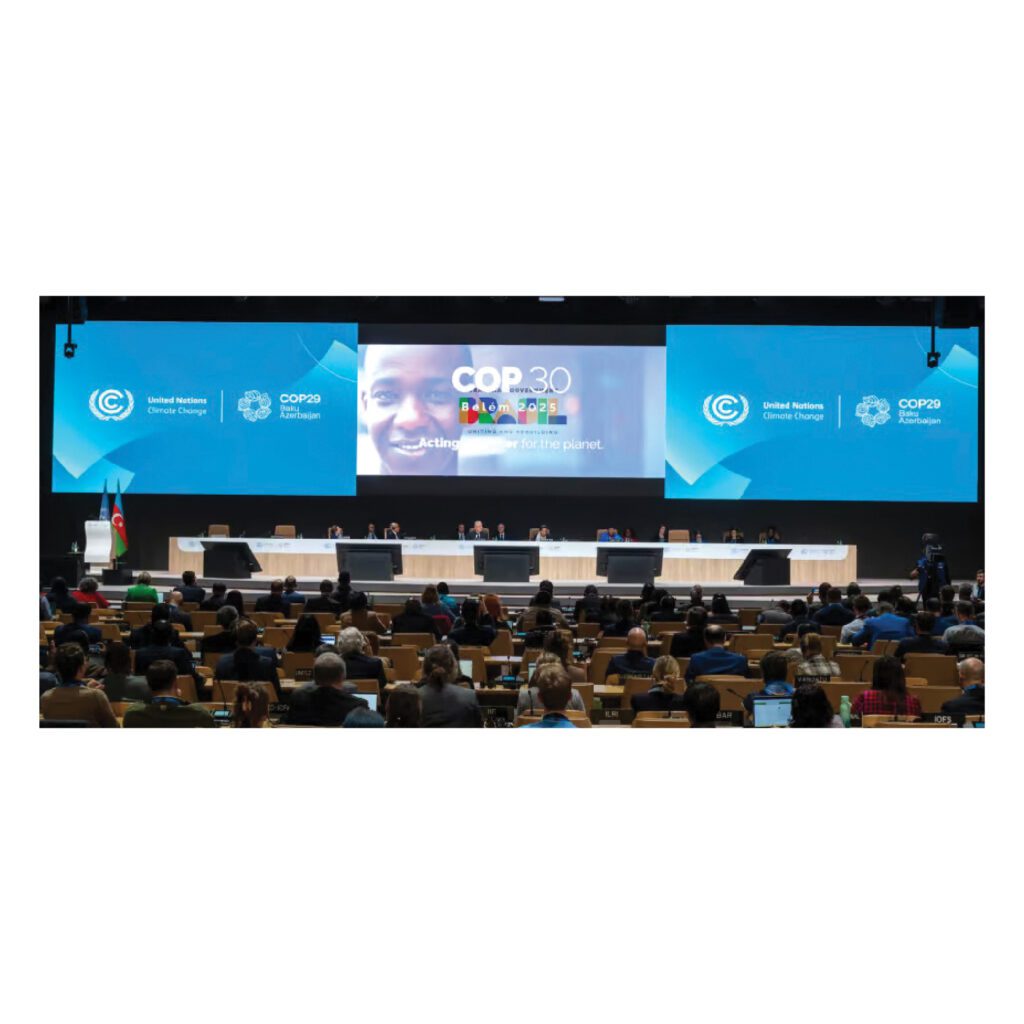
COP 30 demonstrated that symbolic location cannot substitute for political will. Bringing negotiations to the rainforest’s edge sharpened awareness but did not overcome structural conflicts—between fossil fuel producers and consumers, creditors and debtors, ambition and implementation. The 29 decisions represent meaningful progress on adaptation and just transition frameworks; the absence of fossil fuel phase-out language signals how far consensus remains from scientific demands. Three decades of climate diplomacy have produced frameworks, targets, and mechanisms—yet emissions continue rising.
The summit’s legacy may depend on factors beyond formal outcomes. Brazil demonstrated rapid deforestation reductions remain achievable with political commitment. The TFFF established a template for results-based forest finance that could scale globally. Indigenous peoples secured unprecedented participation rights transforming future negotiations. Despite US withdrawal, subnational actors and civil society maintained pressure for ambition. The question is whether these elements constitute building blocks for accelerated action or consolation prizes masking systemic failure.
As President Lula observed in his opening address: “We are moving in the right direction, but at the wrong speed.” With the 1.5°C threshold likely breached by the early 2030s, that speed differential between climate action and climate change itself may define whether the Paris framework survives as more than aspiration. The emissions gap widens each year targets are missed. The adaptation gap compounds as climate impacts accelerate. The credibility gap between pledges and action erodes the trust multilateral cooperation requires. The Amazon held a mirror to global climate diplomacy. The reflection was not flattering—but the image remains possible to change.
Data Sources
COP 30 Overview & Attendance: Wikipedia
US Withdrawal & China Role: CNN, NBC News
China’s 2035 NDC: Climate Home News, Bruegel Analysis
Climate Finance ($300B NCQG): McDermott Will & Emery
Loss and Damage Fund: Heinrich Böll Foundation, Climate Funds Update
Adaptation Finance Gap: UNEP Adaptation Gap Report 2025
Emissions Gap & NDC Assessment: UNEP/NewClimate Institute, WRI, IRENA
Fossil Fuel Phase-Out: IDEAS Energy, CIVICUS, Euronews
Amazon Deforestation: Mongabay (2024 data), Mongabay (2025 spike), Phys.org (degradation)
Tropical Forest Forever Facility: TFFF Official, COP30 Brasil
Indigenous Participation: The Conversation
Brazil Government Statements: COP30 Brasil Official