
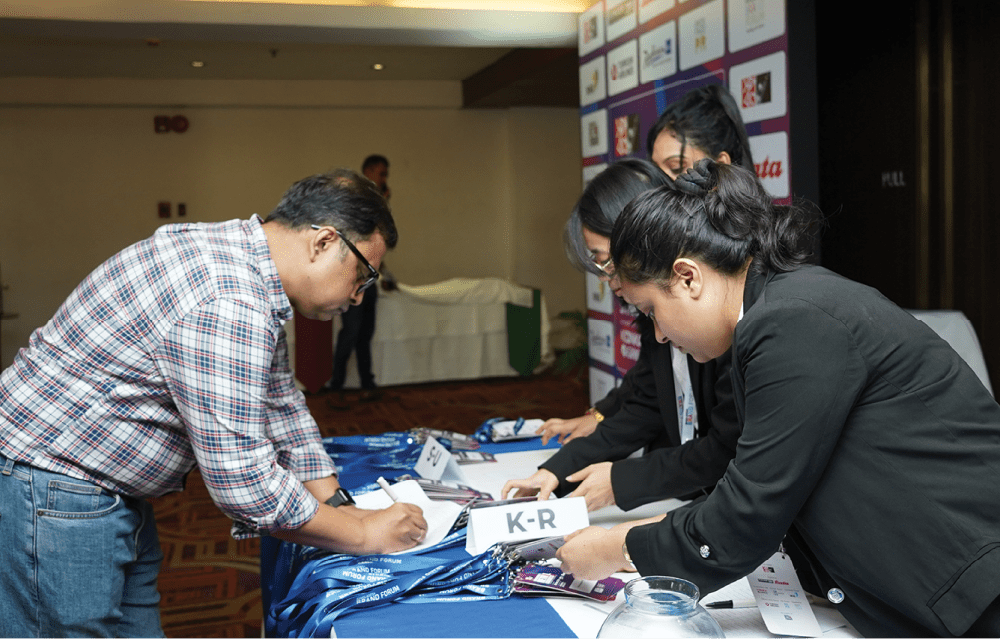
Retail in Bangladesh has never been a simple business. It is a landscape shaped by fragmentation, price pressure, shifting consumer loyalties, and a distribution infrastructure that stretches from organized urban malls to millions of small-format general trade outlets across every corner of the country. Managing that complexity while keeping pace with technological change and evolving consumer expectations is the defining challenge facing the industry today. It was against that backdrop that the 8th edition of SHWAPNO presents Bangladesh Retail Congress powered by Singer and Bata, in association with Konka & Gree (Electro Mart Limited), convened on April 18 at Radisson Blu Water Garden Hotel, Dhaka. Organized by Bangladesh Retail Forum in collaboration with Bangladesh Brand Forum, the congress brought together retail operators, FMCG leaders, apparel sector stakeholders, brand custodians, supply chain specialists, and senior business decision-makers for a full day of discussion under the theme Transforming Retail Through Knowledge.
The theme was not chosen as a slogan. It was chosen as a diagnosis. Across every session of the day, the conversations returned to the same observation: the information and tools needed to make better retail decisions already exist in Bangladesh. What remains uneven is the willingness and capacity to act on them systematically. The congress was designed to close that gap — not by presenting abstract frameworks, but by putting practitioners in the same room to work through real problems and pressure-test the assumptions shaping strategy across the sector.
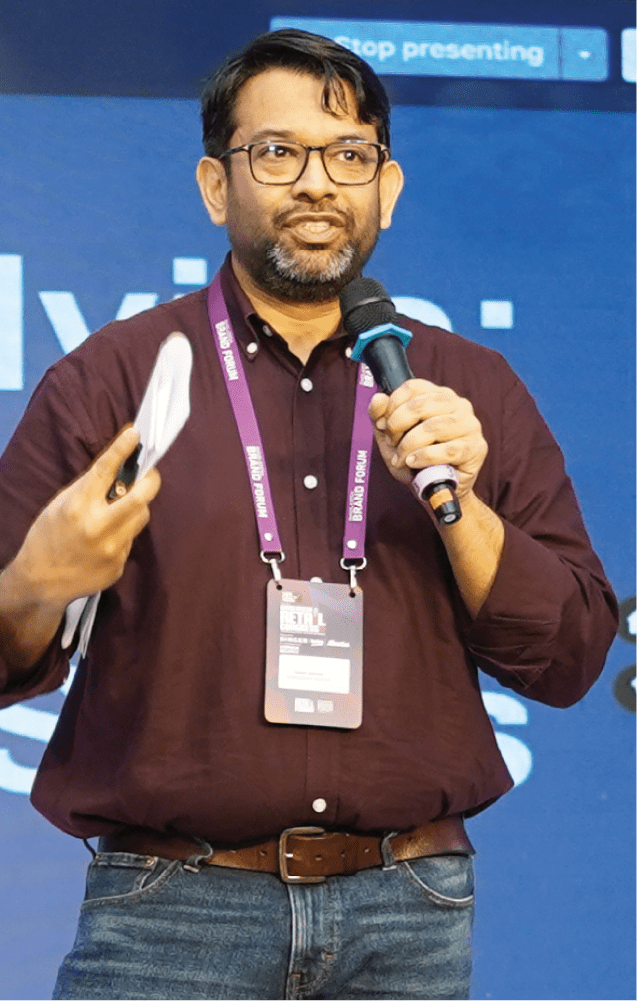
Opening the congress, Sajid Mahbub, Group Chief Executive Officer and Executive Editor of Bangladesh Brand Forum, set the context with directness. He noted that retail is being redefined by how effectively businesses translate knowledge into action — from understanding consumers to optimizing operations. The ability to learn, adapt, and evolve, he said, is what will separate future leaders in this industry from those who fall behind. He made the case that informed decision-making has become a national economic priority, not merely an organizational one, and that platforms like Bangladesh Retail Congress exist precisely to give industry stakeholders the space to share insights, challenge assumptions, and collectively shape a more resilient retail ecosystem. The day’s agenda featured three Keynote Sessions, three Panel Discussions, and two Insight Sessions, spanning distribution efficiency, consumer behavior, supply chain digitization, apparel value chain reform, embedded finance, and sales technology. What the sessions added up to was a consistent argument: the retailers who will lead Bangladesh’s market over the next decade are those who invest in data capabilities, build genuine trust across their ecosystems, and stop treating technology as an afterthought.

SESSION: KEYNOTE
Retail Performance Depends on Distribution Efficiency
Speaker: Ashraf Bin Taj, Co-Founder & Managing Director, IDC Bangladesh PLC.
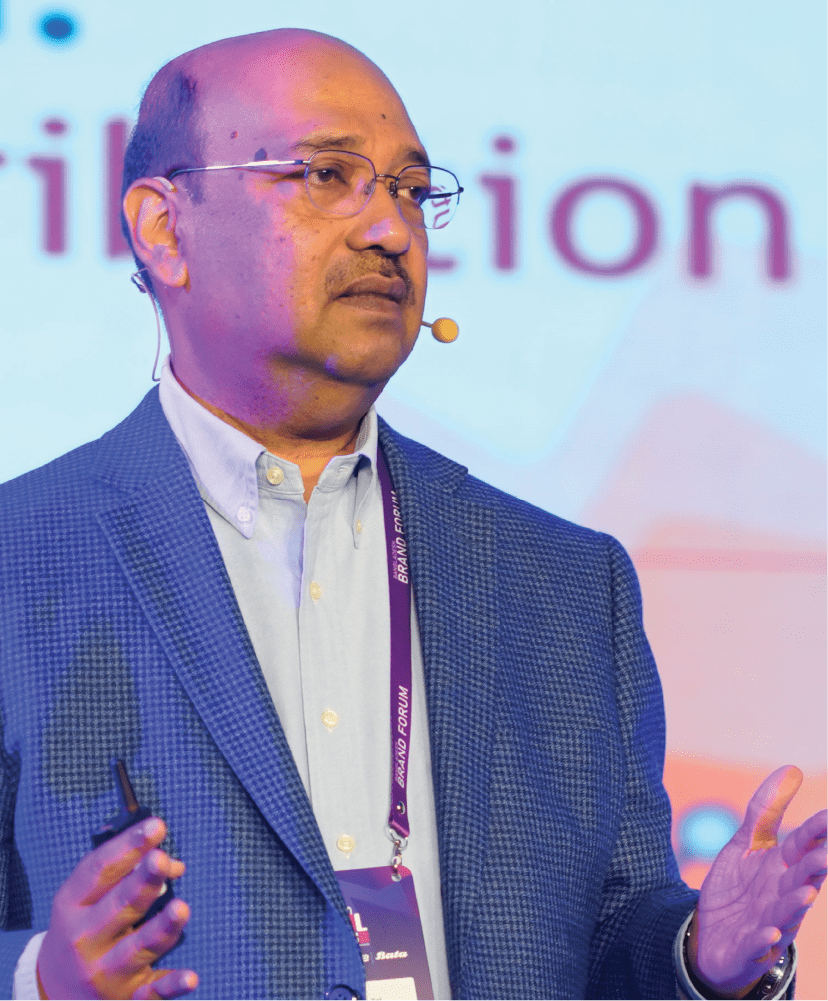
Ashraf Bin Taj opened the keynote proceedings with a frank, data-grounded account of where Bangladesh’s retail distribution stands. The structural reality was stark: with 97% of outlets in the general trade channel, the market is highly fragmented. But the steady expansion of modern trade is creating genuine opportunity in organized retail, and those who position themselves early will gain an advantage that compounds. He made the case that agility is no longer a differentiator — it is the baseline expectation. Retail strategies that rely on periodic reviews rather than real-time data are already operating at a disadvantage. He pointed to macroeconomic pressure as a force reshaping consumer behavior from the ground up: inflation is consistently outpacing income growth across Bangladesh, producing a visible shift toward locally produced goods and a more price-sensitive consumer population. For retailers and distributors, this is not a temporary adjustment but a structural shift in the demand environment.
He stressed that data has become the primary operational asset, with millions of data points processed daily to sharpen inventory decisions and improve supply chain performance. He also highlighted the growing adoption of the SLAM framework — Shelf Enhancement, Location, Availability, and Massive Display — as a practical tool for improving product visibility in increasingly crowded retail environments where the battle for customer attention is won or lost at the shelf. His argument came down to this: sustained competitiveness requires deep retailer partnerships, serious investment in data capabilities, and a clear alignment of strategy with local market realities rather than imported assumptions.
SESSION: PANEL DISCUSSION
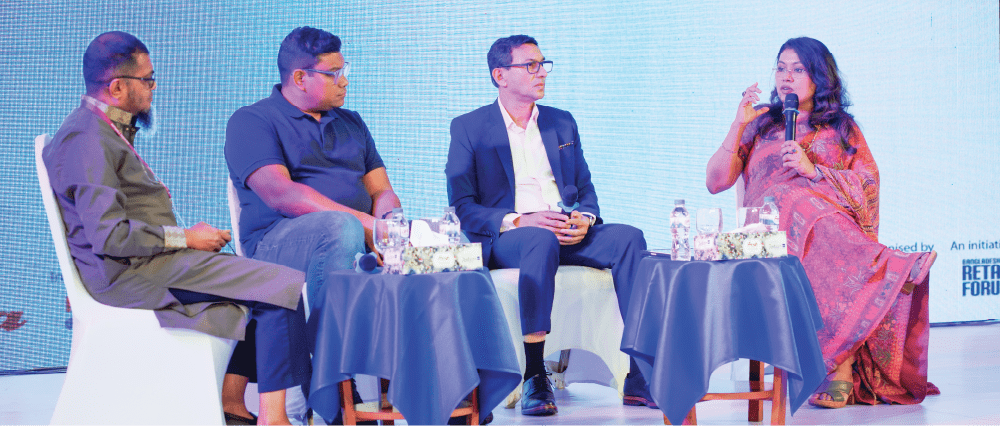
The Future of Retail — Trends That Will Shape Bangladesh
Moderator: Murtoza Zaman, Director, Retaility
Panellists: Faria Yasmin, Managing Director, Bata Bangladesh; Tanzeen Alam, Country Head, Bangladesh & SEA, Emami Ltd.; MHM Fairoz, Managing Director & CEO, Singer Bangladesh Ltd.
The first panel put the future of retail in Bangladesh under direct scrutiny, and the tone was candid from the outset. The discussion opened with retail in Bangladesh growing at 7.5% annually, driven by system integration and omni-channel distribution, before moving to where that growth is most at risk. The panelists were aligned on one uncomfortable point: retail failures tend to happen at the store level, not in strategy documents. Execution is where the gap opens between operators who grow and those who stall, and data leverage is what determines which side of that gap a retailer lands on. Direct-to-consumer models — e-commerce and f-commerce — are accelerating fast enough to pose a genuine threat to traditional retailers who have not yet adjusted their approach. Startups, with fewer legacy constraints, are already reshaping competitive dynamics in categories established players once considered secure.
The discussion also addressed a behavioral shift already playing out across the market. Consumers, particularly Gen Z, are making decisions based on experience rather than product alone, expecting authenticity and personalization rather than a transactional interaction. Brand loyalty is weakening as consumers grow more capable of comparing options. Retailers in lower-tier outlets, where price sensitivity is sharper, face added pressure to rethink what value means to their customer. Early investment in data collection and analytics, the panel concluded, will be what separates market leaders from the rest.
SESSION: KEYNOTE
Retail Revolution: Purpose at the Heart of a Smarter and Greener Future
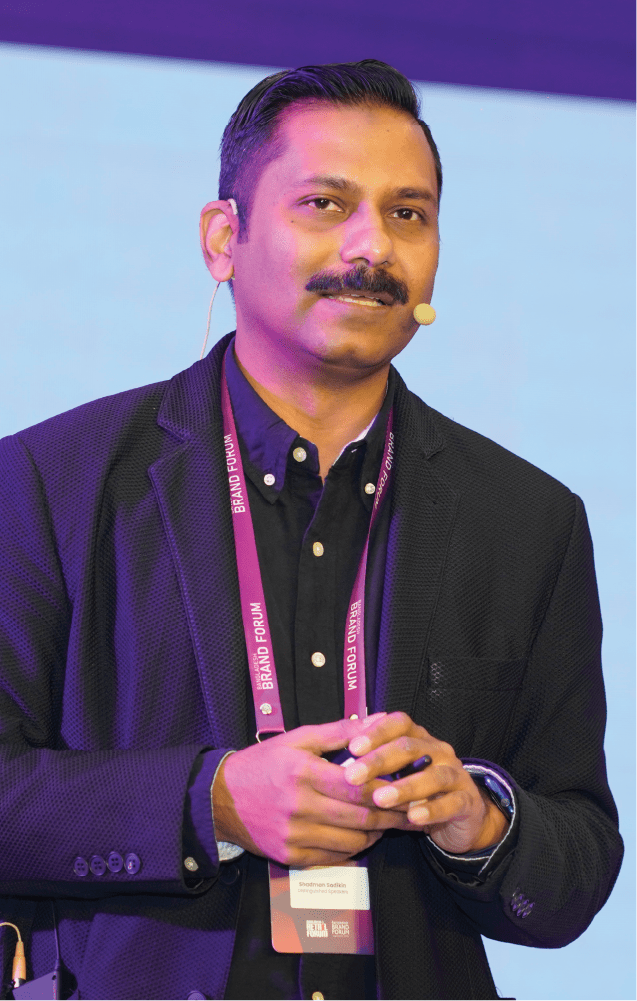
Speaker: Shadman Sadikin, Customer Business Development (CBD) Head, Unilever Bangladesh Ltd.
Shadman Sadikin took a sharply operational view, arguing that growing retail complexity — more suppliers, more SKUs, more customer expectations — has made digital tools a necessity rather than a competitive edge. Retailers still managing these challenges manually are playing a slower game. He identified SKU management as one of the most underappreciated pain points in store-level operations, and pointed to automated replenishment systems triggered by actual order data as a practical fix for reducing the burden on staff and improving inventory accuracy. He connected the push toward digitization to a broader paradox: consumers demand greater product assortment while simultaneously expecting competitive pricing, and only tech-enabled operations can absorb that tension without sacrificing margin or service quality.
Shadman Sadikin closed by putting the customer experience argument plainly. The shopping experience has become a core deliverable — something consumers evaluate and remember. Supply chain failures like stockouts, delayed fulfillment, and manual cash flow management are no longer just operational problems. They register as customer experience failures, and in a market where brand loyalty is eroding, those failures carry a cost that compounds over time.
SESSION: PANEL DISCUSSION
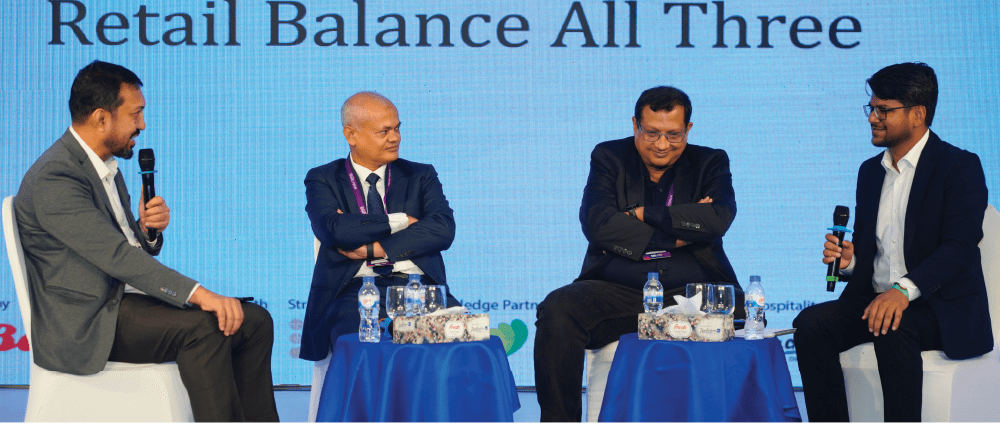
Purpose, Profit & People: Can Bangladeshi Retail Balance All Three?
Moderator: Towfique Hasan, Chief Business Development Officer, Akij Resource
Panellists: Mahbub Baset, CEO (International Business) & Group CMO, IFAD Multi Products Limited; Dipesh Nag, Managing Director, Grameen Danone Foods Limited; Md. Quamrul Hassan, Executive Director & COO, ACI PLC.
The second panel took on the most persistent tension in Bangladeshi retail: whether businesses can genuinely pursue purpose without sacrificing profitability. The panel’s central position was that profit and purpose reinforce each other when executed with discipline — they are not competing priorities. But that reinforcement does not happen by accident. It requires retailers to be precise about what they are selling, who they are selling to, and what functional and emotional value they deliver to that specific customer. Trust across the retail ecosystem — distributors, retailers, consumers — was identified as a structural necessity. Where profitability breaks down at any point in that chain, product promotion suffers, distributor commitment weakens, and market stability follows.
The discussion drew attention to rapid urbanization as a commercial opening the sector has not yet fully acted on. Bangladesh’s growing urban consumer base creates real room for retailers to pursue profitability and social responsibility simultaneously — not as a trade-off, but as a mutually reinforcing strategy. The panelists were direct about what makes that work in practice: genuine investment in human capital through structured recruitment, capability building, and performance KPIs that hold people accountable for outcomes. Retail ecosystems that treat people as a cost to be minimized will not build the operational capability needed to compete in the market taking shape.
SESSION: INSIGHT SESSION
Personalization at Scale: Turning Customer Data into Meaningful Experiences
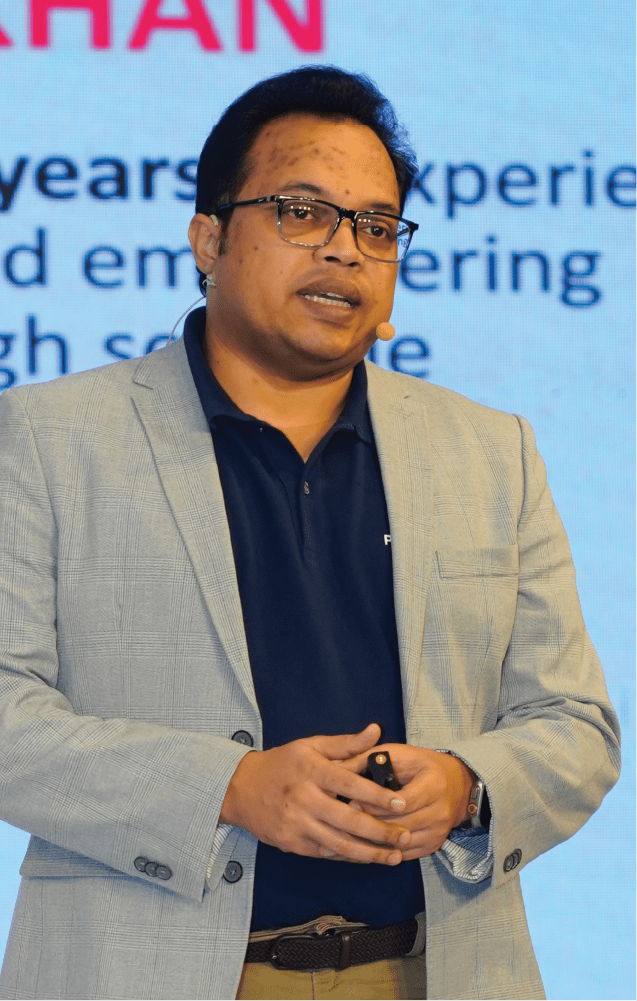
Speaker: Asikul Alam Khan, Founder & Chief Executive Officer, PriyoShop
Asikul Alam Khan opened by challenging a common but damaging narrative: Bangladesh’s retail market is not broken. With over five million MSME retailers operating across the country, it is one of the most extensive and diverse retail ecosystems in the region, with substantial untapped potential in supply flow, capital management, and operational efficiency. The problem is not the market’s size or structure — it is that most participants operate without the data infrastructure and financial tools that would allow them to compete and grow at their actual potential. He made the case that the future of retail will run on data-driven sourcing, integrated finance, and predictive analytics, and that retailers need to evolve into smart, data-enabled nodes within a connected supply chain rather than isolated operators making decisions without adequate information. Embedded finance — specifically inventory-linked financing and collateral-free lending — was identified as a critical enabler for the millions of small retailers who need liquidity to grow but cannot access conventional credit through traditional banking channels. Digital adoption, including mobile financial services, is already growing, but the integration of these tools directly into the retail value chain remains incomplete. Seamless API connectivity across that chain, he argued, is what eliminates data silos and makes real-time decision-making possible. The retailers who build or join platforms capable of that connectivity will pull ahead of those who do not.
SESSION: INSIGHT SESSION
Use of Technology in Managing Mass Retail
Speaker: Shareef Mahmood Khan, Head of Sales & Distribution, Grameenphone Ltd.
Shareef Mahmood Khan drew on Grameenphone’s experience managing a distribution network spanning over 400,000 retail stores — a scale that makes it a useful case study in what technology-enabled distribution actually looks like in practice. The Touch Free Distribution framework he described is designed to manage the full complexity of a nationwide network with minimal manual intervention, reducing operational overhead while maintaining accuracy across every point in the chain. His core argument was that real-time data is now the backbone of sound distribution decisions, from inventory management to identifying which stores to prioritize at any given moment. He also laid out the value of granular population data: by mapping regions into geographic density grids, retailers can make sharper decisions about where to place stores and concentrate promotional spend. AI-powered campaign platforms, he noted, are already giving retailers the flexibility to run personalized promotions with a speed and precision that manual systems cannot replicate.

SESSION: PANEL DISCUSSION
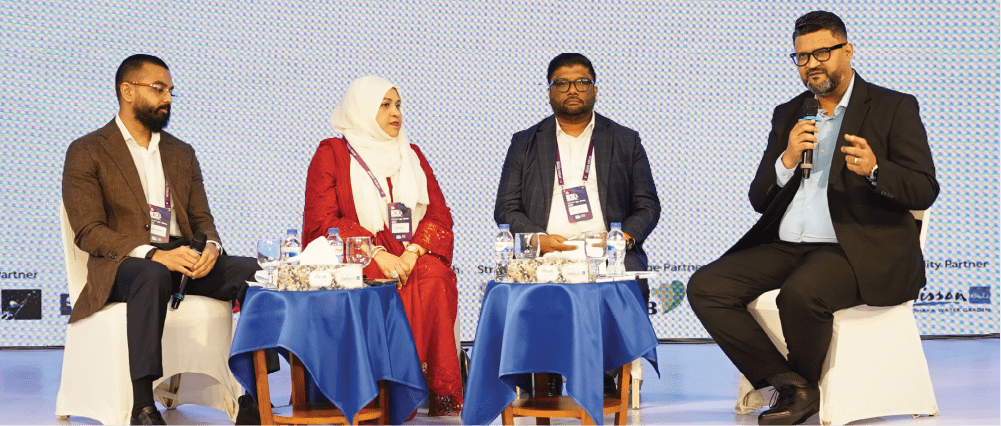
From Factory to Consumer: Rethinking Bangladesh’s Apparel Value Chain for the New Retail Era
Moderator: Sajid Mahbub, Group CEO & Executive Editor, Bangladesh Brand Forum
Panellists: Fahima Akhter, Director, BGMEA; Director, Masco Group; Director, Maria B, Sana Safinaz, Sapphire; Shah Rayeed Chowdhury, Director, BGMEA; Director, Evince Group; Director, Miniso Bangladesh; Md. Junaid Abu Salay Musa, Director, Epyllion Group & Sailor
The third panel placed Bangladesh’s garment and apparel industry in direct conversation with retail strategy. The panelists acknowledged a more competitive environment as foreign and local brands multiply, and were candid about the adjustments still needed. Consumer research into preferences and purchasing behavior, they stressed, is not optional — it is what enables businesses to build effective domestic sales strategies and reduce over-reliance on foreign buyers. On technology, the position was clear: AI adoption in manufacturing is early-stage, but businesses need to start integrating basic tools now rather than waiting for full readiness. The cost of delay is cumulative, and companies that start now will be ahead of those who start later.
The panel pushed back on the assumption that global competitiveness requires sacrificing local relevance. The strongest apparel brands will be those that hold both simultaneously — meeting international standards in product quality and operational practice while remaining genuinely connected to local consumer tastes, cultural references, and price expectations. Building that connection requires active investment in consumer research and local talent, not just adaptation of models imported from elsewhere. Sustainability and social responsibility came up not as aspirational targets but as baseline expectations from both international buyers and domestic consumers. Any brand seeking long-term credibility in the retail sector needs to have incorporated these values into its actual operations — sourcing decisions, production practices, and workforce standards — rather than treating them as a layer of marketing language applied after the fact.
SESSION: KEYNOTE
SaleSync: Rethinking Sales Technology for the Modern Retail Ecosystem
Speaker: Sami Ashraf, Chief Executive Officer, Omni StrateG
Sami Ashraf closed the keynote program by reframing how the room thought about sales technology — not as a set of automation tools, but as an integration layer changing what is possible in retail sales management. The shift, he argued, has moved well past automation. It is now about connecting every part of the sales ecosystem so that data-driven recommendations flow in real time from market intelligence to field execution. He introduced the concept of asymmetric competition: smaller brands challenging larger players not across the full front but by targeting specific market weaknesses, using AI and tools like share-of-shelf analysis to concentrate resources where they have the most impact. This kind of targeted, intelligence-driven strategy was not available to smaller operators a decade ago. It is available now.
Technology-driven demand forecasting, when connected to supply chain systems, can break sales targets to the individual shop level — improving both planning precision and execution quality at the most granular point in the distribution network. His closing point was direct: real-time data analysis tells businesses where they are strong and where they are exposed, and that visibility is what converts market intelligence into commercial advantage that shows up in revenue.
The congress closed with a conviction that had built steadily across the day: knowledge — applied, specific, and operationally grounded — is the competitive currency of retail in Bangladesh right now. The tools exist. The data exists. The market opportunity is real and well-documented. What separates the retailers who capture it from those who watch it pass is not access to resources or information. It is the quality and consistency of the decisions they make with what they already have. That is the argument Bangladesh Retail Congress 2026 made, and it is one the industry would do well to carry beyond the room.
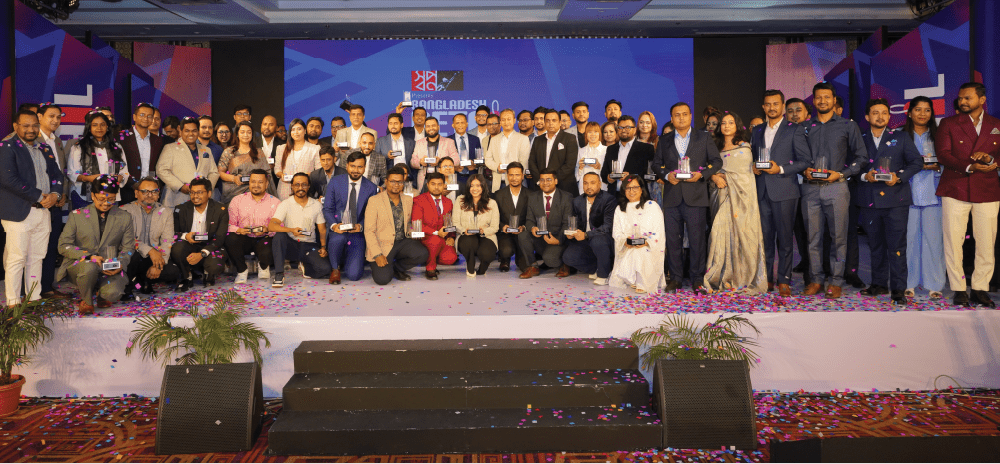
Celebrating Excellence at the Bangladesh Retail Awards 2026
The congress was followed the same evening by the 3rd edition of SHWAPNO presents Bangladesh Retail Awards powered by Singer and Bata, in association with Konka & Gree (Electro Mart Limited), at Radisson Blu Water Garden Hotel. The ceremony recognized the breadth and ambition of Bangladesh’s retail sector, presenting 64 accolades across 26 categories from 347 nominations submitted by 53 organisations — 40 initiatives received Winner recognition and 24 earned Honourable Mentions. The Best Retailer category was the most expansive, featuring awardees across 14 sub-categories including Jewelry, Café, Restaurants, Fashion and Apparels, Footwear, Mobile Handset, Food Court, Banks, Automotive, Furniture, Lifestyle, Cosmetics and Skin Care, Electronics, and Sweet and Savory. Three categories — Innovation in Last Mile Distribution, Inspiring Retailer of the Year, and Experiential Retailer of the Year — saw no awards presented, as the nominations received did not meet the required standard of excellence, reflecting a deliberate commitment to holding the bar rather than distributing recognition for its own sake.
Partners: SHWAPNO presents Bangladesh Retail Congress powered by Singer and Bata, in association with Konka & Gree (Electro Mart Limited), and SHWAPNO presents Bangladesh Retail Awards powered by Singer and Bata, in association with Konka & Gree (Electro Mart Limited), are initiatives of Bangladesh Retail Forum, in collaboration with Bangladesh Brand Forum. Strategic Partner: Bangladesh Garment Manufacturers and Exporters Association (BGMEA); Knowledge Partner: Marketing Society of Bangladesh (MSB); Official Carrier Partner: Turkish Airlines; Hospitality Partner: Radisson Blu Water Garden Hotel; PR Partner: Backpage PR.