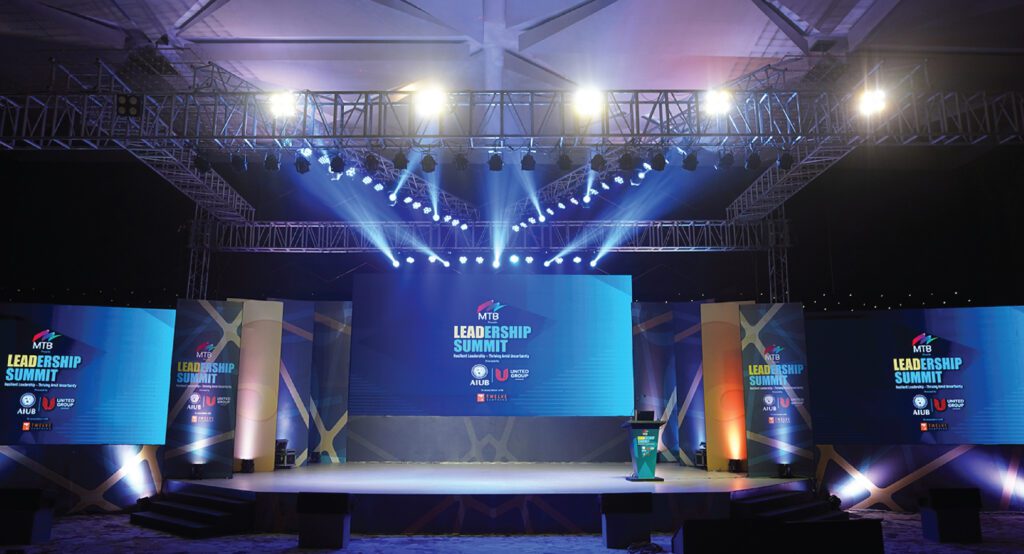
As Bangladesh steps into a decisive new phase of its development journey, the question of who leads, how they decide, and what values shape their choices has moved to the centre of the national conversation. Against a backdrop of global volatility, shifting economic currents, technological disruption, and rising social expectations, the 9th Leadership Summit brought together the country’s most influential business leaders, policymakers, development practitioners, academics, and investors to examine what resilient leadership really demands. Presented by Mutual Trust Bank PLC, Powered by AIUB (American International University-Bangladesh) and United Group, and in Association with Twelve Clothing, the summit framed leadership not as a static role but as a living capability that must evolve with uncertainty, absorb shocks, and still keep institutions, markets, and people oriented toward progress.
The day opened with a clear call for strategic maturity and institutional readiness. Addressing the summit as Honourable Chief Guest, Professor Dr. A. K. Enamul Haque, Director General, Bangladesh Institute of Development Studies, stressed that Bangladesh is entering a defining stage where operational success alone will not be sufficient. He reminded participants that leadership must now be able to understand data, anticipate disruption, and respond with clarity and purpose, emphasising that resilience is not merely about surviving uncertainty, but about building systems that can learn, adapt, and sustain progress even when conditions shift.
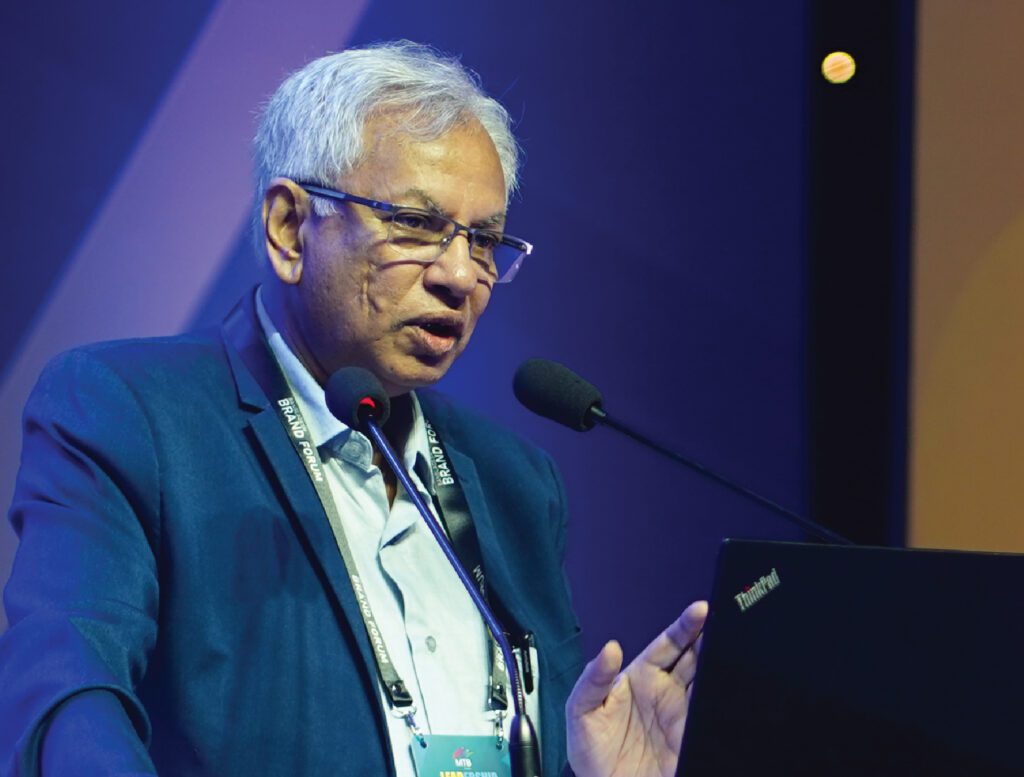
Welcoming the participants, Shariful Islam, Founder and Managing Director, Bangladesh Brand Forum, stated, “The future of Bangladesh will not be shaped by economic ambition alone — it will depend on the quality of leadership that guides it. Today, the demand is for leaders who are transformative in vision, ethical in intent, adaptive in practice, and resilient in crisis. This summit is a call to rethink leadership — not just as authority, but as responsibility, stewardship, and long-term value creation.” His remarks anchored the summit in a shared understanding that the coming decade will test not just business models, but the moral and strategic depth of those who lead them.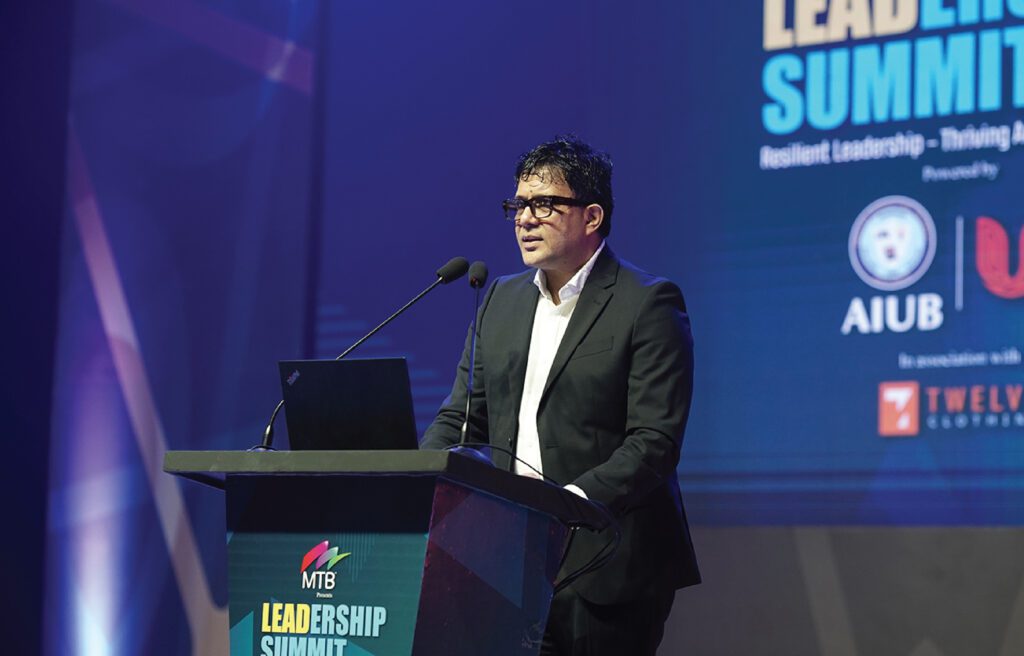
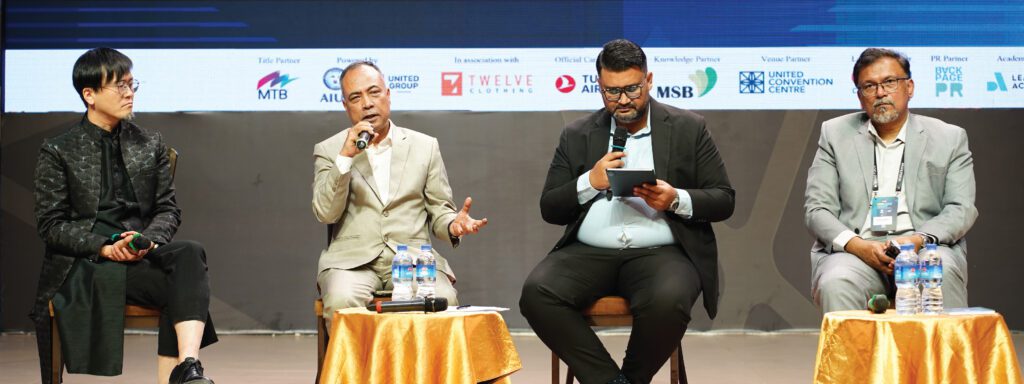
Throughout the day, the summit explored how resilient leadership must connect financial discipline with institutional trust, creative adaptation with structural design, and national ambition with the development of people and systems. Conversations moved from the macro foundations of economic resilience to the micro realities of coaching, mentoring, team culture, and decision -making under pressure. Together, these dialogues positioned resilient leadership as both a strategic necessity and a moral imperative for Bangladesh as it navigates turbulence and seeks to build an economy capable of inclusive, long-term progress.
The day’s agenda featured 3 Keynote Sessions, 3 Panel Discussions, and 1 Insight Session.
For readers, what follows is a comprehensive feature capturing the full depth of the summit — its arguments, provocations, warnings, and ambitions. The sessions ahead offer an unfiltered view of how resilience is being defined inside Bangladesh’s leadership class, and how strategy, governance, creativity, and institutional maturity are converging into a new standard for decision-making.
SESSION: KEYNOTE
Theme: The Financial Foundations of Resilient Growth: What Business Leaders Must Understand Now
Speaker: Professor Dr. A. K. Enamul Haque, Director General, Bangladesh Institute of Development Studies (BIDS)
The keynote argued that Bangladesh must move beyond short-term reactions to global pressure and instead build an anticipatory strategy for tariff shifts, supply-chain realignment, and changing trade rules, positioning itself before external forces dictate adjustment. It emphasized that GDP growth means little without a parallel rise in leadership maturity across business and policy spheres, because economic transitions require decision-makers who can read global signals, absorb new knowledge, and guide institutions through complexity rather than merely chase quarterly results. Professor Dr. A. K. Enamul Haque framed institutional trust as the central condition for financial stability, noting that capital remains inside an economy only when governance inspires confidence and rules appear credible. The keynote also expanded resilience into environmental management, calling for scientific farming, soil protection, and responsible land use as economic safeguards that protect public health and long-term productivity rather than allowing extractive habits to erode national assets. Urban mobility was presented as a key determinant of competitiveness: cities cannot act as engines of growth if congestion destroys time, efficiency, and business output, making integrated transport systems a structural economic reform rather than a civic convenience. Finally, the session pushed corporate leaders to adopt the mindset of social partners — contributing to environmental responsibility, institutional credibility, and community resilience — arguing that sustainable growth will depend on companies that balance returns with societal value.
SESSION: PANEL DISCUSSION
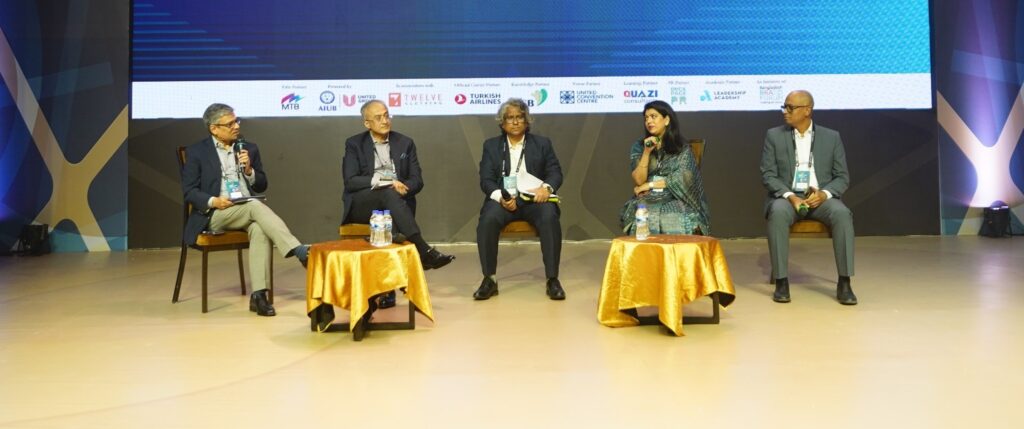
Theme: The Leadership Currency: Building Financial Discipline for a Sustainable Future
Moderator: Professor Imran Rahman, Professor, School of Business, University of Liberal Arts Bangladesh (ULAB).
Panellist: Zinnia Tanzina Huq, Chief Financial Officer & Finance Director, Unilever Bangladesh Limited; Mohammad Enamul Huque, Managing Director & Country Chief Risk Officer, Standard Chartered Bank; Bidyut Kumar Saha, Lead Investment Officer, Asian Development Bank; Sabbir Ahmed, Chief Financial Officer, BRAC.
The panel emphasized that financial discipline must begin with a mindset of protection rather than expansion, arguing that leadership earns its legitimacy by safeguarding consumer value before chasing scale. Instead of treating cost management or hedging as defensive tactics, the dialogue framed them as strategic levers that preserve confidence, ensure supply continuity, and maintain cost certainty during external shocks. Financial discipline in this sense becomes a consumer trust mechanism, positioning leaders to stabilize expectations when inflation, geopolitical disruptions, or currency volatility threaten the market.
The discussion also stressed the cultural foundations of discipline, noting that systems, regulations, and strategies will inevitably change, but organizations anchored in strong values remain steady, transparent, and accountable through uncertainty. A values-driven environment sharpens judgment in ambiguous situations and keeps teams aligned with long-term priorities rather than short-lived incentives.
Panelists outlined an MRF mindset built around monitoring, responsibility, and foresight, arguing that risk cannot be transferred, outsourced, or delegated away. True discipline requires every level of leadership to understand the exposures they create, take ownership of consequences, and plan for risks before they surface. In that context, strong audit capabilities, institutional curiosity, and visible accountability were presented as internal guardrails that test optimism, interrogate assumptions, and ensure that opportunities are assessed for long-term value protection rather than near-term rewards.
The session underscored that leadership must dismantle functional silos so that finance, innovation, and social purpose reinforce one another instead of competing for attention. When financial logic collaborates with frugal innovation, simple ideas often yield meaningful efficiency gains, unlock hidden solutions, and redirect resources toward productive use.
SESSION: KEYNOTE
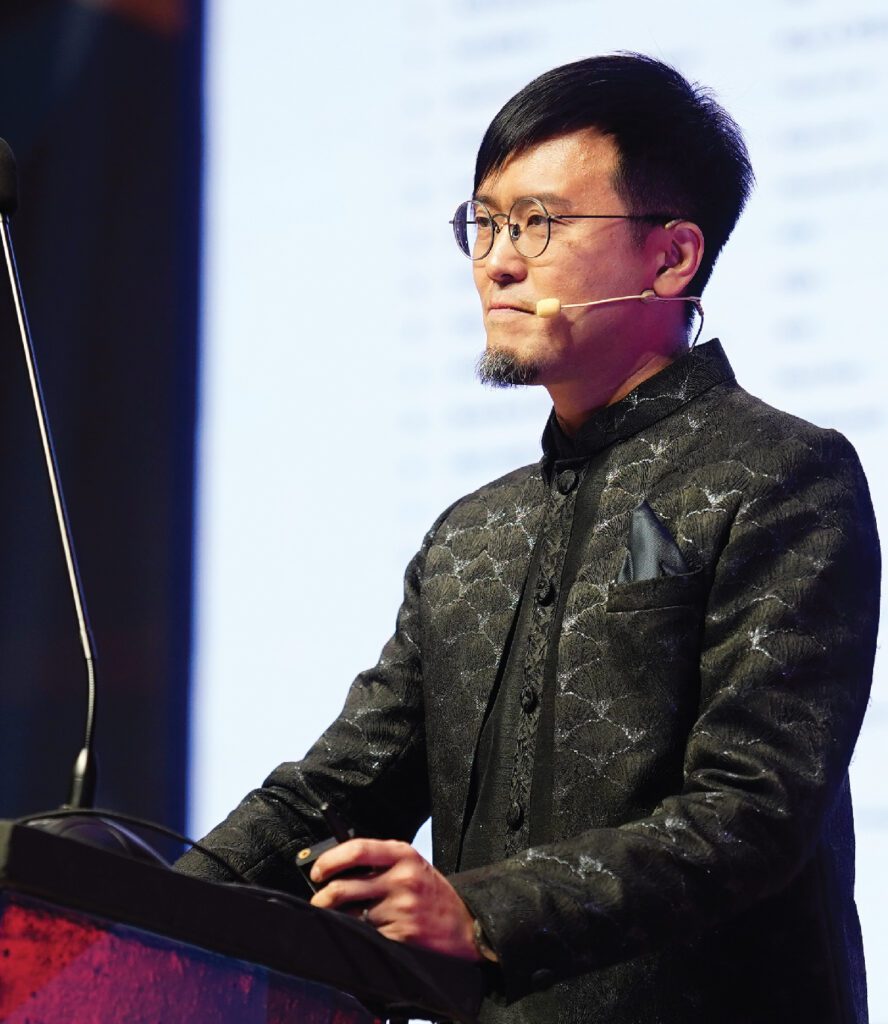
Theme: Designing For Resilience – How Creative Leadership Can Shape a Thriving Future
Speaker: Eisuke Tachikawa, Founder & Design Strategist, Nosigner Professor, Keio University
The keynote contended that contemporary leadership is defined by the capacity to adapt, calling for flexible shifts in thinking and action as climate, society, and business pressures evolve. It presented resilience as a blended approach in which land management, infrastructure planning, and everyday citizen behaviour advance together, so that systems can absorb disruption rather than collapse under stress. In this context, Eisuke Tachikawa suggested that moments of crisis should not be interpreted as failure but as openings to redesign, mutate, and generate improved models through creative adaptation. He stressed that imagination is most powerful when supported by method, highlighting stages of ideation, modulation, assimilation, reduction, substitution, separation, inversion, and integration as a purposeful architecture that turns creativity into usable outcomes. By focusing on natural ecosystems, he encouraged leaders to treat nature as the master designer, offering guidance on climate responsiveness, disaster preparedness, and urban resilience. The keynote closed by elevating observation as the fuel of innovation, noting that the more leaders watch, study, and inquire into the world around them, the more possibilities they uncover and the more capable they become of shaping a thriving future.
SESSION: PANEL DISCUSSION
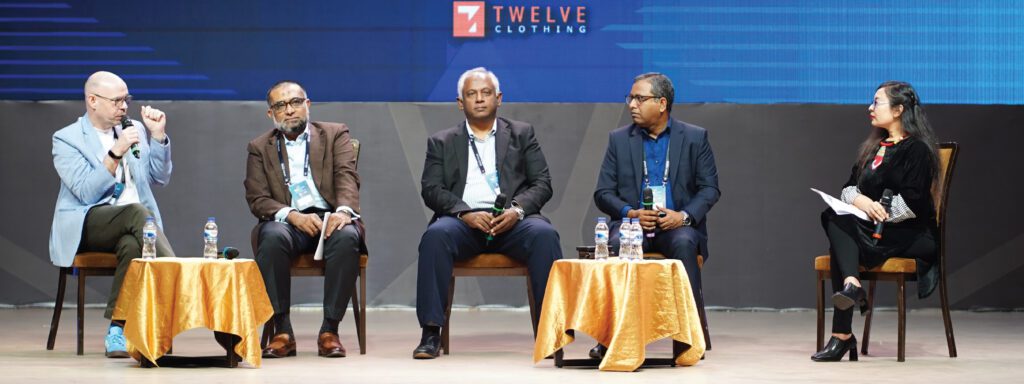
Theme: Leadership Skills for Thriving in Volatile Times
Moderator: Moutushi Kabir, Senior Director, People, Culture and Communications, BRAC.
Panellist: Munawar Misbah Moin, Group Director, Rahimafrooz (Bangladesh) Limited; Ruhul Quddus Khan, Chief Executive Officer & Managing Director, Unilever Bangladesh Limited; Johan Buse, Chief Executive Officer, Banglalink Digital Communications Limited; Mahtab Uddin Ahmed, President, ICMAB Founder & Managing Partner, BuildCon Consultancies Limited.
The panel maintained that volatile periods reveal the core nature of leadership because when unpredictability accelerates and pressure intensifies, people instinctively look to a leader not for perfection but for emotional stability, clarity of direction, and the confidence that decisions are still anchored in purpose. It stressed that mindset becomes an essential determinant of performance in such moments, noting that calmness, composure, and a disciplined ability to frame situations constructively can prevent teams from spiralling into anxiety or distraction. Rather than treating stress as a signal to retreat, the conversation encouraged leaders to steady their psychology first, since unsettled thinking at the top often cascades into wider organisational uncertainty.
The discussion also cautioned that prolonged deliberation can become counterproductive during a crisis. Over analysing threats or waiting for perfect information slows momentum and creates hesitation at the exact moment when action is required. Leaders, it suggested, need the reflex to reset their mental posture quickly, prioritise practical solutions, discard non essentials, and help teams move from paralysis to execution.
Looking ahead to emerging risk, the panel positioned artificial intelligence and other disruptive technologies as forces that demand heightened curiosity, structural openness to learning, and a culture that normalises experimentation. Leaders must not only educate themselves but also prepare their organisations for new technical, ethical, and workforce realities, ensuring that talent is able to evolve rather than resist transformation.
The speakers noted that recruitment and team design require a renewed focus on emotional steadiness, attitude, and lived experience, arguing that technical competence becomes insufficient in environments defined by shock. Resilience is often shaped by exposure to difficulty, and leaders who understand this tend to build stronger teams.
Ultimately, the dialogue reinforced that speed and clarity in a crisis arise from empowerment, not command -and-control. Teams deliver better outcomes when responsibility is distributed, expectations are clear, and people feel authorised to act rather than wait for permission. In that framing, leadership in volatile times becomes the art of psychological steadiness, informed decision-making, and organisational trust that enable institutions to move forward even when certainty is absent.
SESSION: INSIGHT
Theme: Designing For Resilience – How Creative Leadership Can Shape a Thriving Future
Speaker: Eisuke Tachikawa, Founder & Design Strategist, Nosigner Professor, Keio University
The session distinguished between coaching and mentoring by highlighting that coaching sharpens short term performance, while mentoring builds long term capability, direction, and professional identity. It noted that effective mentoring cannot exist in a vacuum and depends on a strong performance management structure and a clear talent development process that aligns individual growth with organizational priorities. In discussing the interpersonal dimension, Shehzad Munim emphasized that mentoring succeeds only when trust is present and when the wider institution believes in investing in people rather than treating development as a transactional obligation. The session encouraged leaders to think beyond selectively nurturing a few high performers and instead expand the overall talent ecosystem so that capacity rises across the organisation. It concluded by framing mentoring as a philosophical, mindset-driven act focused on belief and guidance, while positioning coaching as a structured, performance-oriented mechanism designed to elevate immediate output.
SESSION: KEYNOTE
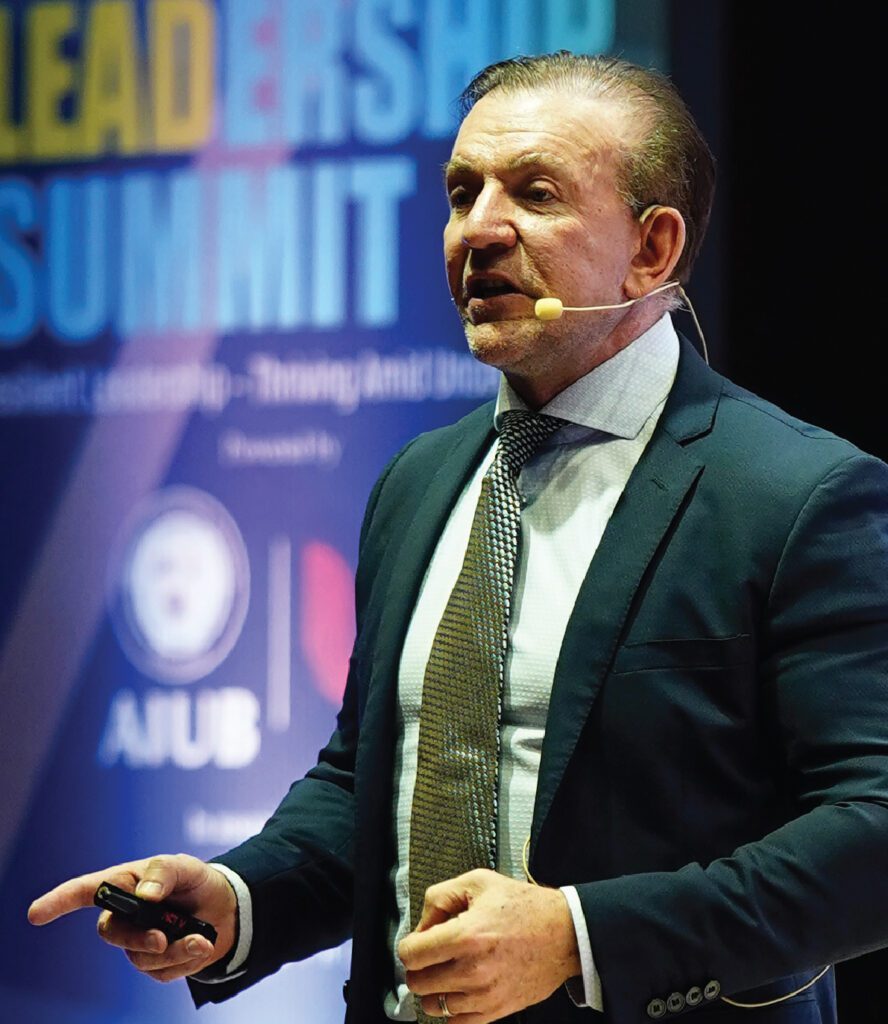
Theme: Resilient Leadership in Emerging Economies: Thriving Amid Turbulence and Transformation
Speaker: Professor Andrew Karl Delios, Provost’s Chair & Vice Dean, Business School, National University of Singapore.
The keynote maintained that leadership cannot operate independently of strategy, arguing that when strategic direction changes, leadership behaviour, mindset, and decision-making must evolve alongside it. It highlighted that traits such as empathy, curiosity, and authenticity gain real influence only when they align with organisational goals rather than functioning as abstract virtues. In the middle of the address, Professor Andrew Karl Delios stressed that systems shape leaders as much as leaders shape systems, because structure, incentives, and access to information guide people toward or away from high performance. He framed leadership as a design challenge in which governance, rules, and shared purpose channel individual ambition toward productive outcomes rather than self-serving behaviour. The keynote connected this to institutional health, noting that when institutions protect the collective interest, leaders naturally look beyond personal gain to pursue broader societal and stakeholder benefits. It concluded by calling for leadership education that sharpens awareness of the long-term consequences of decisions and cultivates values that balance aspiration with responsibility, enabling emerging economies to thrive amid turbulence and transformation.
SESSION: PANEL DISCUSSION
Theme: Charting the Path Forward: Plugging the Faultlines for Sustained Growth
Moderator: Sajid Mahbub, Group Chief Executive Officer & Executive Editor, Bangladesh Brand Forum.
Panellist: Tanveer Mohammad, Chief Corporate Affairs Officer, Grameenphone Limited; Abdullah Hil Nakib, Deputy Managing Director, TEAM Group; Eisuke Tachikawa, Founder & Design Strategist, Nosigner; Professor, Keio University.
The panel observed that persistent uncertainty surrounding energy policy, tax rules, and regulatory interpretation continues to undermine investor confidence, creating hesitation rather than expansion at a time when Bangladesh needs bolder commitment from domestic and international capital. Stable, predictable policymaking was presented as a foundational requirement for sustained growth, as without clarity on costs and compliance, businesses defer investment, push decisions offshore, or operate well below capacity. The conversation also underscored a structural gap between national growth ambitions and the readiness of core infrastructure, noting that logistics constraints, slow mobility, and unreliable energy supply still hinder the emergence of advanced industries. Growth will not accelerate meaningfully, it suggested, unless physical capacity and power reliability expand in parallel with economic targets.
The panel adopted sustainability as a strategic compass rather than a peripheral aspiration, arguing that small, targeted interventions at the enterprise level can scale into national impact if business models incorporate inclusivity, long-term responsibility, and shared value. Attention then shifted to technology and artificial intelligence, which were identified as critical accelerators for energy optimisation, educational transformation, security enhancement, and operational efficiency. However, the speakers cautioned that technology cannot deliver structural benefit without cross-sector collaboration, policy support, and a national digital framework that guides investment and adoption.
The dialogue maintained that Bangladesh holds strong appeal as an investment destination, with market demand, demographics, and economic momentum working in its favour. Yet policy alignment, regulatory clarity, and faster administrative responsiveness must match the pace of business decision-making if the country wants to unlock resilient, inclusive expansion rather than intermittent gains.
Finally, the panel elevated talent as a defining bottleneck, arguing that workforce readiness, managerial depth, and technical skills are uneven across sectors. Without stronger capability development and more deliberate partnerships between industry and academia, Bangladesh risks eroding its competitive position in regional and global markets. In this framing, growth becomes contingent not only on capital and policy but also on the strategic development of human potential.
Bangladesh C-Suite Awards 2025 — Setting a Higher Bar for Leadership
The transition from the Leadership Summit to the Bangladesh C-Suite Awards 2025 offered a useful contrast. After a full day of questioning how resilient leadership should operate, the awards placed attention on the individuals already trying to deliver it inside their organisations. This year, 24 leaders were recognised across 23 categories — a small group, drawn from a wide pool of nominations, representing companies that are competing under pressure rather than comfort.
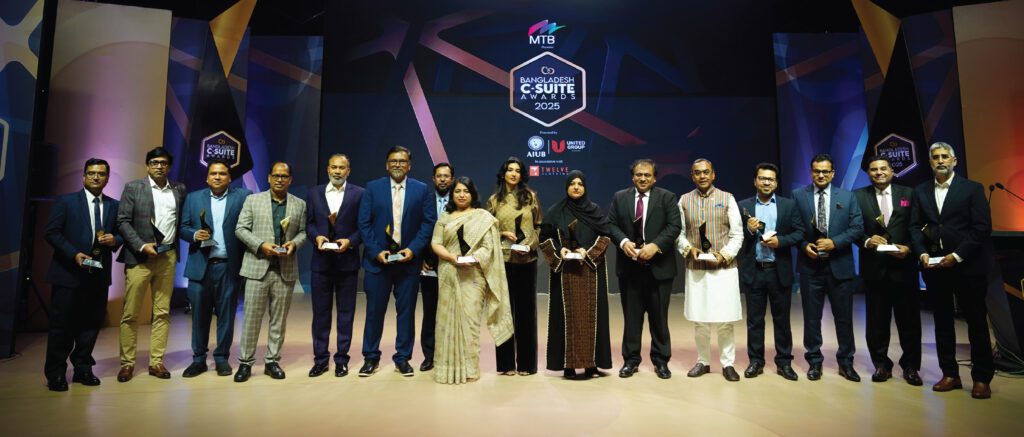
More than a ceremonial evening, the awards signalled how the expectations around corporate leadership have shifted. With 102 submissions from 51 organisations, the appetite to benchmark performance has grown, and the willingness to put leadership credibility under evaluation is becoming normalised. The process was handled by an independent council with backgrounds in corporate stewardship, economics, consultancy, and business education — a reminder that recognition now comes with scrutiny, not ceremony.
The tone of the evening was set early. “The strength of a nation lies in the quality of its leadership,” Shariful Islam noted in his opening remarks, framing the awards not as corporate applause but as a prompt to think beyond profit, short-term gain, and institutional habit. In that spirit, the C-Suite platform has steadily evolved into a reference point for how Bangladesh wants its leaders to show up — strategic in ambition, disciplined in execution, and accountable in public view.
Since its inception, the award has evolved into one of the country’s most trusted platforms for recognising corporate excellence—spotlighting leaders who not only deliver results but set new benchmarks for corporate leadership in Bangladesh.
PARTNERS
The Leadership Summit and Bangladesh C-Suite Awards 2025 2025 were presented by Mutual Trust Bank PLC, Powered by AIUB (American International University-Bangladesh) & United Group. In Association with partner —Twelve Clothing. Official Carrier Partner —Turkish Airlines; Knowledge Partner — Marketing Society of Bangladesh (MSB); venue partner — United Convention Centre; Learning Partner — Quazi Consultants; PR Partner — Backpage PR; Academic Partner — Leadership Academy. Leadership Summit 2025 is an initiative of Bangladesh Brand Forum.