
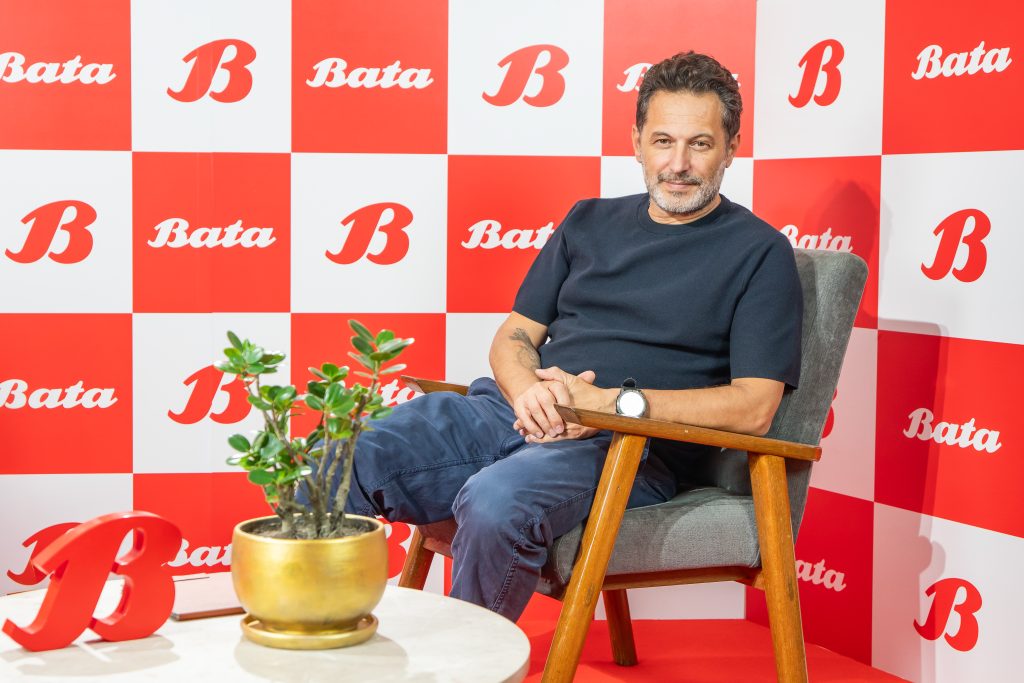
Martino Boselli, Chief Commercial Officer of Bata, lately visited Bangladesh in November 2026. During the visit, Bangladesh Brand Forum spoke with him about Bata’s commercial direction, the role of Bangladesh in the group’s strategy, the use of data in decision-making, and leadership.
Based in Lausanne, Switzerland, Martino is responsible for driving commercial performance across Bata’s markets, partnering with operating companies to accelerate growth and strengthening execution across planning, trading, pricing, assortment and go-to-market. He brings more than 20 years of international experience across retail, wholesale and e-commerce, including roles at VF Corporation, Safilo, Amazon, Trussardi and Miroglio Fashion. Most recently, he served as Worldwide Chief Commercial Officer at United Colors of Benetton, where he led a global turnaround and managed a €1.1bn business across regions and channels.
BBF: What led you to join Bata at a time of global economic volatility?
Martino Boselli: Bata has a unique setup. It is highly relevant in markets such as Bangladesh, India, Pakistan and Southeast Asia, which are its core markets, and these are the markets developing fastest, much faster than the western side of the world. Markets like Bangladesh present exceptional opportunities for growth, driven by strong consumer demand, evolving aspirations and significant potential for expansion. While Europe continues to focus on innovation and retail efficiency, Bangladesh offers an exciting environment to accelerate growth and shape Bata’s future.
In countries like Bangladesh, there is footfall, there is demand, and consumers want to buy more. That is a rare opportunity. Most big global brands do not belong to the markets they sell in. They arrive and open their businesses, but they are not from there. Bata has been present in its markets for so long that consumers consider it their own. In Chile, people will tell you Bata is a Chilean brand. In Bangladesh, they say it is Bangladeshi. In Mumbai, it is Indian, and in Jakarta, it is Indonesian. I do not know another company of global scale that remains this relevant country by country. Working for such a company means you start with muscles that are already developed. That is why I chose it.
BBF: How do you see the Bangladesh market, and what is Bata’s strategy for the region?
Martino Boselli: What makes this market unique is the pace of development. Consumers in Bangladesh, as in other countries in the region, want to grow. Their purchasing power is rising, and they are asking for more valuable products, not simply cheaper ones. Demand as a whole is changing, and that is the challenge for Bata. Bata serves everybody, but Bata sets the standard rather than following it.
In Bangladesh, I see a company raising quality in its materials, in how its shoes are made, and in the technology that makes them among the most comfortable in the market. Our task is to understand where demand and expectations are going, build our proposition around them, and at times set new standards.
BBF: What does this growth mean for Bata’s retail presence and product strategy?
Martino Boselli: Bangladesh is growing, so we need more stores, more locations and larger locations. We also need to evolve our product strategy. We have centralised design in a global design centre in Europe, with a team drawn from Bangladesh, India, Southeast Asia and Europe. The team works across countries and reads local trends alongside global ones. Global trends sooner or later become relevant in every country, and a purely local brand cannot anticipate them in the same way. We set global standards and then add local knowledge. Bangladesh also contributes strong product development expertise to the wider group.
BBF: How does Bata use market data to guide its decisions?
Martino Boselli: Our new centre of excellence in Europe monitors more than 800 competitors every day. We can see what Nike is doing in Bolivia, what a Chinese private label is doing in Jakarta and what our competitors in Dhaka are doing. The system is AI-based. We launched it two weeks ago, after five to six months of development. It tracks market dynamics in detail: who is applying markdowns, which products sell best, at which price points, and what the products are made of. We receive weekly reports on all of it. A local brand, however strong, knows its own market well, but it cannot see what is happening elsewhere.
BBF: Which factors will drive change in fashion and footwear in 2026 and beyond?
Martino Boselli: The first is weather. Weather patterns are shifting, and with a global view the pattern is clear. Seasonality matters a great deal, more in apparel than in footwear, but in both. A business plans its assortment for a cold or warm window, and then the expected weather does not arrive. The second is trends, which can enter the market very quickly. In both cases, speed is what matters. If you have the time to adjust your intake plan and assortment strategy, you can manage the deviation.
This is why a good manager is, first, a precise planner. But once the plan is done, the focus shifts entirely to managing the deviation. That is a combination of science, because you work with numbers, and art, because you have to understand what is happening and work with people. A manager is judged by how well he manages the deviation while the business is running, not only by the quality of his plan.
BBF: How has working across different cultures shaped you as a leader?
Martino Boselli: The people, markets and cultures were among the reasons I joined Bata. I see strong curiosity, commitment, and a willingness to embrace new ideas in markets like Bangladesh. That energy and resilience stand out, offering valuable perspectives and opportunities for growth across our global business. A wholesale market in Dhaka offers a fascinating example of entrepreneurship and efficiency. I see traders who take pride in their work, know their products and shops inside out, and make remarkable use of every square foot. There is precision, resourcefulness and strong commitment in how they operate. This is what makes working in markets like Bangladesh so rewarding, and there is much to learn from it. I spend nearly 80% of my time travelling because being close to markets, people and their everyday realities gives me perspectives that are difficult to gain from behind a desk in Lausanne.
BBF: What advice would you give the next generation of chief commercial officers?
Martino Boselli: I am not sure I am the right person to give advice. I can only share what has worked for me, and luck played its part. The first thing is curiosity. Stay curious about people, markets and new ideas. The second is not to fear mistakes. I have made many, and everyone does. Fear of making them keeps people standing still, and then nobody improves. The third is to keep the long term in view. Daily, weekly and quarterly objectives matter, and we must deliver them, but they should never come at the cost of the long term. That is especially true in a career. Ask yourself where you want to be in ten years and work towards it with patience. If you hold on to these three things, I believe the results will follow.
Interviewed by Mohammad Sifat


