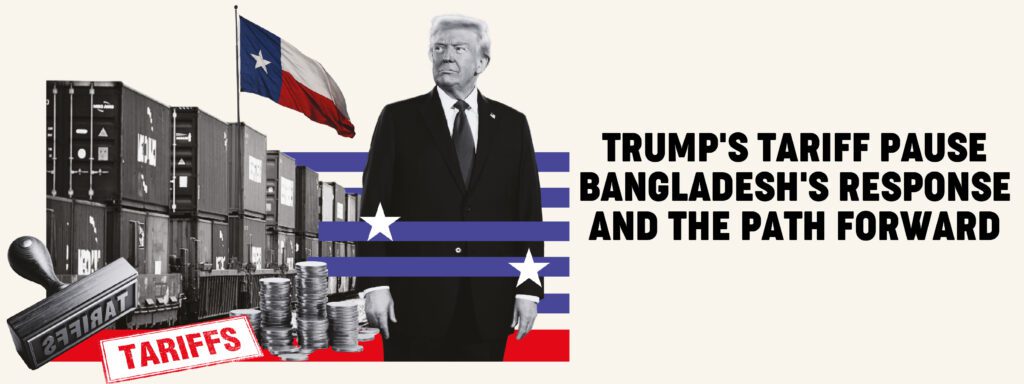
In early 2025, US President Donald Trump’s re-election brought with it the return of his aggressive tariff agenda. Unlike the first round of tariffs during his previous term, which mostly targeted economic rivals like China, this time Trump expanded his vision. He introduced blanket tariffs on imports, with a sweeping 10% universal tax and sector-specific levies of up to 25% on steel, aluminium, automobiles, and textiles. For an export-dependent country like Bangladesh, the announcement was a shock. Within days, the country saw the ripple effects of it. Orders got cancelled, contracts were frozen, and anxiety arose in Dhaka’s industrial corridors.
Bangladesh’s ready-made garment (RMG) industry, which contributes more than 80% of the nation’s export earnings, relies heavily on the US market. While Bangladesh wasn’t initially named among primary targets, the fear was palpable. The unpredictable nature of Trump’s trade policy, his disdain for multilateral norms, and his history of treating even allies as economic adversaries created a high degree of uncertainty. Adding fuel to the fire was Trump’s decision to impose secondary tariffs. These targeted countries engaging with US-sanctioned states. Since Bangladesh imports LNG from Russia, there was concern that it could be caught in the crossfire. Exporters, already grappling with rising input costs and a fluctuating taka, feared that garments or other goods might face sudden levies. The cancellation of several US-bound orders further intensified concerns. Local newspapers buzzed with anxiety. Reports showed exporters describing an atmosphere of “chaotic confusion” as buyers paused negotiations, awaiting clarity on tariff lists. Many factories, particularly small and medium ones without diversified markets, began slowing production. The Dhaka Stock Exchange dipped slightly, reflecting general unease.
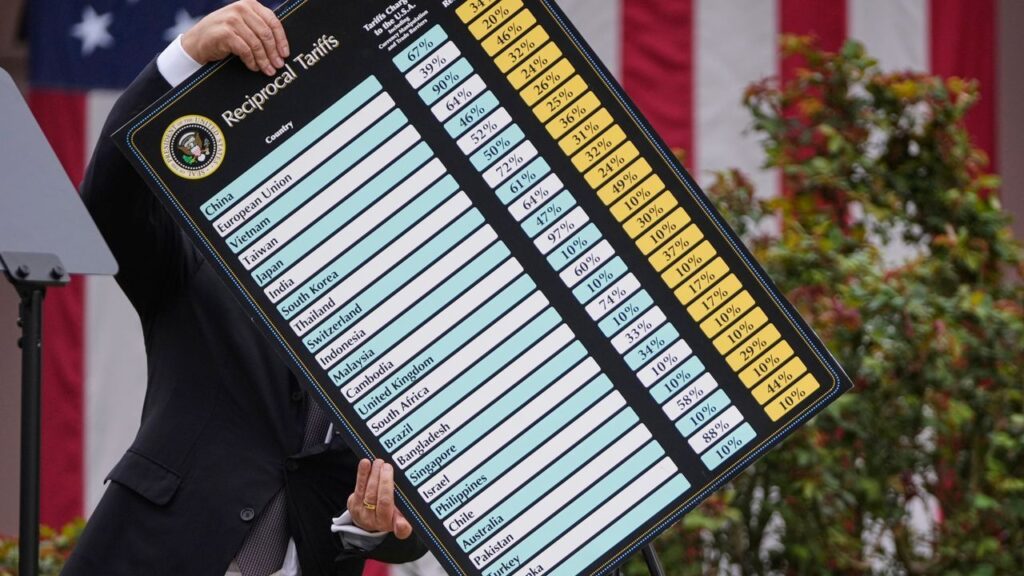
The government moved swiftly. A series of high-level meetings were convened between the Ministry of Commerce, the Bangladesh Garment Manufacturers and Exporters Association (BGMEA), and trade advisors. At the heart of this response was a realisation: Bangladesh, as a small economy in global trade theory, had little pricing power or influence but needed smart diplomacy and regional agility. The turning point came when Nobel Laureate and the current Chief Advisor, Dr Muhammad Yunus wrote a direct and impassioned open letter to President Trump. In it, Yunus emphasised the unintended harm the tariffs would cause to millions of poor workers in Bangladesh, especially women in the garment sector. His moral appeal and international stature helped bring visibility to the issue. Shortly afterwards, Trump announced a 90-day suspension of the new tariff measures, except for Chinese goods, which remained subject to a 145% tariff.
This pause provided Bangladesh with breathing space, a window to recalibrate. But the relief was mixed with realism. As Trade Advisor Ahsan H. Mansur noted in a press briefing, “This is a reprieve, not a resolution. We need to use this time strategically.” Mansur outlined three immediate priorities for the country: stabilising the taka, securing long-term trade deals, and diversifying export markets. The Bangladesh Bank began easing the exchange rate towards a more market-based regime. The overvalued taka had long been a concern for exporters, as it made Bangladeshi goods less competitive. A controlled depreciation was initiated, aligning the currency more closely with real market conditions. Simultaneously, the central bank intervened to reduce volatility and curb speculative dollar buying. On the trade front, the Ministry of Commerce accelerated talks with Asian partners. Initial discussions were held with Vietnam, Indonesia, and India to form regional supply chain alliances. There was also outreach to Chinese firms seeking to relocate production outside China to avoid the US tariffs. Bangladesh positioned itself as a low-cost, stable alternative. The BGMEA launched an aggressive campaign to reassure US buyers. CEOs of major US brands like Walmart, Target, and Gap received formal communication that Bangladeshi factories were unaffected for the moment and committed to compliance and quality. “It’s not just about tariffs now,” said Rubana Huq, a former BGMEA president. “It’s about building trust amid chaos.”
Preparing for Day 91: Post-Tariff Strategy
Everyone understands that the 90-day pause is tactical. It gave the Trump administration time to recalibrate its strategy and perhaps extract concessions through bilateral negotiations. For Bangladesh, that means the sword still hangs. The end of this window could bring back tariffs unless compelling alternatives are in place. One strategy is seeking a temporary preferential agreement with the US, possibly modelled on the Generalised System of Preferences (GSP) programme. Though Bangladesh lost GSP privileges in 2013 due to labour concerns, recent improvements in compliance and safety could strengthen its case for reinstatement. With global inequality back in the spotlight, Dhaka is emphasising its role in sustainable and ethical sourcing. Another is deepening regional integration. The Asian Development Bank has already suggested that countries like Bangladesh will benefit if supply chains become more regionalised. By reducing reliance on any one market—especially an unpredictable one like the US—Bangladesh can build economic resilience. Countries like Vietnam, which has navigated US-China tensions with agility, offer models to emulate.
Enterprise-level reforms are also on the agenda. As Advisor Mansur pointed out, “If Bangladesh wants to win in a volatile global market, it must improve productivity.” This includes automating parts of the production process, investing in worker skills, and digitising supply chains. The government is also pushing for simplified customs procedures and faster port clearance to reduce shipment times.
The Bigger Picture: Inequality and Economic Sovereignty
Many economists argue that Trump’s tariff war, under the guise of protecting American jobs, is triggering a wave of instability in the Global South. Countries like Bangladesh, which did not contribute to the structural trade imbalances Trump decries, are bearing disproportionate costs. These policies are fuelling currency depreciation, increasing borrowing costs, and jeopardising fiscal stability in developing nations.
Indeed, in the month following Trump’s initial tariff announcement, sovereign bonds from lower-middle-income countries like Bangladesh saw increased yield spreads. Investors were demanding higher risk premiums, anticipating turbulence. While Bangladesh remains in relatively good fiscal shape compared to peers, a prolonged trade shock could derail growth projections. The concern isn’t just economic. Trade uncertainty is fuelling social anxiety. For workers in the garment sector—many of whom live pay cheque to pay cheque, even a small disruption can mean skipping meals or withdrawing children from school. The government has urged exporters not to lay off workers prematurely. The World Bank has been approached to create a contingency credit line for vulnerable sectors.
Way Forward: From Panic to Preparedness
If there is a silver lining to this crisis, it’s that it has exposed the vulnerabilities of Bangladesh’s trade dependence on the US and EU. For too long, the country relied on a few large markets and a single dominant sector. The Trump shock is a wake-up call. Diversification of products, markets, and partners is now the buzzword. There is renewed focus on growing non-RMG exports like pharmaceuticals, jute goods, and light engineering. Bangladesh is also exploring trade agreements with ASEAN and Middle Eastern countries. But perhaps the biggest shift is philosophical. There is a growing realisation that developing economies must build resilience not just through exports but by boosting domestic consumption, investing in infrastructure, and building stronger safety nets. As Trump unravels the liberal trade order, the Global South must chart a new course, one less dependent on volatile Western policies. The 90-day pause may have delayed the blow, but it has also given Bangladesh a rare opportunity: to adapt before impact. What the country does with this windfall will shape not just its economy for the coming year but its strategic position in a rapidly shifting global trade landscape.
Trump’s tariffs have once again shown how the economic decisions of a superpower can rattle smaller nations. For Bangladesh, the crisis triggered panic, but it also sparked a coordinated response from policymakers, industry leaders, and civil society. From Muhammad Yunus’ moral diplomacy to the government’s pragmatic market reforms, Bangladesh is doing what small countries must: act quickly, think regionally, and plan for uncertainty. As the countdown to the end of the 90-day suspension continues, the urgency is real. But so is the potential to turn this disruption into a moment of transformation.
Author: Anika Tasnim