Podcasting has shifted from a fringe medium to a central part of many content strategies. What began as a casual format with a niche audience now serves as an obvious medium for brands to reach, retain, and relate to their audiences. The expectations have changed, and with them, so has the way podcasts are produced, presented, and evaluated.
This change did not happen all at once. It followed years of experimentation, audience behaviour analysis, and a growing understanding that time spent listening is more valuable than clicks or impressions. Podcasts hold attention. That alone makes them stand out in a media environment saturated with distractions.
Podcasts as Multi-Format Content Hubs
Earlier, publishing a podcast often meant uploading audio to a single platform and sharing a link. Today, most podcasting efforts involve a content system rather than a one-off act of publishing. A single 45-minute conversation can generate a highlight reel for YouTube, short video snippets for Instagram or TikTok, a newsletter recap, a blog post focused on a specific theme, and a live conversation with an audience. None of these are treated as secondary; they are considered parts of the same ecosystem.
The objective is not to repeat the message endlessly but to shape it for different formats and behaviours. Each output provides its own entry point into the original conversation. This approach encourages both consistency and repetition without becoming tiresome. When applied with focus, it allows brands to communicate one idea in multiple ways, without fragmenting the story.
The Visual Layer Now Matters
Many podcasts are still audio-first, but video has clearly changed how the medium is experienced. Audiences increasingly expect a visual layer not because of aesthetic demands, but because expression often carries more meaning when seen, not just heard. A shift in posture, a long pause, or eye contact between hosts can all add to the tone of a conversation.
Because of this, some teams now build out their podcast spaces with cameras and lighting in mind. That doesn’t mean every show needs to look like a film set. What matters is the ability to capture presence. As YouTube has grown into one of the most important podcast platforms, it’s no longer enough to think of it as an optional extra. For many listeners, video is now the primary format.
Less Script, More Structure
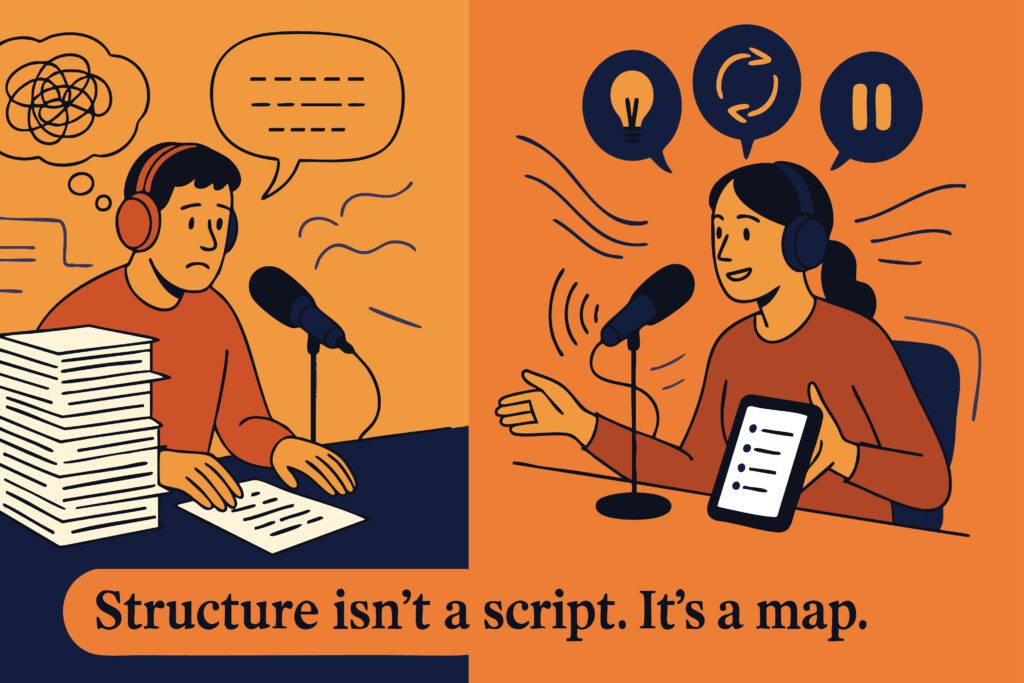
Audiences respond to conversations that feel natural but not aimless. The most effective podcasts strike a balance between preparation and spontaneity. While some scripts may help with introductions or transitions, heavy scripting tends to make content feel distant and over-controlled. On the other hand, completely unstructured discussions can quickly lose momentum or drift away from relevance.
Many experienced hosts work with outlines rather than word-for-word scripts. This helps them stay on topic while giving enough flexibility for unexpected turns or deeper reflection. The result is often more engaging, especially when the speaker is allowed to pause, change direction, or express uncertainty.
This also builds trust. Listeners can tell when a conversation is planned but not staged. That distinction shapes how a podcast is perceived, whether it feels like content or communication.
Guesting as a Strategy
Not every organisation needs to start its own show. For many, guest appearances on established podcasts offer a better return on time and resources. Done well, this can provide targeted exposure with minimal infrastructure. The trick is to treat these appearances as contributions, not commercials.
Good guesting means showing up with clarity, listening carefully, and responding in a way that adds to the discussion. It also means respecting the host’s format and audience expectations. The most effective guest segments are those that feel like a natural part of the show, not an interruption.
These appearances can also be repackaged. Clips from the episode, quotes from the conversation, or related blog posts can extend the reach and life of a single interview across other platforms.
From Listeners to Participants
Podcast audiences used to be passive. They listened, and that was enough. Now, the most resilient podcasts are the ones that find ways to include their audience, either during production or after release.
Some shows ask for questions ahead of recording. Others collect suggestions for themes or use listener polls to decide what gets discussed next. A few create dedicated spaces like chat groups or live sessions where ongoing conversation can take place. This doesn’t require large infrastructure, but it does require intention.
The difference is in tone. Listeners want to be invited, not recruited. When they feel like contributors, they become more invested, more likely to share content, and more willing to stay involved over time.
Sponsorships That Fit the Format
Advertising in podcasts has moved away from static inserts and toward something more considered. Sponsors today often prefer partnerships that allow for integration with the episode’s content or audience experience.
For example, some shows now dedicate entire episodes to topics that align with a sponsor’s area of interest. Others include live reads that are adapted to match the host’s style. What matters is that the sponsorship fits. If a brand’s presence in the episode feels disruptive or unrelated, listeners will notice and disengage.
The strongest partnerships don’t just offer visibility. They allow the podcast to do something it couldn’t do alone, whether that’s bringing in a specific guest, funding a live event, or producing additional content for subscribers.
Distribution Is a Process, Not a Push
Publishing an episode is only the starting point. Getting it in front of the right audience now depends on distribution systems that work across multiple platforms and formats.
Some listeners find episodes on Spotify or Apple Podcasts. Others encounter them through LinkedIn posts, Instagram reels, Substack emails, or direct messages from community members. The episode itself can remain unchanged, but the framing must shift depending on where it’s being shared.
To do this well, planning has to start early. The team producing the podcast needs to be in conversation with the team distributing it. It’s not about spreading content thin but about shaping it for different surfaces, each with its own rules and expectations.
What Metrics Actually Show
Download numbers still carry weight, but most podcast teams now look far beyond that. Listener behaviour tells a more complete story: how long people stay with an episode, where they stop listening, which segments are shared, and whether follow-up actions like signing up for a newsletter or attending a live event occur afterwards.
This data helps producers refine pacing, structure, and topic selection. It also gives marketers something more grounded than vague impressions. A high completion rate, for instance, often says more about value than a spike in traffic from a single post.
Importantly, none of these metrics functions in isolation. They work best when used to improve the listening experience, not just to measure performance.
Bringing Episodes Into Physical Space
More podcasts now exist both as recordings and as live events. These events range from theatre tours to pop-up recordings at conferences or coworking spaces. For creators, they offer a chance to connect directly with listeners. For brands, they offer a way to deepen engagement and build visibility in a format that stands out.
Live shows don’t need to be elaborate. A small audience, a live Q&A, or a panel discussion can all create moments that feed into the larger content system. When recorded and redistributed, these events extend the value of the podcast beyond the original episode.
Localisation Beyond Translation
As podcast audiences have become more global, simple translation is no longer enough. What works in one region may fall flat in another, even when the topic remains relevant. Language is just one part of cultural adaptation. Tone, references, pacing, and even humour may need to shift to match the expectations of different listeners.
Some companies now run multiple podcast tracks for different markets. These aren’t simply dubbed versions of the same show; they’re produced with separate hosts and context in mind. The aim is to connect, not just to replicate.
Technology can assist with the mechanical side, transcripts, summaries, and editing but the decision-making still requires human context. Local production partners or editorial advisors often play a key role in keeping the content grounded.
Final Observations
Podcasting in 2025 is no longer a side project. It is one of the few formats that still allows for long attention spans and thoughtful engagement. Whether through hosting, guesting, or supporting others, brands that approach it with discipline are more likely to see value that lasts.
This doesn’t require constant innovation or high production budgets. It requires consistency, planning, and a clear sense of purpose. When these are present, podcasting becomes less about promotion and more about presence, showing up with something to say, and being heard because of how it’s said.
Author: Rafsan Ahmed