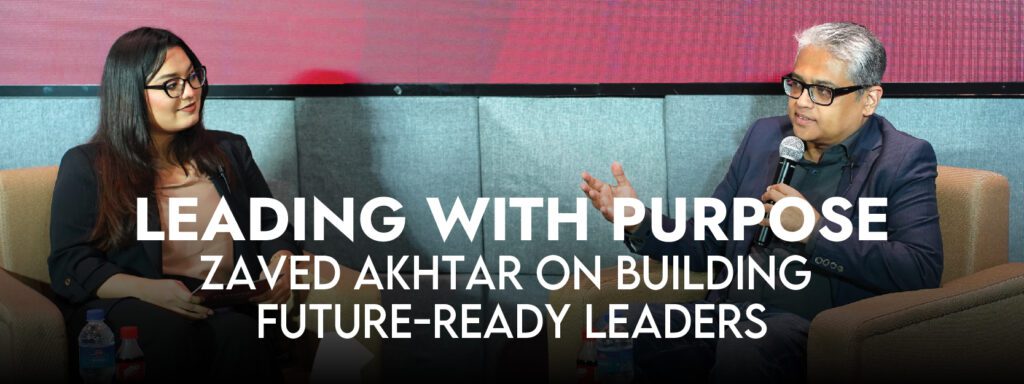
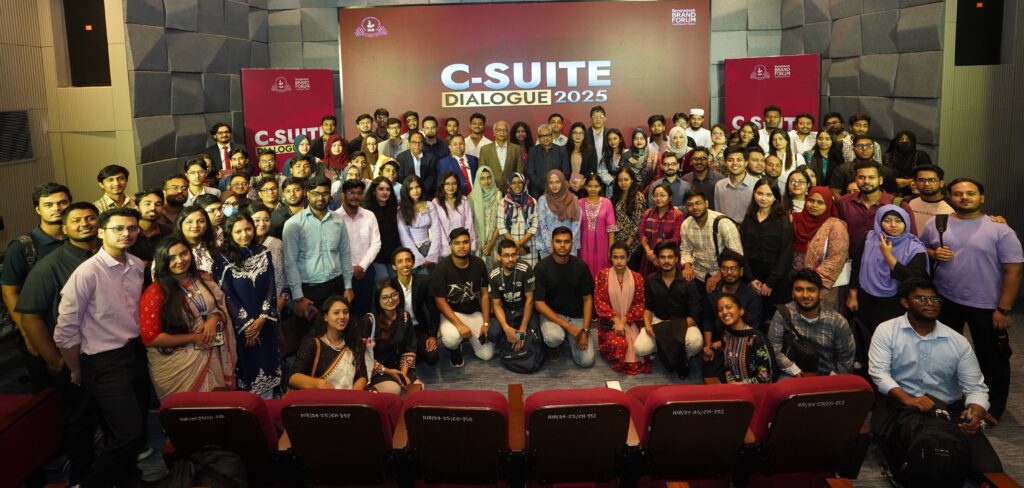
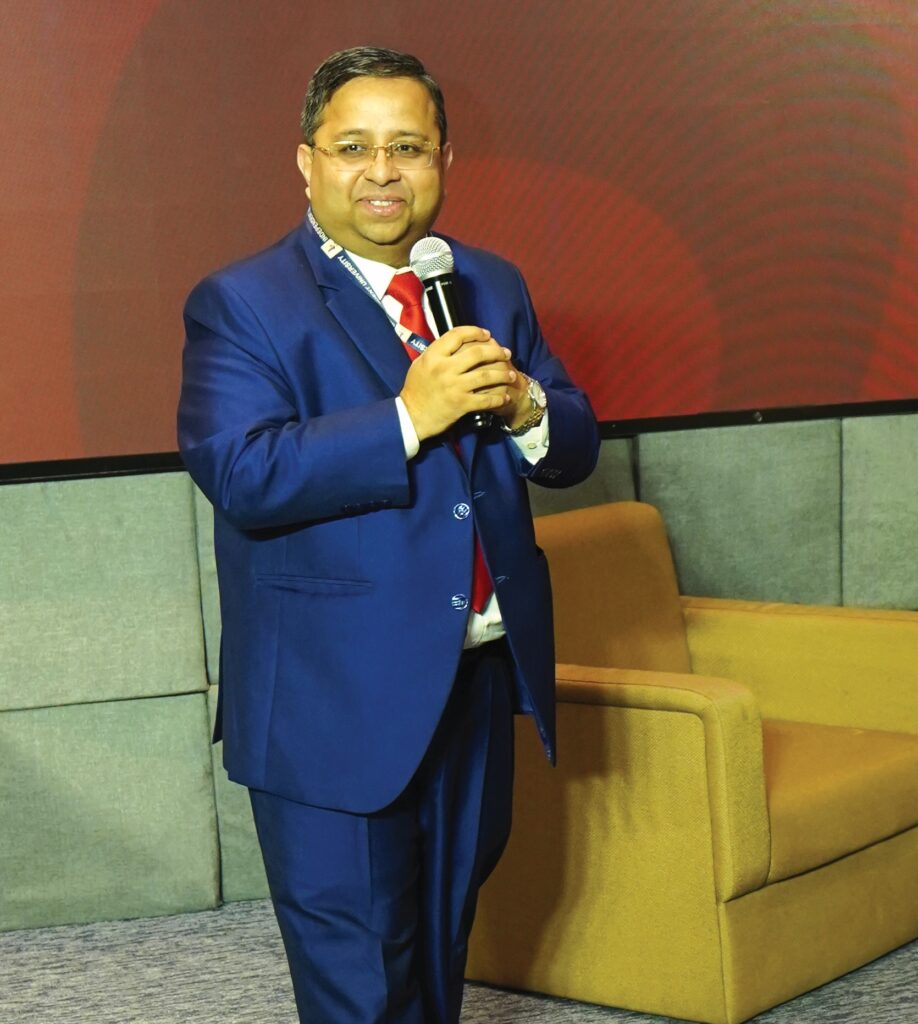
The inaugural session of C-Suite Dialogue 2025, jointly organized by Bangladesh Brand Forum (BBF) and Independent University, Bangladesh (IUB), took place on August 18 at the IUB campus. The dialogue featured Zaved Akhtar, Chairman and Managing Director of Unilever Bangladesh, in a thought-provoking conversation on “Building Future-Ready Leaders” moderated by Jannatul Ferdousy, Project Lead at Bangladesh Brand Forum.
The session—attended by students, faculty members, and young professionals—focused on leadership, adaptability, and the evolving skills required to thrive in the future of work. Under Jannatul Ferdousy’s moderation, the discussion moved across diverse themes—from career beginnings and personal resilience to sustainability, inclusion, and the transformative role of technology.
A Journey of Choice and Conviction
At the beginning of the discussion, Jannatul highlighted Zaved Akhtar’s unconventional start—when he chose to pursue business despite family expectations of a medical career. Reflecting on that decision, Akhtar shared, “My father was a doctor and wanted me to be one too. I even got admitted to medical school but realized I wasn’t passionate about it. I wanted to work with people and businesses. That choice completely changed my life.”
This decision led him to the Institute of Business Administration (IBA), where he was among the first batch of BBA students. “We studied everything—from biology to geology,” he recalled. “At that time, it made no sense. But today I realize it taught me to understand business end-to-end.”
From the Shop Floor to the Boardroom
Guided by Jannatul, the conversation moved to the early years of his career, where Akhtar’s story illustrated the importance of humility. “Before becoming CEO, I started at the very bottom,” he said. “At BAT, I sold cigarettes, cleaned store shelves, and learned how retail really works. Those early lessons of discipline and respect for basics stayed with me throughout my journey.”
He emphasized that leadership should never detach from reality. “Titles don’t define you. When I became CEO, I saw it not as prestige but as responsibility—because every decision affects 22,000 people in our ecosystem.”
Learning Across Borders
When asked by Jannatul about the challenges of his global journey, Akhtar reflected on his transition to Hindustan Unilever in India in 2004. “It was a big leap. I was one of the first Bangladeshis to take on an innovation role in India. It was difficult—people questioned whether I could succeed. But every time your environment changes, your benchmark changes too.”
Over the years, he worked across India, the Philippines, and regional Asia roles. Each role, he said, demanded reinvention. “You have to continuously evolve and adapt. The benchmark never stays still.”
The Hunger to Learn
Throughout the dialogue, Akhtar repeatedly emphasized the importance of continuous learning. “You need to keep adding new skills,” he said. “I started in sales, then worked in marketing, media, insights, transformation—every role taught me something new. Today, leaders must have a ‘T-shaped’ skill set: deep expertise in one domain but broad understanding across others.”
He also pointed out that staying relevant now requires embracing technology. “Even as CEO, I am learning about AI because it’s shaping how businesses and people operate.”
Decision-Making and Empowerment
Under Jannatul’s probing, the conversation turned to leadership and decision-making. Akhtar challenged the traditional view of a CEO’s role. “Contrary to what people think, CEOs don’t make all the decisions. My job is to coach and empower my team. Responsibility can be delegated—but accountability cannot.”
He shared a memorable anecdote: “Once a businessman came to meet me about a partnership. I called my Head of Procurement and said, ‘She’ll decide.’ He looked surprised and asked what I do then. I said, ‘I have tea and coffee with you.’ That’s how it works. My role is to unlock resources and enable others to perform.”
Failure as a Teacher
One of the most engaging moments came when Jannatul asked him to share a failure that changed his perspective. Akhtar recalled launching Rexona in India with Akshay Kumar as brand ambassador—a million-dollar campaign that failed. “I thought I knew better than the consumer research. It was a disaster. But it taught me humility,” he said. “As Socrates said, ‘Knowledge is knowing what you don’t know.’ That failure changed how I approach decisions.”
Sustainability, Technology, and the Future of Business
When the discussion shifted to the future of leadership, Akhtar identified two defining forces—sustainability and technology. “In the 1990s, we were taught that the purpose of business was to maximize profit. That’s no longer true. Today, businesses must also create positive impact—on society and the environment.”
He emphasized that this shift is driven by younger generations. “This generation asks the right questions—about sustainability, inclusivity, and fairness. They will only support brands that stand for something.”
On technology, he highlighted how generative AI is changing the workplace. “AI can now perform analyses that used to take weeks in just seconds. The future of work will look completely different—and we must learn to adapt to it.”
On Passion and Purpose
Reflecting on his own journey, Akhtar said his purpose evolved through personal reflection. “My sons once asked me, ‘What impact are you creating through your work?’ That question made me realize the power of brands to improve lives. For example, through hygiene education and sustainability initiatives, we’ve changed habits and improved health for millions.”
Championing Gender Balance
When Jannatul brought up Unilever’s progress on gender diversity, Akhtar shared his conviction. “Women are often more productive and empathetic. The barriers are cultural, not professional. We’ve created flexible hours, daycare facilities, and safe spaces for women to grow. Inclusion is not charity—it’s good business.”
He also offered direct advice to students: “Men—don’t feel threatened. Inclusion isn’t about taking away your place. Women—speak up and own your space. When both genders collaborate, organizations thrive.”
Calm Leadership in Times of Crisis
Asked how he manages stress, Akhtar said, “Early in my career, I had a boss who would lose his temper easily. It scared people and killed productivity. I learned that panic never helps. Staying calm lets your team think clearly.”
His personal discipline—early mornings, regular exercise, and reading—helps maintain balance. “I always keep books near me. Reading keeps me grounded.”
Advice for Students and Future Leaders
In closing, Jannatul invited him to share advice for students facing uncertainty about their future. Akhtar responded, “You’ll always worry—about jobs, careers, and outcomes. But focus on what you can control today: your learning and effort. Once you start working, you’ll never have this time again. Excellence comes from mastering the present.”
He urged students to develop curiosity and creativity rather than chasing trends. “Machines can code, but they can’t empathize or dream. That’s your advantage.”
C-Suite Dialogue 2025: Building Future-Ready Leaders
The session ended with an interactive Q&A where students engaged directly with Zaved Akhtar, guided by Jannatul Ferdousy’s thoughtful moderation. The discussion reflected the very essence of C-Suite Dialogue 2025—a platform designed to bridge leadership experience with youthful curiosity.
In his opening remarks, Prof. M. Tamim, Vice Chancellor of IUB, emphasized, “Conversations like these prepare students to lead with resilience and vision.”
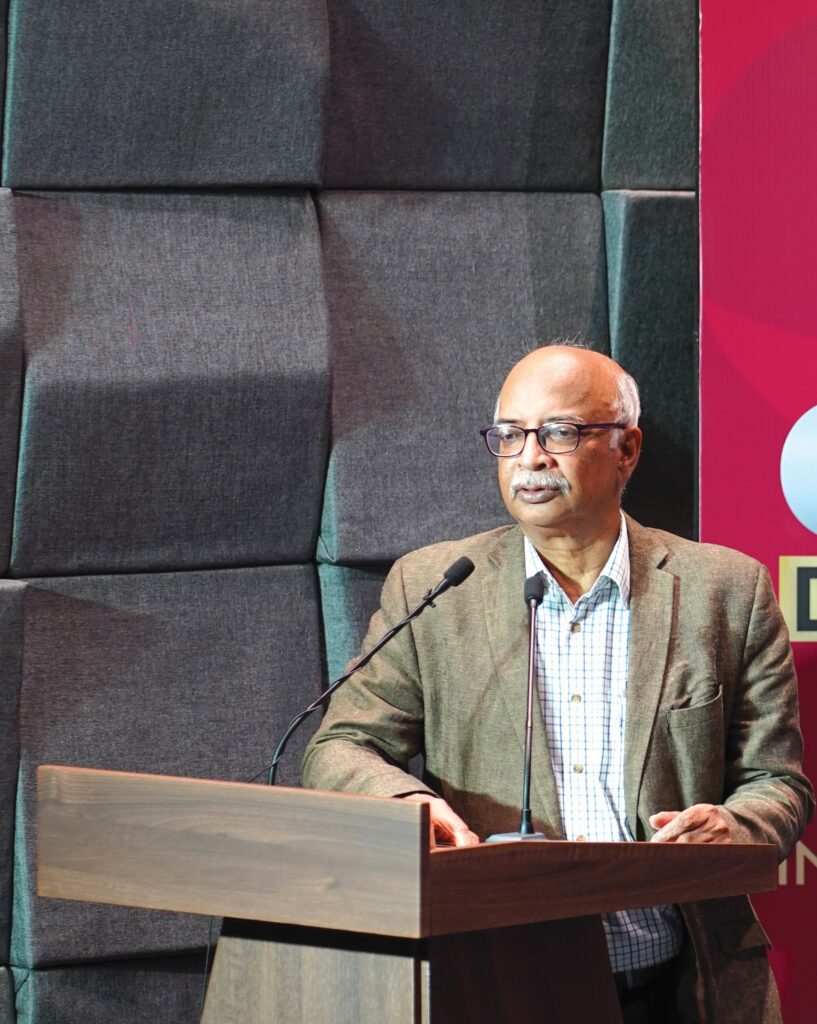
Shariful Islam, Founder and Managing Director of Bangladesh Brand Forum, added, “The C-Suite Dialogue connects ambition with insight—helping future leaders align their aspirations with real-world challenges.”
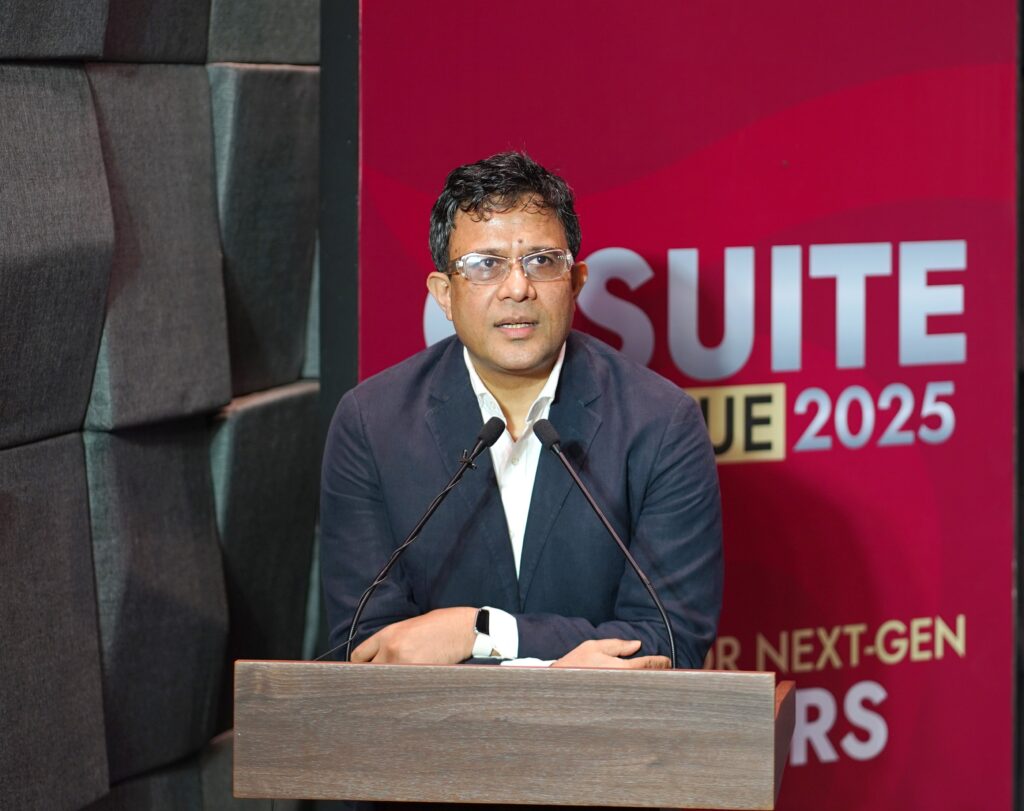
As Zaved Akhtar’s words resonated through the hall, one insight became clear: in an age of transformation, leadership will not be defined by authority, but by adaptability, empathy, and continuous learning.
Partners
C-Suite Dialogue 2025 is organized by Bangladesh Brand Forum & Independent University, Bangladesh. Strategic Partner: School of Business & Entrepreneurship, IUB; Club Partner: Independent Management and Entrepreneurship Club, Department of Management, IUB; Knowledge Partner: Leadership Academy & BBF Academy; Snacks Partner: Pran Cheese Puff.
Transcribed by Nadim Ahmed
M.A. in English Language Teaching
Jahangirnagar University