Abstract
The rise of marketing technologies (MarTech) has significantly altered how organisations approach customer engagement, decision-making, and capability development. However, the effectiveness of MarTech adoption often hinges not on the technology itself but on how well it aligns with an organisation’s strategic objectives. This conceptual paper explores the pathway through which MarTech enhances marketing capability, with strategic decision-making positioned as a mediating mechanism. Drawing on the Dynamic Capabilities Theory, the proposed framework explains how firms can convert technological inputs into competitive marketing capabilities. Real-world cases from Malaysian service firms, SMEs, and manufacturing sectors illustrate how strategic alignment determines the impact of MarTech on decision speed, customer analytics, and campaign optimisation. The paper contributes to emerging MarTech literature by clarifying the conditions under which technology investment translates into tangible marketing outcomes. It also offers practical insights for firms aiming to align their digital transformation strategies with performance-oriented marketing capabilities.
Keywords: Marketing Technology, Strategic Decision-Making, Capability Building, Malaysia
- Introduction
The development of marketing technology (MarTech) has produced an array of digital tools and systems which inform and shape strategic marketing decisions. Artificial intelligence (AI) for customer engagement, marketing automation, big data analytics, and intelligent CRM systems are among key MarTech developments that have enabled firms worldwide to personalise engagement, optimise promotional activities, and improve marketing decision-making (Chatterjee et al., 2023; Kumar et al., 2022). The growing adoption of MarTech and marketing automation solutions is no different in Southeast Asia. MarTech adoption has become a strategic imperative for businesses across organisational sizes and industries in Malaysia as organisations struggle to remain competitive in an emerging digital economy (Lim et al., 2023).
The country’s increasing digitalisation is growing consumer digital literacy, and the national government policy is to position Malaysia as a leading digital economy in the ASEAN region. The Malaysian Digital Economy Blueprint (MyDIGITAL) plans for a digital economy to make up 22.6% of the country’s GDP by 2025 (Economic Planning Unit [EPU], 2021). The number of e-commerce users and businesses utilising digital tools and platforms to access markets and engage consumers has accelerated the transition. Digital platforms such as Shopee, Lazada, TikTok Shop, and WhatsApp Business have become the most essential channels used by Malaysian firms for digital marketing. These platforms utilise AI-powered algorithms for consumer targeting, insights generation, and service automation to deliver hyper-personalised consumer experiences, transforming the marketing landscape (Statista, 2024).
Large organisations like Grab, Maybank, and AirAsia have leveraged the MarTech toolbox to broadly transform their marketing and operations. Grab Malaysia, for example, used machine learning to personalise promotions for users and optimise dynamic pricing. At Maybank, AI chatbots were deployed to improve the bank’s customer experience, and service response times were cut (Lee & Cheah, 2023; Lai, 2023). These use cases reflect a consistent finding that MarTech aligned with strategic decision-making can have positive performance implications and help firms build marketing capabilities (Kumar et al., 2022).
Malaysian small and medium-sized enterprises (SMEs) are increasingly unable to adopt MarTech in marketing due to various implementation barriers. Challenges such as high implementation costs, lack of internal resources and expertise, and limited access to scalable digital infrastructure have constrained Malaysian SMEs from reaping the potential benefits from MarTech (Nasir et al., 2022; Deloitte, 2023). This development is particularly alarming given that SMEs account for over 97% of total business establishments and employ over 62% of the workforce in Malaysia. SMEs contribute 38.4% to the country’s GDP, crucial to Malaysia’s digital economy (SME Corp Malaysia, 2023). Failure to strategically integrate MarTech in marketing efforts may leave SMEs behind in an economy where digital is the main driver of economic activity.
In addition, with the Malaysian regulatory environment emphasising stringent compliance measures around data privacy, particularly with the Personal Data Protection Act 2010 (PDPA), organisations deploying MarTech powered by AI and data analytics face various ethical dilemmas and potential legal risks (Abdullah et al., 2021). Applying AI and data analytics in marketing to derive insights and target consumers requires collecting and analysing large datasets, including customer information. Increased awareness of the risks of surveillance, algorithmic bias, and data misuse on the part of consumers is an ethical concern that requires firms to engage more with consumers on privacy issues as they deploy AI and data analytics more broadly (Tan et al., 2024).
The trends and issues have become more relevant in the post-pandemic era, where traditional forms of marketing were exposed as lacking structural support systems to survive marketing crises. The rapid adoption of digital engagement tools during this period reinforced the urgency for firms to develop dynamic marketing capabilities that support agile decision-making, cross-channel integration, and customer-centric approaches (Nguyen et al., 2023).
In this context, the study explores the enablers of MarTech adoption for building marketing capabilities among Malaysian organisations. The study employs the Resource-Based View (RBV) and the Dynamic Capabilities Theory as theoretical lenses for developing a conceptual framework linking the adoption of MarTech and enhanced decision-making with the long-term building of marketing capabilities. The study contributes to the limited academic literature on digital transformation and marketing capability building in emerging markets and economies by drawing on theoretical development and industry case examples. Findings from this study may have practical implications for firms in Malaysia as the country’s MarTech ecosystem continues to develop rapidly.
1.1 Problem Statements
Marketing technology (MarTech), which refers to software and digital tools used in marketing activities, is essential in the competitive world of digital business environments. It is, therefore, important for organisations, especially in Malaysia’s rapidly growing digital economy, to incorporate MarTech in their processes. However, studies show that despite increased awareness about MarTech, many Malaysian firms have not explored how MarTech affects organisational strategic decisions and capabilities (Nasir et al., 2022). While the academic literature has made some contributions on this topic, there is a lack of generalisability in Southeast Asia, including Malaysia. Although existing studies on MarTech adoption in the Southeast Asian setting have demonstrated potential benefits, they often lack a precise identification of boundary conditions and levels of organisational parameters (Lim et al., 2023). In other words, the articles in this field often fail to properly explicate the conceptualisation of key ideas and variables of the research problem.
Previous research regarding MarTech adoption in Malaysia provides basic evidence of implementation, but has yet to elaborate on the connection between MarTech tools and marketing capability development. As such, the literature is strongly needed to explain why MarTech matters in developing marketing capabilities. Large firms have also been overrepresented in these studies, including well-known e-commerce and e-payments companies such as Grab, Maybank, and AirAsia, which may not be an accurate representation of the general population of firms, especially manufacturing industries or rural SMEs (Lee & Cheah, 2023). In addition, most studies in this area have taken a positivist approach by using case studies that are often descriptive, lacking a detailed explanation of the development of MarTech adoption over time.
As such, this study will address the problem of how MarTech can facilitate marketing capability building. The problem, which was identified and grounded in the Malaysian organisational setting, has also considered the appropriate levels of independent variables: strategic alignment and organisational decision-making. The implications of this problem have also been made clear in this study. As such, this study was designed to address the gap in the previous literature on the underdeveloped theoretical integration and lack of empirical validation of MarTech’s strategic role.
2 Literature Review
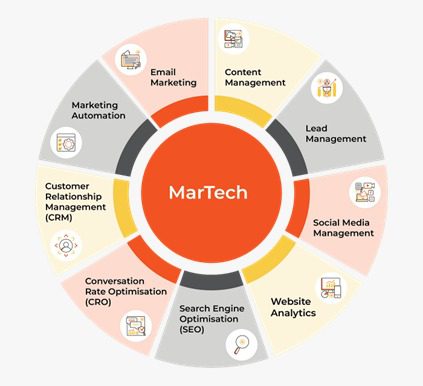
As business and marketing landscapes evolve with the increasing sophistication of digital technologies, marketing technology (MarTech) has become a strategic imperative for agility, consumer engagement, and performance measurement. MarTech can be defined as the totality of software, digital tools, and technological platforms utilised by the marketing function in its operations in the digital economy. In today’s context, the scope of MarTech has expanded beyond tactical tools to encompass an entire ecosystem of data-driven solutions, including artificial intelligence (AI), predictive analytics, customer relationship management (CRM), and automation platforms that augment and transform the entire marketing value chain. As marketplaces become more competitive and digitally saturated, the role of MarTech in redefining strategic decision-making and building marketing capabilities has become an essential avenue of inquiry. However, most of the research is not well integrated, especially regarding the application of models in line with the emerging real-world context of MarTech application in emerging markets such as Malaysia (Lim et al., 2023). This literature review section presents an overview of key scholarly works and empirical studies that have contributed to understanding the integration of MarTech for improved strategic decision-making in marketing and building marketing capability. In particular, it will look at studies that have offered theoretical models or frameworks that can help conceptually link the use of MarTech, strategic alignment, and performance at the organisational level in Malaysia.
2.1 Conceptualising Marketing Technology (MarTech)
MarTech started as basic solutions including email platforms and customer databases, but has since advanced to incorporate AI, machine learning, programmatic advertising, sentiment analysis, and cross-channel analytics, among other applications. The classification of MarTech varies in breadth, from a focus on general digital tools and platforms that facilitate and augment marketing activities, including those that automate processes and provide real-time analytics and data-driven insights (Chatterjee et al., 2023), to more advanced technologies that deliver more precision, scale, and responsiveness in marketing functions (Kumar and Sharma, 2022). As such, MarTech applications may help firms build better-informed segmentation and personalisation strategies, allowing for more targeted and measurable campaigns, using insights from analysing at-scale consumer data (Kumar and Sharma, 2022). Marketing and technology have now become deeply intertwined in the modern digital context. Martech also can be referred as refers as a stack of cloud-based tools that are integrated with other systems, such as CRM, social media management, content delivery, and customer analytics platforms (Wang et al., 2021).
The Southeast Asian market is also seeing increasing adoption of MarTech. However, this is at different maturity levels depending on industry and firm size. In Malaysia, the proliferation of e-commerce platforms, such as Shopee and Lazada, as well as social commerce platforms, such as TikTok Shop, has led to increased use of AI-enabled marketing tools, especially in the form of advertising targeting and consumer behaviour analytics (Statista, 2024). At the enterprise level, firms like Grab and Maybank have also integrated AI-powered CRM and marketing automation solutions to enhance customer engagement and improve internal workflows and processes. Maybank’s AI-driven CRM systems are not adopted in isolation; they are strategically aligned with the bank’s mission to become the leading digital bank in ASEAN. The use of MarTech directly supports its goals of improving customer responsiveness, reducing branch reliance, and enhancing data-driven cross-selling, showing how alignment drives efficiency and capability building. The developments point to a trend of MarTech as a strategic capability that allows firms to capture value from digital channels and respond to rapidly evolving consumer demands. As Hussain et al. (2023) found, the adoption of MarTech-related capabilities is associated with dynamic marketing capabilities that underpin long-term competitive advantage.
However, not all types of organisations adopt MarTech to the same extent or in the same way. While larger, established organisations with greater resources and digital maturity may be able to implement more sophisticated MarTech solutions across their operations, smaller and medium-sized enterprises (SMEs) may encounter a range of barriers that impede this process, including costs, skill and capacity constraints, and lack of strategic alignment (Tan et al., 2023). This means that rather than focusing on MarTech as a technology upgrade per se, it is important to consider the specific contexts in which organisations are situated. How organisations use and configure MarTech tools depends on their goals, structure, and culture, and thus affects how MarTech affects decision-making, customer intimacy, and marketing performance.
- Theoretical Framework
3.1 Resource-based view (RBV)
The Resource-Based View (RBV) has been a longstanding theoretical framework that has contributed to explaining the process of MarTech adoption (Rehman et al., 2024; Teofilus et al., 2020). It has long been proposed that a firm could create and sustain its competitive advantage by acquiring and effectively deploying a combination of resources and capabilities that were unique, valuable, rare, and non-substitutable (Barney, 2021). Digital capabilities and technology, when meeting the VRIN attributes, could be considered strategic resources. Internalisation of MarTech was, in this sense, regarded as a key strategic enabler for firms to drive differentiation in product offerings, customer experiences, and brand value (Srivastava & Kaul, 2022). A key moderator in this relationship is the extent to which MarTech strategically aligns with the firm’s long-term goals and marketing vision. As Kumar et al. (2023) highlighted, alignment ensures that MarTech tools are not deployed as standalone digital add-ons but integrated within workflows that support strategic objectives such as market expansion, customer engagement, or brand building. Firms with high alignment are better able to extract insights from MarTech systems and convert those into strategic decisions, thereby enhancing capability outcomes. Conversely, when MarTech is adopted without a clear strategic roadmap, organisations often fail to sustain performance improvements, as many Malaysian SMEs struggle with disconnected systems and inconsistent digital campaigns (Hussain et al., 2023; Chia & Wong, 2022).
RBV has informed the understanding of MarTech in the role of unique assets and strategic advantage (Ristyawan, 2020). The value of MarTech does not reside solely in operational efficiencies but also in its potential to be leveraged in ways that are distinct to the firm’s positioning. A good example would be AI-enabled customer segmentation or algorithm-driven CRM platforms that can be integrated into a firm’s strategy-making and execution (Kumar et al., 2023). This capability is increasingly prevalent in many large Malaysian firms with strong digital infrastructures, such as Grab and RHB Bank. Equipped with high-volume, data-intensive resources that draw on sophisticated predictive modelling and near-real-time streaming analytics, these firms have been able to extract deep value from AI-assisted marketing tools in delivering hyper-personalised campaign content. In a way, the resources align closely with firm-specific customer insights that drive product and service offerings and are thus seen as the organisation’s core capabilities.
RBV is also helpful in understanding the uneven impacts of MarTech adoption (Nakabuye et al., 2023). When an organisation is poorly resourced, for instance, many Malaysian SMEs and firms lack the necessary internal competencies, such as in-house analytics or previous experience with CRM integration, leading to digital transformation initiatives not performing to their best (Rahim et al., 2023). From an RBV perspective, MarTech is a resource that needs to be acquired and closely embedded with a firm’s internal routines and knowledge creation processes.
3.2 Dynamic capabilities theory (DCT)
The Dynamic Capabilities Theory (DCT) is a complementary framework that provides a different lens to understand the firm and its use of MarTech (Castellano et al., 2019). DCT has provided a coherent understanding of how a firm can continually integrate, build, and reconfigure internal and external competencies to match the requirements of a rapidly changing environment (Teece, 2021). In a digitalised landscape, it is particularly pertinent as it heavily emphasises how a firm responds and adapts to change and structures itself. DCT differs from the RBV in that it looks less at what resources are available to a firm, but rather how it uses and reconfigures its resources in response to market changes, customer needs, and innovation opportunities (Warner & Wäger, 2019).
Applied to MarTech, dynamic capabilities are materialised through how a firm leverages the affordances of MarTech to engage in continuous learning, experimentation with new digital marketing platforms, and iterative optimisation of its marketing campaigns. In particular, Yao et al. (2022) noted that firms with well-developed dynamic capabilities are better equipped to adapt to real-time information, recalibrate their value propositions, and refine their customer engagement and messaging strategies based on data analysis and customer feedback. In the Malaysian context, one could point to AirAsia and IKEA Malaysia as companies that have quickly adapted to evolving customer needs using MarTech such as AR, live-streaming commerce, and omnichannel CRM. In both cases, these companies were quick to pivot towards more digitally integrated service propositions and shopping experiences that aligned with the shifts in consumer behaviours in the new normal (Lim et al., 2023).
DCT can also be used to expound upon how firms can develop strategic alignment between their marketing technologies and broader organisational goals. Nambisan et al. (2020) have made it clear that it is not simply the number or type of digital tools possessed by an organisation that determines success, but rather, the organisational capabilities to activate, reconfigure, and redeploy these tools based on their shifting strategic focus and direction. In that sense, DCT emphasises the need to think of MarTech not as a static resource but as one that allows for continual innovation and marketing capability-building that is flexible, scalable, and agile in the face of external changes.
- MarTech and Strategic Decision-Making
The adoption and implementation of MarTech in the organisation have transformed the scale and scope of marketing capabilities and how strategic marketing decisions are made (Wang et al., 2023). The power of MarTech has shifted decision-making from an intuition-driven and managerially-centred process to data-informed, real-time decision-making in the market (Nordin & Ravald, 2023). Strategic decision-making in the digital economy increasingly relies on marketing analytics, predictive algorithms and AI-enabled platforms that allow firms to sense and make sense of customer behaviours, optimise their campaigns and messaging and improve the accuracy of performance forecasting (Kannan et al., 2022). The core premise of MarTech is to empower decision-makers with actionable business intelligence by effectively using the large, dispersed and diverse datasets. The MarTech tools also enable firms to be more responsive to market changes and outmanoeuvre competitors through greater agility. Malthouse et al. (2023) even described MarTech as an “extended mind” of the firm, as these technologies enhance marketers’ mental and strategic capacity with intelligent systems to perform scenario modelling, A/B testing, and simulate various budget reallocation models that could yield a higher ROI and customer engagement.
In Malaysia, many local companies have also adopted AI-powered MarTech tools to improve their strategic decision-making in marketing. Maybank is a good example, where it deploys intelligent CRM software to understand better its customers’ needs and areas of concern using natural language processing-based chatbots for customer service. In addition, Maybank’s analytics solution also provides a foundation for the company’s executives and middle management to make informed resource allocation decisions, which is a critical aspect of strategic decision-making in marketing (Lai & Ariffin, 2023). On the other hand, Shopee Malaysia is another notable example, as it utilises real-time analytics and machine learning to adjust its flash sale and dynamic pricing strategies for each item based on the live data of consumer purchasing and browsing behaviour. In doing so, the e-commerce giant can also create more targeted and time-sensitive discounts or offers to incentivise customers to maximise campaign effectiveness (Statista, 2023). In these cases, the examples show how the adoption of MarTech has translated low-level, high-volume, and granular customer data into strategic, high-level marketing decisions for marketing and operations at both executive and managerial levels.
In particular, predictive analytics in MarTech is one of the most notable applications for strategic decision-making in marketing (Prasanth et al., 2023). Erevelles et al. (2022) demonstrated that with predictive analytics that harnesses machine learning and AI, new emerging customer segments, product demand, and optimal marketing channels can be identified, forecasted and even recommended to organisations for more informed decision-making. By implementing these machine learning models in organisations’ strategic decision-making processes, marketers can go beyond reactive decision-making to more proactive, scenario-based approaches. In high-velocity business environments, such as e-commerce and financial technology (fintech), predictive analytics can significantly compress decision-making latency and allocate marketing budgets to better match rapidly changing customer expectations.
However, the ability to make MarTech-enabled strategic marketing decisions is not just a function of the digital tools alone, but also the internal readiness of an organisation and leadership commitment towards these technologies. Nguyen & Sim (2023) indicated that firms that lack a culture of analytics and data-supported decision-making could not realise the full strategic potential of MarTech, despite their adoption and investments in these solutions. The lack of integration across functional and organisational silos, for instance, between marketing, IT and strategy teams could constrain the effective implementation of MarTech (Nguyen & Sim, 2023). This situation is more prevalent in mid-sized organisations in Malaysia, where marketing departments are typically resource-constrained yet not well-equipped with live dashboards or decision support systems. Hence, their marketing decisions rely heavily on historical trends or managerial instincts (Rahman et al., 2022).
Another issue is the lack of trust in algorithmic decision-making in marketing, which persists in many organisations (Sarath Kumar Boddu et al., 2022). The low levels of interpretability, possible issues with data and model bias, and even ethical considerations often deter some executives from entrusting their firm’s MarTech tools and algorithms to make high-stakes and consequential decisions (Dwivedi et al., 2021). To mitigate the concerns and increase the rates of MarTech adoption in strategic decision-making, researchers have called for implementable AI (XAI) frameworks, greater investment in developing analytical literacy, and better alignment between MarTech and the organisation’s business strategy. Otherwise, there is a risk of a “technology push” in which the changes in the organisation’s MarTech platforms and tools will not be reflected in the marketing performance or the quality of decision-making (Prasanth et al., 2023).
In conclusion, the integration of MarTech into strategic decision-making in marketing involves more than the adoption of tools. It is also critical to transform how marketing problems are conceptualised and framed, how insights are generated from data and analytics, and how organisational capabilities are aligned to leverage digital intelligence towards sustainable strategic advantage. As digital transformation and digitalisation have accelerated in Malaysian companies and Southeast Asia, making intelligent and data-supported marketing decisions will become a differentiating capability between market leaders and laggards.
- MarTech and Marketing Capability Building
Marketing capability is defined as the ability of an organisation to perform the essential marketing functions effectively (Nalbant & Aydin, 2023). These include identifying and attracting customers, segmenting and targeting the market, building and maintaining customer relationships, differentiating products, positioning brands, and creating customer value (Morgan et al., 2021). In the digital economy, marketing capabilities are often embedded in MarTech systems that enable firms to automate, analyse, and optimise marketing activities (Kalogiannidis et al., 2024). MarTech adoption allows firms to transition from an outdated, intuitive, and linear marketing approach to a more agile and data-driven one, helping marketers become more responsive and accurate in their decisions. Pandey and Chawla (2023) state that MarTech solutions like real-time customer feedback, multichannel integration, and personalisation can build marketing capability in areas like adaptive engagement, campaign optimisation, and omnichannel customer experiences.
Arguably, the most crucial area where MarTech contributes to marketing capability is customer relationship management (CRM). A CRM system with artificial intelligence and machine learning algorithms helps automate customer profiling, loyalty programmes, and customer lifecycle tracking (Rao & Kumar, 2022). The system helps the marketer understand who the customer is, when and where to reach them, and how to engage them for maximum loyalty. In Malaysia, Grab Malaysia’s CRM system tracks the customers’ real-time behavioural data, allowing the company to offer on-demand discounts and promos that make users stay and keep using the app. The high engagement rates observed result from MarTech enhancing the customer-centric capability. MarTech also enhances campaign management and performance measurement capability. Many modern marketing platforms are built to enable marketers to test, iterate, and refine campaigns on the fly (Rao & Kumar, 2022). Automated A/B testing, dynamic content optimisation, and real-time reporting and analytics allow marketers to run more controlled experiments and learn from their actions much faster. Firms using MarTech such as Google Marketing Platform and HubSpot experience reductions in time-to-market for digital campaigns and higher customer response rates (Lee & Tan, 2023). This operational speed translates into better short-term marketing performance but is also a critical dimension of long-term marketing capability because the shorter the feedback cycle between action and response, the more the firm can learn and experiment. While large organisations have more resources to deploy advanced MarTech stacks, SMEs and manufacturers increasingly demonstrate that marketing capabilities can still be built with leaner digital tools. For example, Hup Fatt Biscuit Sdn. Bhd., a heritage SME manufacturer in Penang, adopted WhatsApp Business and Shopee storefront integrations to manage promotions, gather customer feedback, and create loyalty offers during the pandemic. Despite limited resources, the company leveraged CRM plug-ins and social analytics to segment repeat customers and personalise discounts. This case highlights that even basic MarTech can help smaller firms build customer engagement capabilities and achieve strategic outcomes.
The use of MarTech also improves the capability to personalise the customer journey. Personalisation has gone beyond demographics and basic buying patterns to more contextual engagement that anticipates customer needs based on micro-moments, sentiment, or cross-channel interactions (Narang & Jain, 2022). AI algorithms allow firms to customise content, offers, and experiences in real-time, increasing conversion and engagement. Narang and Jain (2022) report that personalisation enabled by MarTech results in up to 40% higher customer conversion rates across digital channels, especially in the retail and e-commerce industries.
In Malaysia, e-commerce and online booking platforms like AirAsia have increased ancillary revenue during the booking process by offering personalisation through AI-powered upselling features and recommendations. Maybank’s integration of MarTech tools such as AI-powered chatbots was aligned with its strategic priority of enhancing customer responsiveness and reducing front-office costs. This alignment enabled seamless CRM integration, which improved decision-making turnaround and enhanced campaign personalisation. Key outcomes of capability building. A significant factor explaining why MarTech helps build marketing capability is the ability to impact customer conversion rates.
Marketing capability building through MarTech adoption involves using the right tools and developing relevant skills and organisational learning processes (Buvár & Gáti, 2023). Firms must take time and invest in staff training and digital upskilling to maximise their MarTech investments and not just procure digital tools in silos (Ghani et al., 2023). A recent study of Malaysian SMEs shows that firms that invested in digital marketing training and analytics workshops showed greater marketing confidence in using MarTech tools and reported higher marketing ROI (Buhalis et al., 2023; Peyravi et al., 2020). This research supports the notion that MarTech investments must be accompanied by human capital development to yield more strategic and long-term returns.
In conclusion, while most studies show a positive impact of MarTech on marketing capability building, the success of this process depends on several factors such as strategic alignment, leadership commitment, and the organisation’s culture and readiness for digital transformation. Building marketing capabilities requires more than technology; it involves institutionalising these skills and creating a culture of data-driven decision-making and cross-functional collaboration (Singh & Kumar, 2023). Firms that see MarTech as a strategic enabler and performance multiplier, rather than a mere support function, are more likely to build marketing capabilities that adapt to changing customer needs and competitive environments.
6 MarTech-Driven Capability Building in SMEs and Manufacturing Firms
While much of the discourse around MarTech adoption focuses on large firms with the financial and technological capacity to implement sophisticated systems, there is growing evidence that small and medium-sized enterprises (SMEs) and manufacturing firms are also leveraging marketing technologies to enhance their capabilities. The strategic use of MarTech by these firms may differ in scale and complexity, but the underlying principles of capability building, such as customer engagement, segmentation, and campaign optimisation, remain relevant across contexts (Nasir et al., 2022; Hussain et al., 2023).
For example, Hup Fatt Biscuit Sdn. Bhd., a traditional biscuit manufacturer based in Penang, exemplifies how even heritage SMEs can integrate MarTech tools into their marketing operations. During the COVID-19 pandemic, the company adopted WhatsApp Business, Shopee Mall, and social media advertising to reach customers directly. These platforms enabled the business to communicate real-time promotions, segment loyal customers for targeted offers, and gather feedback to refine their product positioning. Though they lacked access to enterprise-grade CRM systems, Hup Fatt utilised basic Shopify-based analytics to gain insights into customer preferences. This strategic shift resulted in higher direct-to-consumer engagement. It helped the company reduce dependence on third-party distributors, demonstrating that even lightweight MarTech solutions can support capability development (SME Corp Malaysia, 2023; Lee & Tan, 2023).
Similarly, firms in the manufacturing sector are adopting niche MarTech applications to improve B2B marketing effectiveness. For instance, Precision Mould Engineering (PME) Sdn. Bhd., a Selangor-based SME in the metal fabrication industry, integrated digital catalogues, QR-coded product brochures, and automated email follow-ups via Mailchimp to engage prospective clients during trade expos and online requests. By linking their CRM plug-in with inquiry forms on their website, PME managed to track prospect journeys and personalise communication, thus enhancing lead nurturing and reducing sales cycle times. Although such tools are considered basic compared to the enterprise suites used by large firms, they play a critical role in building marketing responsiveness, customer intimacy, and post-sale service quality core dimensions of marketing capability (Chia & Wong, 2022; Buhalis et al., 2023).
These examples demonstrate that the strategic alignment of MarTech is not exclusive to mature corporations digitally. Instead, SMEs and manufacturing firms can implement fit-for-purpose technologies that align with their business models and resource constraints. The modular and scalable nature of many modern MarTech platforms allows smaller firms to incrementally build capabilities such as campaign testing, segmentation, feedback analysis, and social media analytics, contributing to more adaptive and customer-oriented marketing functions (Tan et al., 2022; Ghani et al., 2023).
Moreover, research has shown that SMEs who invest in digital marketing training and upskilling tend to achieve better outcomes from MarTech adoption, as knowledge acquisition directly improves their capacity to translate tools into strategic insights (Peyravi et al., 2020; Rahim et al., 2023). This reinforces the idea that capability building is not solely about tool acquisition but strategic alignment and embedding MarTech into organisational decision-making routines.
The proposed conceptual framework linking MarTech adoption to marketing capability building through strategic decision-making remains applicable to SMEs and manufacturing firms. Although these firms operate under different constraints than large service-oriented organisations, the framework is adaptable based on context-specific MarTech configurations, industry needs, and organisational maturity.
7 Conceptual Framework
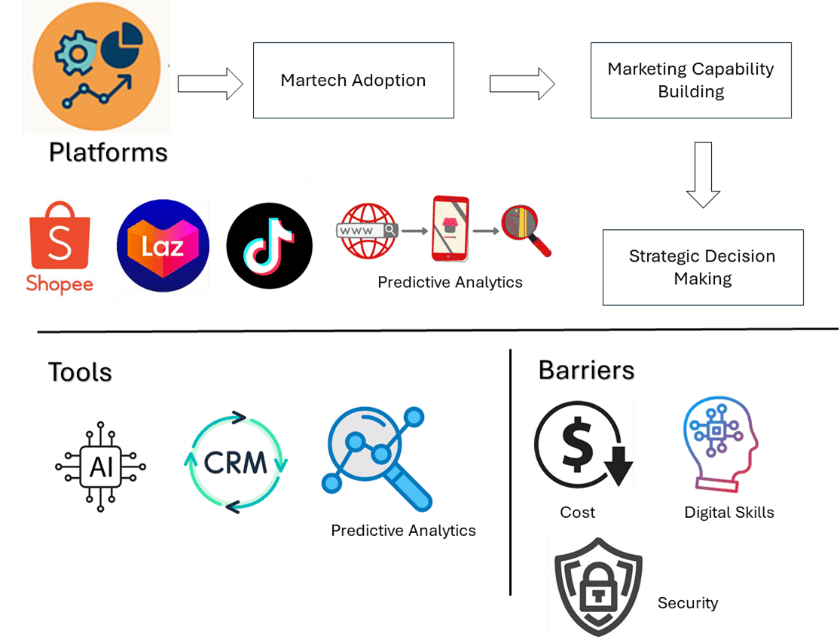
This study suggests a model that situates MarTech as an enabler of strategic decision-making, enabling marketing capability building in an organisation. The theoretical underpinnings of this framework are rooted in the Resource-Based View (RBV) and the Dynamic Capabilities Theory (DCT). The two theoretical perspectives explicate the role of MarTech in building marketing capability as both a distinctive organisational resource and a facilitator of dynamic response to the changing marketing environment.
The RBV allows MarTech to be conceptualised as a unique and valuable organisational resource in the form of AI-powered CRM, predictive analytics, automated content and email systems, etc., that may be a source of sustained competitive advantage if employed effectively (Barney, 2021; Srivastava & Kaul, 2022). In other words, firms with a superior digital resource base are positioned to understand customer behaviour better, personalise engagement and experience, and ultimately achieve marketing differentiation. However, the mere possession of these resources is not a sufficient condition. In the RBV, the unique resource base can be translated into sustained competitive advantage through the development of dynamic capabilities or the ability to adapt, integrate and reconfigure internal resources in response to market changes (Teece, 2021; Warner & Wäger, 2019). Numerous studies emphasise that aligning MarTech with a firm’s strategic goals is a critical success factor in digital transformation efforts. According to Kannan et al. (2022), MarTech yields superior returns when deployed within a well-defined strategic vision, rather than in isolated, tool-specific implementations. Warner and Wäger (2019) argue that firms with more substantial strategic alignment exhibit higher agility, data utilisation effectiveness, and customer-centric outcomes. This alignment enables MarTech tools to be reconfigured to support evolving market objectives. Technology adoption risks becoming fragmented and underutilised without strategic anchoring, leading to capability gaps and digital fatigue (Singh & Kumar, 2023).
Strategic decision-making has been identified in the literature as the mediating mechanism in the link between MarTech and building marketing capability. Literature on MarTech has shown that effectively incorporating marketing technology into decision-making processes has been cited as a transformative capability in marketing functions. It has allowed firms to move away from reactive and traditional approaches to predictive and insight-driven planning that has improved customer experience, campaign effectiveness and brand equity (Kannan et al., 2022; Malthouse et al., 2023). Based on their timeliness, accuracy, and alignment with customer needs, the quality of these decisions is a critical factor determining the firm’s ability to build and refine relevant capabilities and institutionalise them.
Marketing capability building is the intended outcome and resultant state of the relationship between MarTech and strategic decision-making in the framework. This construct measures the degree to which a firm can perform marketing functions that matter, including customer segmentation, engagement across channels, brand awareness and positioning, data-driven campaign management, etc. (Morgan et al., 2021; Pandey & Chawla, 2023). These capabilities are performed with efficiency, scalability, adaptability, and strategic focus. As firms adopt MarTech to enhance and build capabilities in these areas, they would be better placed to deliver and sustain performance.
The context in which Malaysian firms, particularly SMEs, currently find themselves has been considered in the conceptual framework. This includes issues such as high costs of implementation, other regulatory and PDPA-related challenges, and digital literacy and infrastructure as part of the environmental context that could influence the factors at the heart of the model (Hassan et al., 2023; Noor & Razak, 2022). The model is necessarily agnostic to the direction of causality. However, it suggests a linear and causally interdependent relationship between MarTech Adoption towards Strategic Decision-Making and Marketing Capability Building. Although examples used in this study include large service firms, the framework is intentionally designed to be scalable and adaptable to various organisations. To enhance decision-making and marketing effectiveness, SMEs and manufacturing firms can apply the same logic by leveraging appropriately scaled MarTech tools, such as mobile CRM systems, social media automation, and plug-and-play analytics. The principles of strategic alignment, data-informed decisions, and capability development remain applicable regardless of sector or firm size.
The theoretical basis for each of the relationships in the framework is drawn from the relevant literature and corroborated by empirical observations in Malaysian industry practices. As a model, it offers an integrated structure to understand how digital tools, when leveraged strategically and with the right approach to change management, could be taken beyond a means of automating or optimising routine functions to a means of developing and institutionalising strategic capabilities.
8 Methodology
8.1 Research Design
Quantitative research approach will be used to test the conceptual framework. Quantitative methodology allows for empirical measurement of constructs using statistical analysis, which makes the results generalisable to a wider population (Creswell & Creswell, 2018). A quantitative approach to testing the model will include using measurement scales, statistical techniques, and numerical data collected through surveys. In addition, since the study is theoretically grounded in the Dynamic Capabilities perspective and is based on the Resource-Based View (RBV) model, the deductive approach will be used to test the hypotheses derived from the conceptual framework and their relationship. The time horizon used in the study will be cross-sectional, as it is a well-established strategy when further follow-up is limited due to time, access, or resources (Zikmund et al., 2020). This design will allow us to measure the constructs at one point. The sampling method will be a stratified random sample, allowing respondents from different industries and businesses of different sizes to be distributed. It will also allow the control of the industry and size of a business as extraneous variables. It will contribute to the external validity of the results. Respondents will be marketing managers, digital strategists, or other key persons in charge of adopting technologies and planning the digital strategy in their business.
8.3 Population, Sampling, and Unit of Analysis
The population of the study is the marketing and strategic managers working in organisations in Malaysia that have adopted or are in the process of adopting MarTech platforms. The sampling technique will be non-probability purposive sampling, where the marketing and strategic managers who know about MarTech adoption, use, and experience will be purposively sampled. The unit of analysis will be at the individual level of the organisation, where the marketing and strategic managers in companies that have adopted or are in the process of adopting MarTech platforms will be sampled.
8.4 Data Collection Instrument
The data collection instrument for the study is the structured questionnaire, adapted from prior similar research with valid and reliable constructs. This is to achieve an instrument with validated and reliable constructs used in the study for variables, including MarTech adoption from Chatterjee et al. (2023), strategic decision-making from Kannan et al. (2022), and marketing capability from Morgan et al. (2021). The data collection instrument will be the structured questionnaire, administered using a five-point Likert scale, where one is strongly disagree and five is strongly agree.
8.5 Data Analysis Technique
The research will employ Partial Least Squares Structural Equation Modelling (PLS-SEM) with SmartPLS 4 software. The rationale for this choice is its appropriateness for exploratory research designs, as in this study, where the research questions and hypotheses are relatively new and focused on testing mediation effects using latent constructs (Hair et al., 2021).
The PLS-SEM approach was chosen over the Covariance-Based SEM approach as it is more robust in management and business studies than other studies, as it requires smaller sample sizes and has better capabilities for handling non-normally distributed data (Sarstedt et al., 2022).
9 Expected Outcome
Empirically, this study is expected to add to the relatively sparse body of literature about digital marketing transformation by empirically testing and providing a conceptual underpinning for a model that posits a relationship between MarTech adoption and marketing capability strengthening through strategic marketing decision making. It is expected that MarTech adoption will have a significant positive impact on the quality of strategic marketing decisions, which will act as the main enabler of marketing capability building for more effective customer segmentation, campaign optimisation, personalised engagement, and cross-channel integration that can support the sustained competitive advantage of firms in the increasingly digital economy. It is also expected that the data collected will exhibit significant variance between types of firms and industries in terms of MarTech readiness, available resources, and organisational agility, for instance that larger firms may have more advanced MarTech integration but that SMEs may have better outcomes when the tools used are highly aligned with strategic objectives and supported by digital talent and leadership. It is also likely that the study will confirm the research hypothesis that the benefits of MarTech depend not only on the adoption of technology but on how it is strategically leveraged in decision-making processes based on deep customer insights, real-time data analysis, and predictive analytics. Practically, the research is expected to provide useful managerial insights to several firms, particularly in Malaysia, on how to structure their investments in digital marketing tools and processes to secure strategic returns. The study results will enable the firms to see that marketing technology is not just plug-and-play or a set of functions that will automatically improve capability and outcomes, but it is a strategic investment that has to be woven into the firm’s decision infrastructure to release its value. In terms of wider research value, this study is also expected to provide a validated conceptual model that can be used by other scholars as a basis for further research on this topic, for example to test for moderating variables such as digital literacy, industry type, or leadership style, or mediating effects such as organisational learning or customer orientation on the relationship between MarTech and marketing capability building. Furthermore, by providing a theoretically grounded and statistically validated model, this research will hopefully contribute to bridging the gap between digital marketing theory and practice and filling the large research void at this intersection in the ASEAN and Malaysian contexts. Finally, the study is expected to support the main proposition that adopting MarTech accelerates capability development and competitive differentiation when strategically aligned and embedded in decision-making.
The findings will underscore the importance of strategic alignment as a core enabler of MarTech effectiveness. When digital tools are deployed in synergy with marketing and organisational strategies, firms are more likely to build scalable, data-driven capabilities that lead to competitive differentiation. This integration helps avoid the pitfalls of “technology push” scenarios, where tools are implemented without strategic clarity. The conceptual framework presented in this paper is grounded in the premise that strategic decision-making, when enabled by aligned MarTech systems, directly facilitates marketing capability development. Future research should further investigate how different forms of alignment—such as leadership support, cross-functional integration, and digital maturity—moderate or amplify this relationship.
Author’s Profile:

Dr. Mohd Farid Shamsudin

Dato’ Sharifah Mohd. Ismail
Dr. Mohd Farid Shamsudin and Dato’ Sharifah Mohd. Ismail are experienced professionals in digital marketing and retail industry strategies. Dr. Farid serves as a Council Member at IIM, bringing over 22 years of industry expertise, while Dato’ Sharifah is the President of the Institute of Marketing Malaysia, with extensive leadership experience in marketing innovation and organizational transformation.
References:
Abdullah, A., Rahim, N., & Noor, S. (2021). Data privacy and security concerns in AI-driven marketing. Journal of Digital Ethics, 18(2), 45–60.
Barney, J. (2021). Resource-based view: Building a sustainable competitive advantage. Strategic Management Journal, 42(5), 99–120.
Bryman, A. (2021). Social research methods (6th ed.). Oxford University Press.
Buhalis, D., Leung, D., & Lin, M. (2023). Metaverse as a disruptive technology revolutionising tourism management and marketing. Tourism Management, 97, 104724.
Buhalis, D., Leung, D., & Lin, M. (2023). Metaverse as a disruptive technology revolutionising tourism management and marketing. Tourism Management, 97, 104724.
Buvár, Á., & Gáti, M. (2023). Digital marketing adoption of microenterprises in a technology acceptance approach. Management and Marketing, 18(1), 1–15.
Castellano, R., Fiore, U., Musella, G., Perla, F., Punzo, G., Risitano, M., Sorrentino, A., & Zanetti, P. (2019). Do digital and communication technologies improve smart ports? A fuzzy DEA approach. IEEE Transactions on Industrial Informatics, 15(12), 6520–6529.
Chatterjee, S., Rana, N. P., Tamilmani, K., Sharma, A., & Dwivedi, Y. K. (2023). Adoption of artificial intelligence in marketing: A systematic literature review and research agenda. Journal of Business Research, 158, 113658.
Chia, Y. L., & Wong, C. H. (2022). Digital fragmentation in Malaysian SMEs: MarTech scaling and integration barriers. Asian Journal of Technology Management, 19(1), 55–70.
Creswell, J. W., & Creswell, J. D. (2018). Research design: Qualitative, quantitative, and mixed methods approaches (5th ed.). SAGE Publications.
Deloitte. (2023). The state of AI in marketing: Enhancing decision-making with MarTech. Deloitte Insights. https://www2.deloitte.com
Dwivedi, Y. K., Hughes, D. L., Ismagilova, E., Aarts, G., Coombs, C., Crick, T., … & Williams, M. D. (2021). Artificial intelligence (AI): Multidisciplinary perspectives on emerging challenges, opportunities, and agenda for research, practice and policy. International Journal of Information Management, 57, 101994.
Economic Planning Unit (EPU). (2021). Malaysia Digital Economy Blueprint (MyDIGITAL). Government of Malaysia. https://www.epu.gov.my/en
Erevelles, S., Fukawa, N., & Swayne, L. (2022). Big data consumer analytics and the transformation of marketing. Journal of Business Research, 142, 211–223.
Etikan, I., & Bala, K. (2017). Sampling and sampling methods. Biometrics & Biostatistics International Journal, 5(6), 00149.
Ghani, N. A., Mohd Salleh, N., & Ariffin, M. I. (2023). Building digital marketing capability through human capital development: Evidence from Malaysian SMEs. Journal of Small Business and Enterprise Development, 30(2), 275–293.
Hair, J. F., Hult, G. T. M., Ringle, C. M., & Sarstedt, M. (2021). A primer on partial least squares structural equation modeling (PLS-SEM) (3rd ed.). SAGE Publications.
Hassan, H., Zakaria, N. A., & Yasin, M. H. (2023). Adoption of marketing technology among SMEs in Malaysia: The role of perceived cost and performance expectancy. Malaysian Journal of Digital Business, 2(1), 13–27.
Hernon, P., & Metoyer-Duran, C. (1993). Problem statements in research proposals and published research: A comparison of researchers’ views. Library & Information Science Research, 15(1), 71–82.
Hussain, N., Mohd Salleh, N., & Ariffin, M. I. (2023). Digital transformation in Malaysian SMEs: Challenges and performance implications. International Journal of Business and Society, 24(1), 101–120.
Kalogiannidis, S., Kalfas, D., Loizou, E., Papaevangelou, O., & Chatzitheodoridis, F. (2024). Smart sustainable marketing and emerging technologies: Evidence from the Greek business market. Sustainability (Switzerland), 16(1), 312.
Kannan, P. K., Reinartz, W., & Verhoef, P. C. (2022). The path to intelligent marketing: From marketing technology to decision-making excellence. Journal of the Academy of Marketing Science, 50(5), 789–812.
Kumar, S., Singh, R. K., & Jha, M. K. (2023). Leveraging digital technologies for competitive advantage in emerging markets: A strategic perspective. Technology in Society, 73, 102236.
Kumar, V., Dixit, A., Javalgi, R. G., & Dass, M. (2022). Digital transformation of business-to-business marketing: Frameworks and propositions. Journal of Business Research, 146, 376–388.
Lai, H. T. (2023). AI-powered CRM and predictive analytics in financial services. Journal of Financial Marketing, 10(4), 87–102.
Lai, H. T., & Ariffin, M. I. (2023). Intelligent CRM and chatbot deployment in Malaysia’s financial services: Implications for marketing agility. Journal of Financial Services Marketing, 28(1), 18–33.
Lee, C. P., & Cheah, M. K. (2023). The rise of AI-driven predictive analytics in ride-hailing services: A case study of Grab Malaysia. Asian Journal of Business Innovation, 7(2), 56–78.
Lee, M. H., & Tan, Y. W. (2023). Campaign agility and customer response in Malaysian firms using MarTech. Asia Pacific Journal of Business Innovation, 7(3), 101–116.
Lim, Z., Tan, C. Y., & Wong, M. L. (2023). Digital transformation and MarTech innovation in Southeast Asia: A Malaysian perspective. Asia Pacific Journal of Marketing and Logistics, 35(6), 1213–1230.
Malthouse, E. C., Haenlein, M., Skiera, B., Wege, E., & Zhang, M. (2023). Managing customer journeys in the age of AI: Challenges and research opportunities. Journal of Interactive Marketing, 61, 30–42.
Mayr, S., Erdfelder, E., Buchner, A., & Faul, F. (2007). A brief guide to power analysis using G*Power. Tutorials in Quantitative Methods for Psychology, 3(2), 51–59.
Morgan, N. A., Slotegraaf, R. J., & Vorhies, D. W. (2021). Building marketing capabilities for strategic advantage. Strategic Management Journal, 42(2), 345–372.
Nakabuye, Z., Mayanja, J., Bimbona, S., & Wassermann, M. (2023). Technology orientation and export performance: The moderating role of supply chain agility. Modern Supply Chain Research and Applications, 5(1), 45–59.
Nalbant, K. G., & Aydin, S. (2023). Development and transformation in digital marketing and branding with artificial intelligence and digital technologies dynamics in the metaverse universe. Journal of Metaverse, 3(1), 1–14.
Nambisan, S., Wright, M., & Feldman, M. (2020). The digital transformation of innovation and entrepreneurship: Progress, challenges, and key themes. Research Policy, 49(1), 103–118.
Narang, R., & Jain, A. (2022). Personalisation through MarTech: Driving digital engagement and conversions. International Journal of Consumer Studies, 46(5), 1289–1302.
Nasir, M. N., Hashim, N., & Yusoff, R. (2022). Challenges in MarTech adoption among SMEs in Malaysia. Malaysian Journal of Business and Economics, 9(1), 41–55.
Nguyen, T., & Sim, A. K. (2023). Digital marketing intelligence and strategic decision-making: An empirical study among Southeast Asian firms. Journal of Strategic Marketing, 31(1), 88–104.
Nguyen, T., Sim, A. K., & Low, M. Y. (2023). Post-pandemic digital marketing resilience among Southeast Asian SMEs. International Journal of Entrepreneurial Behavior & Research. Advance online publication.
Noor, M. N., & Razak, N. A. (2022). The digital capability gap in Malaysian SMEs: A human capital perspective. International Journal of Entrepreneurship and Management Practices, 5(1), 44–60.
Nordin, F., & Ravald, A. (2023). The making of marketing decisions in modern marketing environments. Journal of Business Research, 165, 113872.
Omar, A., Wahid, F., & Mansor, S. (2023). Data privacy compliance in AI-enabled marketing systems in Malaysia: A PDPA perspective. Journal of Technology and Society, 6(2), 33–49.
Pandey, S., & Chawla, D. (2023). Enhancing marketing capability through technology: A study of digital maturity and performance outcomes. Technological Forecasting and Social Change, 189, 122305.
Park, Y., Konge, L., & Artino, A. R. (2020). The positivism paradigm of research. Academic Medicine, 95(5), 690.
Peyravi, B., Nekrošienė, J., & Lobanova, L. (2020). Revolutionised technologies for marketing: Theoretical review with focus on artificial intelligence. Business: Theory and Practice, 21(2), 489–500.
Peyravi, B., Nekrošienė, J., & Lobanova, L. (2020). Revolutionised technologies for marketing: Theoretical review with focus on artificial intelligence. Business: Theory and Practice, 21(2), 489–500.
Prasanth, A., Vadakkan, D. J., Surendran, P., & Thomas, B. (2023). Role of artificial intelligence and business decision making. International Journal of Advanced Computer Science and Applications, 14(6), 84–91.
Rahim, R. A., Kasim, R. S. R., & Yunus, N. (2023). Digital capability building and MarTech adoption in Malaysian SMEs. Malaysian Journal of Management Studies, 58(2), 45–61.
Rahman, M. H., & Jalil, M. S. (2023). Change resistance in marketing digitalisation: Organisational culture and learning in focus. Journal of Digital Transformation and Strategy, 5(1), 71–85.
Rahman, R. A., Yusof, M. R., & Samad, N. A. (2022). Marketing intelligence systems and managerial decision quality in SMEs: The moderating role of digital literacy. Malaysian Journal of Entrepreneurship and Business, 10(1), 52–67.
Rao, A., & Kumar, R. (2022). CRM evolution in the digital era: Leveraging MarTech for strategic growth. Journal of Relationship Marketing, 21(4), 303–321.
Rehman, S. U., Bresciani, S., Zhang, Q., & Bertoldi, B. (2024). Tech and grow! Unravelling the interplay between Industry 4.0 technologies and supply chain performance: Marketing strategy alignment as a moderator. International Entrepreneurship and Management Journal. Advance online publication.
Ristyawan, M. R. (2020). An integrated artificial intelligence and resource base view model for creating competitive advantage. GATR Journal of Business and Economics Review, 5(1), 35–42.
Sarath Kumar Boddu, R., Santoki, A. A., Khurana, S., Vitthal Koli, P., Rai, R., & Agrawal, A. (2022). An analysis to understand the role of machine learning, robotics and artificial intelligence in digital marketing. Materials Today: Proceedings, 62, 5216–5221.
Sarstedt, M., Ringle, C. M., & Hair, J. F. (2022). Partial least squares structural equation modeling. Handbook of Market Research, 1–47.
Saunders, M., Lewis, P., & Thornhill, A. (2019). Research methods for business students (8th ed.). Pearson Education Limited.
Sekaran, U., & Bougie, R. (2022). Research methods for business: A skill-building approach (8th ed.). Wiley.
Singh, A., & Kumar, V. (2023). Marketing technology as a strategic enabler: Role of culture and leadership in digital capability building. Journal of Business Research, 157, 113593.
SME Corp Malaysia. (2023). SME Annual Report 2022/2023: Resilience and Transformation. https://www.smecorp.gov.my/
Srivastava, S., & Kaul, D. (2022). Marketing technology integration and competitive advantage: A resource-based view approach. Journal of Strategic Marketing, 30(4), 267–281.
Statista. (2023). E-commerce in Malaysia: AI-powered strategies and consumer trends. https://www.statista.com
Statista. (2024). Digital advertising and social commerce in Malaysia. https://www.statista.com
Tan, S. H., Lee, C. P., & Mokhtar, S. (2022). Organisational inertia and MarTech adoption in Malaysian retail: An exploratory analysis. Malaysian Retail Journal, 8(2), 11–29.
Tan, Y. W., Goh, S. L., & Chia, L. H. (2023). Technology adoption barriers among Malaysian SMEs: A MarTech perspective. Journal of Business and Technology, 15(1), 33–49.
Tan, Y. W., Goh, S. L., & Chia, L. H. (2024). Ethical implications of artificial intelligence in digital marketing: A Malaysian perspective. Journal of Digital Policy & Regulation, 11(1), 22–38.
Teece, D. J. (2021). Dynamic capabilities and organisational agility in digital transformation. California Management Review, 63(4), 13–35.
Teofilus, T., Singh, S. K., Sutrisno, T. F., & Kurniawan, A. (2020). Analysing entrepreneurial marketing on innovative performance. MIX: Jurnal Ilmiah Manajemen, 10(1), 61–74.
Wang, R., Bush-Evans, R., Arden-Close, E., Bolat, E., McAlaney, J., Hodge, S., Thomas, S., & Phalp, K. (2023). Transparency in persuasive technology, immersive technology, and online marketing: Facilitating users’ informed decision making and practical implications. Computers in Human Behavior, 139, 107545.
Wang, Z., Lee, L., & Chan, Y. (2021). Building a digital MarTech stack: Strategic pathways and performance outcomes. Journal of Interactive Marketing, 55, 10–24.
Warner, K. S. R., & Wäger, M. (2019). Building dynamic capabilities for digital transformation: An ongoing process of strategic renewal. Long Range Planning, 52(3), 326–349.
Yao, M., Shao, B., & Li, Q. (2022). How dynamic marketing capabilities enhance firm innovation in the digital era. Technological Forecasting and Social Change, 174, 121279.
Yap, H. Y., & Lim, S. M. (2023). The role of MarTech in driving customer loyalty: A study of Grab Malaysia. Asian Journal of Business and Technology, 10(1), 21–34.
Zikmund, W. G., Babin, B. J., Carr, J. C., & Griffin, M. (2020). Business research methods (10th ed.). Cengage Learning.