There was a time when communication revolved around simple responses like yes, no, and very good. But Gen Z, born between 1997 and 2012, refuses to operate within that old framework. They are creative, active, bold, and at times rebellious. Alongside their strengths, they also carry flaws. Some label these traits as attitude problems, lack of communication, or overconfidence.
However, perceptions vary from person to person. Not everything people say is true. What truly matters is understanding how Gen Z sees the world, how they prefer to work, and what motivates them. No generation can be dismissed. Every generation has unique strengths and weaknesses, and accepting both is essential for building a better future.
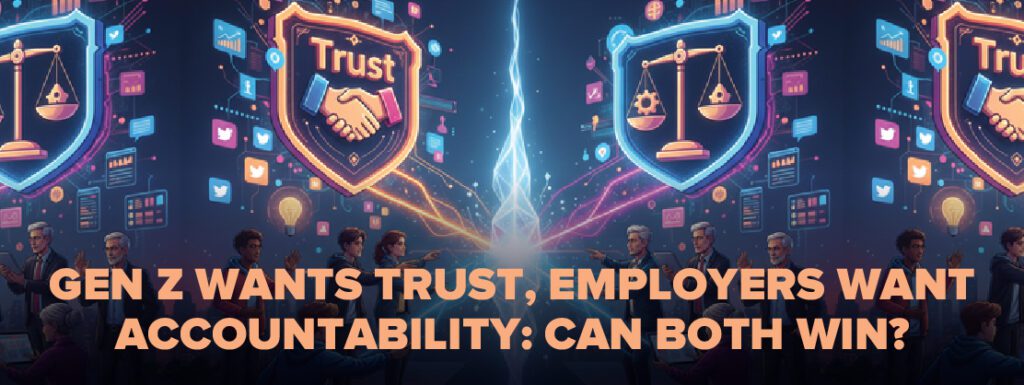
At the center of every workplace lies an unspoken truth: trust. The trust gap between Gen Z and their employers is significant. Trust can feel like love or a battleground depending on how both sides navigate it.
Gen Z, often called digital natives, grew up with the internet, smartphones, and social media. This generation is diverse, pragmatic, and more vocal about mental health than previous generations. Positioned between millennials and Gen Alpha, Gen Z carries both modern anxieties and modern opportunities.
Yet the workplace reality is troubling. According to Intelligent.com, one in six businesses hesitate to hire fresh graduates, citing concerns about professionalism, communication, and workplace readiness. Some Gen Z employees are even being let go within months. This raises two questions: What is happening, and how can Gen Z reshape this narrative?
Conflict is common. Since the beginning of humanity, disagreement and friction have shaped progress. So it is natural for a gap to exist between Gen Z and employers. The challenge is not the existence of the gap; it is how we respond to it.
Should we choose adjustment or argument? In reality, a healthy workplace requires both. If a Gen Z employee brings a creative idea and it’s rejected, they will argue. If they are unwilling to adjust, conflict arises. And if employers refuse to adapt, the gap widens.
Every issue can turn into a confrontation if viewed through a critical lens. The world is already chaotic; pushing Gen Z deeper into that chaos will only harm the future. To thrive, both sides must balance adjustment and argument, blending flexibility with constructive communication.
The world dislikes gaps; it always tries to fill them. Yet Gen Z faces major challenges: Communication issues, trust barriers, and Misunderstandings around gender perceptions. This is not just a gap; it’s a potential generational crisis. Every generation has the power to change the world, but doing so becomes difficult when the divide is this wide.
The world is changing rapidly. If Gen Z does not adapt and if employers do not meet them halfway, potential will be lost. Potential is the lifeblood of success. Gen Z has unstoppable potential: creativity, modern knowledge, and a strong technological advantage. They complete tasks efficiently, think differently, and innovate naturally. Yet a problem exists: Many Gen Z individuals don’t believe in their own potential.
As Roy T. Bennett said, “Believe in your infinite potential.” Reports show 25% of Gen Z do not trust their employers, which creates a damaging cycle: lack of trust leads to lack of confidence, which leads to lost potential. Both sides must work to rebuild trust and confidence.
The Gen Z trust deficit is not a flaw in one generation; it is a shared responsibility shaped by misunderstanding, resistance, and fear of change. Gen Z brings creativity, speed, and technological fluency, while organizations bring experience, structure, and stability. When trust is missing, both sides lose potential; when trust is built, progress accelerates. Bridging this gap requires more than tolerance; it demands empathy, open dialogue, and mutual adjustment. Employers must rethink control and embrace flexibility, while Gen Z must pair confidence with accountability and communication.
The future of work depends on this balance. Trust, once rebuilt, will not only close the generational divide but unlock the full potential of a generation capable of reshaping the world.
Author: MD. Nadim Ahmed
M.A. in English Language Teaching
Jahangirnagar University
Email: nadim@bangladeshbrandforum.com