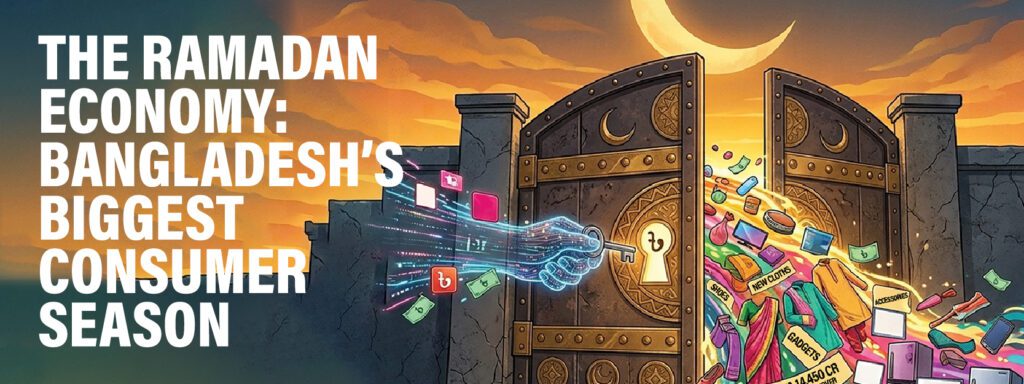
THE MONTH THAT MOVES MARKETS
On the evening of February 17, 2026, the crescent moon rose over Dhaka and Ramadan began. Within hours, the city had already transformed. The streets of New Market, Elephant Road, and the garment lanes of Keraniganj filled with early shoppers. Cloud kitchens in Gulshan began fielding orders for iftar platters. Wholesale traders in Sadarghat loaded trucks with dates from Dubai, spices from India, and dried fruits from Iran. On digital platforms, order volumes started their long climb — a steady escalation that would not peak until the last ten days of Ramadan, then surge again at Eid.
None of this is surprising to anyone who lives in Bangladesh. Ramadan has always been the country’s biggest commercial season. But the full dimensions of that season — its scale, its structure, its inefficiencies, and its unrealised potential — are rarely examined with the seriousness the data demands.
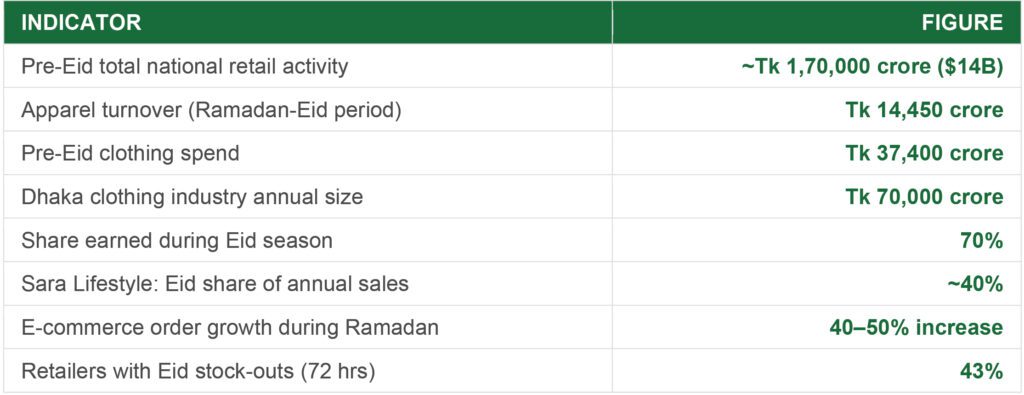
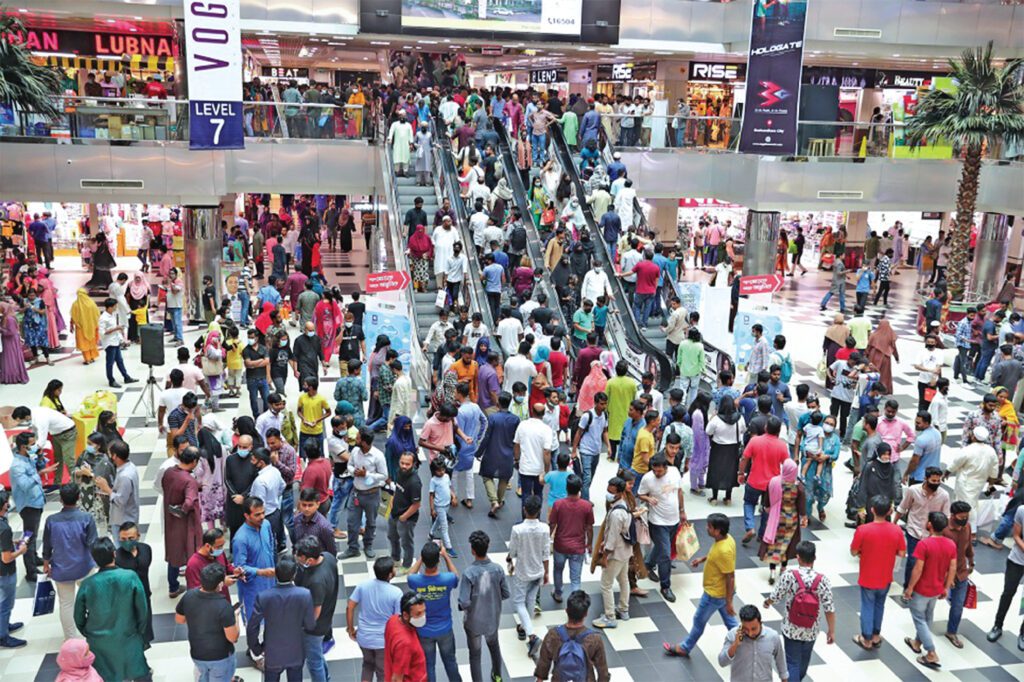
Consider the numbers. Pre-Eid shopping generates approximately Tk 1,70,000 crore — roughly $14 billion — in national retail activity, according to the Bangladesh Shop Owners Association. Clothing alone accounts for Tk 37,400 crore of that total. The festive season injects an estimated Tk 1,50,000 crore into Dhaka’s economy in a matter of weeks. Dhaka’s clothing industry, valued at Tk 70,000 crore annually, earns seventy percent of its revenue in the Eid season. For some retailers, a single month determines whether the year succeeds or fails.
And yet, for all its dynamism, Bangladesh’s Ramadan economy is also a story of structural contradiction. A country where consumer spending surges 40.6 percent during the holy month — and 76.3 percent during Eid — is also a country where per capita FMCG spending sits at just $22 per year, among the lowest in Asia. A country that generates $14 billion in festive retail is also one in which 43% of fashion retailers run out of their best-selling items within 72 hours of Eid sales beginning. A country where prices of essential commodities spike every Ramadan despite government duty cuts, price monitoring, and interventions by the Trading Corporation of Bangladesh.
The surge is real. The potential is vast. And the gap between the two tells us almost everything important about Bangladesh’s consumer economy.
“For some retailers, Eid accounts for forty percent of their annual total sales. A single month determines whether the year succeeds or fails.”
SECTION 1: THE SECTORS THAT WIN
Ramadan and Eid do not lift all sectors equally. The economy reorganises itself around a specific set of consumption priorities — clothing, food, footwear, electronics, and home goods — and within those categories, the gains are concentrated in ways that reward preparation and penalise complacency.
APPAREL: WHERE THE MONEY FLOWS
Apparel is the undisputed champion of the Ramadan-Eid economy. CAL Bangladesh, the capital market research group, estimates apparel turnover at Tk 14,450 crore during the festive period — the single largest category in the Ramadan consumer basket. That figure reflects not just the scale of purchasing but the cultural weight of the moment: in Bangladesh, wearing new clothes at Eid is not merely a preference but a near-universal custom that cuts across income levels, geographies, and generations.
The digital channel has transformed apparel retail during Ramadan at a pace that most traditional retailers have struggled to match. Online platforms reported a forty to fifty percent increase in total sales during Ramadan 2025, with daily e-commerce orders climbing from 250,000 at the start of the month to 350,000 by its midpoint.
But the sector’s structural weakness becomes visible precisely at its moment of greatest opportunity. A 2025 study by data analytics firm MarketPulse Bangladesh found that forty-three percent of fashion retailers experienced stock-outs of their best-selling items within the first seventy-two hours of Eid sales. At the same time, thirty-eight percent ended the season with thirty to fifty percent excess inventory of slower-moving products. The industry over-orders before major festivals by an estimated 150 percent and under-orders by forty percent for regular seasons — a ‘feast-or-famine’ inventory cycle that creates constant financial stress and leaves billions of taka in unmet demand on the table.
FOOD: THE IFTAR TABLE AND THE SUPPLY CHAIN
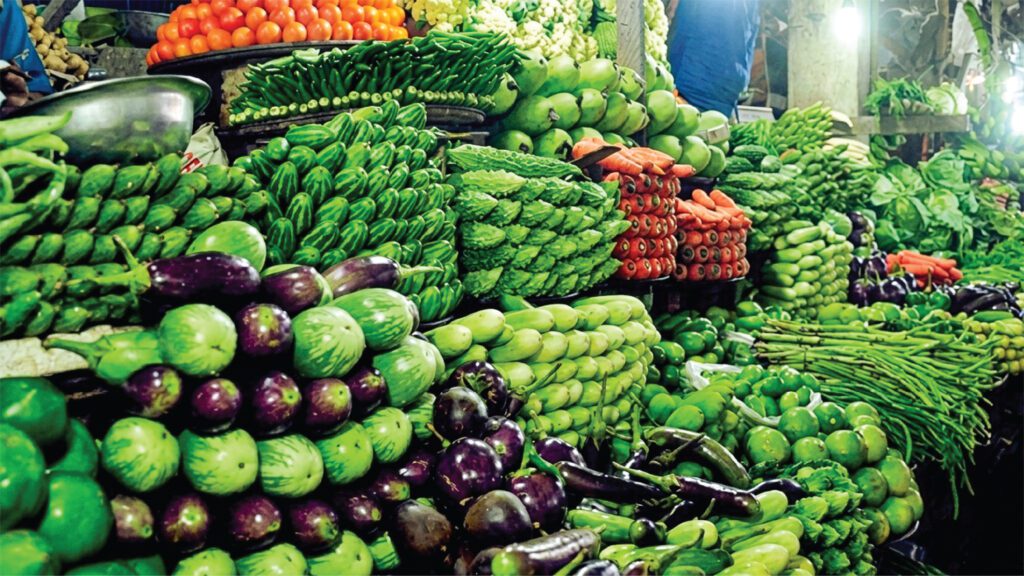
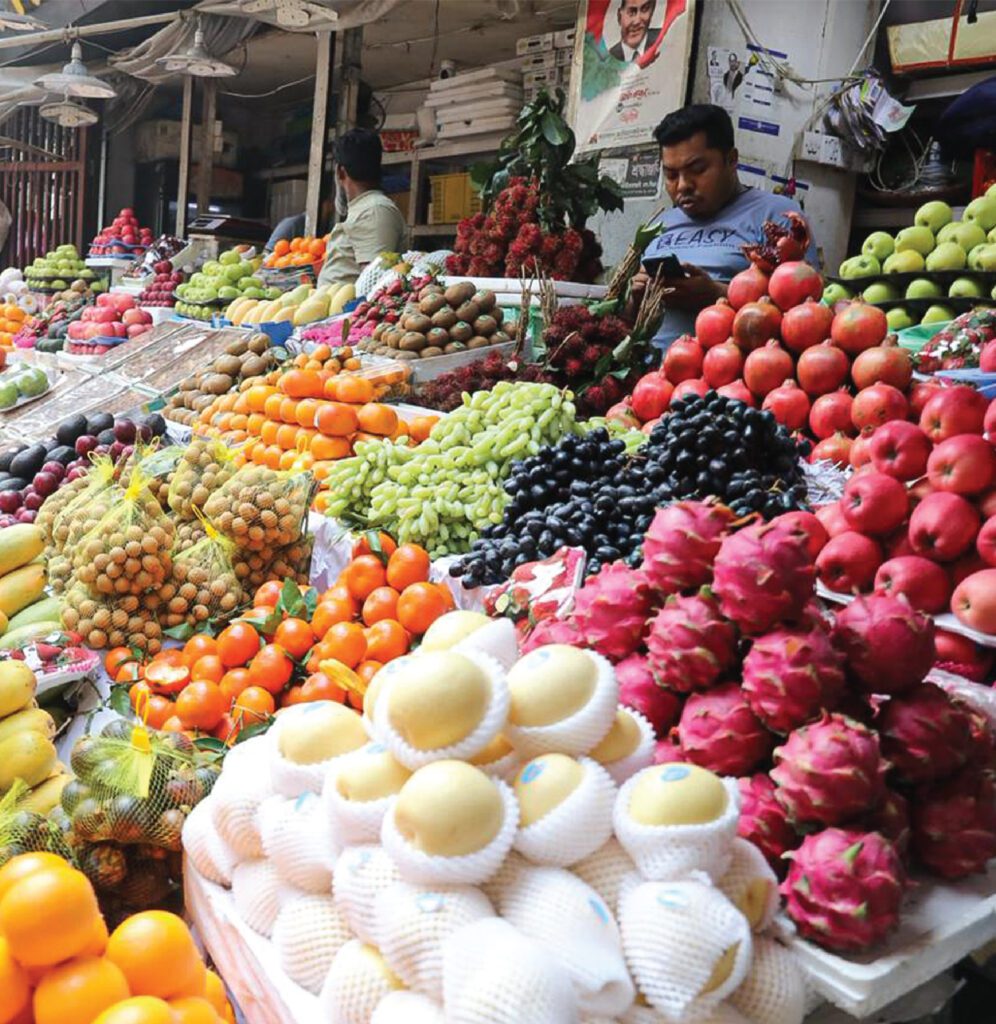
Food is the second pillar of the Ramadan economy, with estimated turnover of Tk 11,000 crore during the festive period. The logic is straightforward: when you eat only twice a day — at Suhoor before dawn and at Iftar after sunset — the quality and abundance of those meals takes on an outsized significance. Ramadan eating in Bangladesh is a social and spiritual act as much as a nutritional one. Iftar tables feature dates, halim, chhola, piyaju, beguni, jilapi, and a rotating cast of seasonal specialties. Suhoor meals are hearty and unhurried. The appetite for food — and the willingness to spend on it — expands dramatically.
Bangladesh’s foodservice market was estimated at $4.32 billion in 2025 by Mordor Intelligence and is projected to reach $8.05 billion by 2030, growing at a compound annual rate of 13.25 percent. Ramadan is the single most important revenue season in that trajectory. Over 8,000 restaurants operate in Dhaka alone. Cloud kitchens — the fastest-growing segment of the foodservice market — see their highest order volumes during Ramadan, particularly in the post-Iftar window between 8 PM and midnight.
The formal food market, however, is only part of the picture. Ramadan generates a vast informal food economy: street-side iftar bazaars in every neighbourhood, home-cooked iftar sets sold through WhatsApp groups and Facebook pages, haleem cauldrons simmering in residential lanes, and a seasonal explosion of handmade sweets and savouries. This informal economy is enormous and entirely unmeasured by official statistics — meaning the true food contribution to the Ramadan economy is likely significantly higher than what formal data captures.
The pharmaceutical and health sector also benefits from the Ramadan food cycle in ways that are less visible but economically significant. Dietary shifts during fasting — high sugar intake at Iftar, irregular hydration, changes in meal timing — drive demand for antacids, oral rehydration salts, digestive aids, and blood sugar management products. Pharmacies report their own Ramadan surges, particularly in the final days, as families stock up on both medicines and health supplements for the Eid period.
ELECTRONICS & DURABLES: THE EID BONUS ECONOMY
Consumer electronics and durable goods occupy a distinctive position in the Ramadan economy. Unlike food and clothing, which are bought throughout the month, electronics and home appliances tend to concentrate their sales in the Eid period itself — when annual bonuses arrive and households treat themselves to bigger-ticket purchases.
 The data from listed companies reveals the pattern with unusual clarity. Eid-ul-Fitr accounts for one-third of annual footwear sales in Bangladesh. For electronics, the scale is even more pronounced: Walton Hi-Tech Industries, Bangladesh’s largest domestic electronics manufacturer, sees approximately 37% of its annual sales in the Ramadan quarter. Around 60% of its full-year sales come in the four-month period from Ramadan through Eid-ul-Adha. Singer Bangladesh captures around thirty percent of its annual sales in the same window.
The mechanism is well understood: Ramadan coincides with the annual bonus cycle for formal sector workers. The arrival of bonus income — typically one month’s additional salary for government employees and a similar or greater amount for private sector workers — creates a surge in purchasing power that flows directly into categories consumers have been deferring: refrigerators, televisions, air conditioners, smartphones, and kitchen appliances. Walton, which has invested heavily in manufacturing capacity and domestic supply chains, has structured its production and distribution calendar entirely around this seasonal reality.
“Around sixty percent of Walton’s full-year sales come in the four-month stretch spanning Ramadan through Eid-ul-Adha.”
SECTION 2: THE STRUCTURAL PARADOX — A BIG SEASONAL SURGE ON A SMALL ANNUAL BASE
The Ramadan-Eid consumer surge is real and impressive. But understanding what it means for Bangladesh’s economy requires placing it against a base that is, by regional and global standards, remarkably low.
Bangladesh’s FMCG market is approximately $4 billion. Per capita annual FMCG expenditure is $22. Compare this with India, where per capita FMCG spending is $40 — nearly double — and where the total market has crossed $150 billion. Compare it with the Philippines, a country with nearly the same GDP size as Bangladesh and fifteen percent fewer people, where per capita FMCG spending is $100 and the total market is ten times larger. Bangladesh’s FMCG sector represents less than one percent of GDP; India’s constitutes more than three percent.
These are not small differences. They represent decades of divergence in consumption habits, retail infrastructure, product penetration, and purchasing behaviour. And they create the defining paradox of Bangladesh’s Ramadan economy: a spectacular seasonal spike on a stubbornly low annual base.
Nearly 28 percent of the population lives below the poverty line, according to a recent PPRC study, forcing families to focus spending on food and basic essentials. Even among the middle class, purchasing habits formed during leaner decades are slow to change. The result is a market where consumption growth follows income growth but with a significant lag — and where Ramadan and Eid represent not just a spending spike but also a genuine and culturally sanctioned permission for consumption that ordinary months do not provide.
This creates a structural problem for brands and retailers. If Ramadan concentrates the willingness to spend into thirty days, then the challenge is not just to capture the seasonal surge but to extend the consumption habits it temporarily unlocks into the rest of the year. No major Bangladeshi FMCG company has yet cracked this problem at scale. Unilever Bangladesh has made manufacturing investments — including becoming the ninth country globally to produce Dove soap locally — specifically to lower price points and make products accessible to the mass market year-round. But the broader challenge of shifting consumption culture is generational.
The distribution infrastructure reinforces the gap. Unilever Bangladesh, with one of the strongest distribution networks in the country, directly reaches approximately six lakh of the twelve lakh FMCG retail outlets nationally. Half the market is structurally beyond its reach. For smaller brands, the penetration is even more limited. This means that the Ramadan surge — even when it is large in absolute terms — is concentrated in urban and peri-urban markets, while rural Bangladesh participates in the festive economy primarily through informal channels that leave little permanent commercial infrastructure behind.
The inventory crisis that surfaces every Eid is a symptom of the same structural weakness. When forty-three percent of fashion retailers run out of their best-selling items within seventy-two hours and thirty-eight percent end the season with massive unsold inventory, the underlying problem is not just poor forecasting — it is the absence of the data infrastructure, demand signal sophistication, and supply chain flexibility that would allow businesses to respond to a concentrated and culturally predictable surge with precision. Bangladesh’s Ramadan economy generates enormous demand. Its commercial infrastructure was not built to capture it efficiently.
SECTION 3: THE ANNUAL PRICE CRISIS — STRUCTURAL FAILURE, NOT BAD LUCK
Every year, the government announces a package of Ramadan price stabilisation measures: duty reductions on essential commodities, expanded Trading Corporation of Bangladesh open market sales, price monitoring by district administration, and directives to importers and wholesalers. Every year, the prices of essential goods — dates, spices, edible oil, lentils, chickpeas, onions — rise anyway.
This is not coincidence. It is structure.
Consider the case of dates, which illustrates the mechanism with unusual clarity. In Ramadan 2026, a fifteen-percentage-point duty reduction on dates was announced well before the month began. The global date market was stable: Bangladesh’s primary suppliers — the UAE, Iraq, Saudi Arabia, and Egypt — all reported normal to slightly elevated output. There was no supply shock. Yet retail prices remained elevated throughout the early weeks of Ramadan.
The timing gap is one lever. Chittagong Port congestion is another. Bangladesh’s port — which handles approximately 9.8 million TEUs annually — routinely experiences spikes in congestion in the weeks leading up to Ramadan as importers rush to clear shipments of essential commodities. Customs clearance averages seventy-two hours under normal conditions; in the peak Ramadan import season, delays compound. The longer the cargo sits, the higher the holding costs. Those costs are passed on.
Intermediary chain markup is a third factor. Bangladesh’s commodity distribution typically passes through four to six layers between the importer and the final consumer: importer, national distributor, regional wholesaler, local wholesaler, and retailer. Each layer adds its margin. When demand is rising and consumers’ willingness to pay increases — as it does during Ramadan — each layer captures a share of the demand premium. Government-set retail prices, when they exist, are often absorbed at intermediary levels rather than passed to consumers in full.
The TCB’s mobile truck programme and designated dealer network provide some relief to lower-income households but cover a small fraction of total Ramadan commodity demand. Economists have repeatedly noted that these interventions serve as temporary stabilisers rather than structural solutions. When monitoring is weak and enforcement inconsistent, policy relief dissipates before it reaches the consumer.
The broader consequence is predictable and politically damaging: Ramadan, a time of spiritual generosity and community solidarity, becomes associated in the popular consciousness with price exploitation and economic hardship for ordinary families. The festive boom registered in retail turnover figures coexists with genuine material stress for the bottom forty percent of the income distribution — households for whom the Ramadan commodity basket represents a significant share of monthly expenditure.
The contrast with Malaysia is instructive. Malaysia’s ‘Ramadan Bazaar’ ecosystem — a government-private sector partnership that creates structured discount markets in every major city and town — demonstrates that price stability and commercial dynamism are not mutually exclusive. The bazaar model channels Ramadan demand into regulated, high-competition environments where pricing pressure is structural rather than administrative. Bangladesh has nothing equivalent. The gap is not one of resources but of institutional design.
“The festive boom registered in retail figures coexists with genuine hardship for the bottom forty percent — for whom the Ramadan commodity basket is a large share of monthly spending.”
SECTION 4: THE REMITTANCE MULTIPLIER — DIASPORA DOLLARS AND THE EID CONSUMPTION SURGE
Bangladesh’s Ramadan economy has a dimension that is absent from most comparable Muslim-majority economies and frequently underappreciated in domestic market analysis: the remittance multiplier.
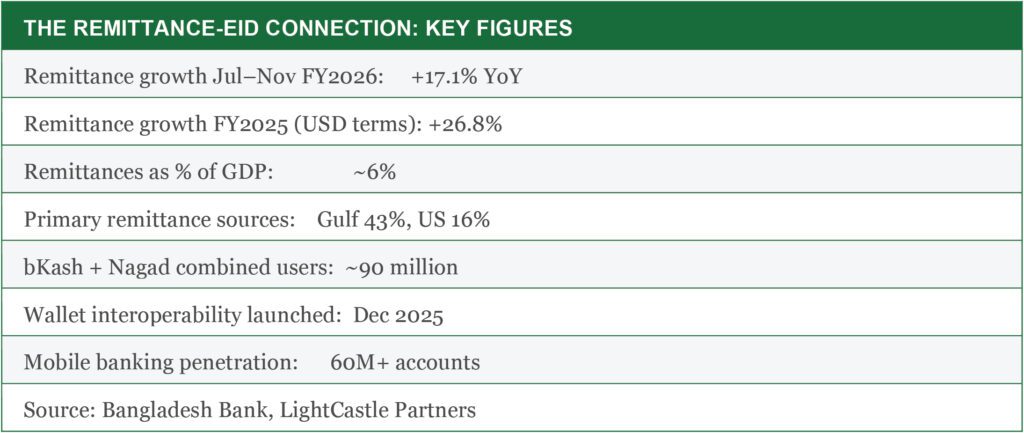
Remittances from Bangladeshis working abroad — the Gulf countries account for forty-three percent of the total, the United States sixteen percent, and the remainder distributed across Europe, Southeast Asia, and beyond — have always followed a Ramadan-Eid seasonal pattern. Workers abroad send more money home in the weeks leading up to Eid, ensuring their families can participate fully in the festive economy: new clothes, special foods, gifts for children, charitable giving. This is a cultural obligation as much as a financial transfer.
In FY2026, remittances grew 17.1 percent year-on-year in the July-November period, following a 26.8 percent growth in FY2025 in US dollar terms. Total remittances represent approximately six percent of Bangladesh’s GDP. For rural households that are the primary recipients of remittance income — and which represent a significant share of Bangladesh’s population — Eid remittances are often the largest single cash inflow of the year. It funds clothing purchases, home improvements, food expenditure, and, in some cases, consumer durable purchases that would otherwise be deferred indefinitely.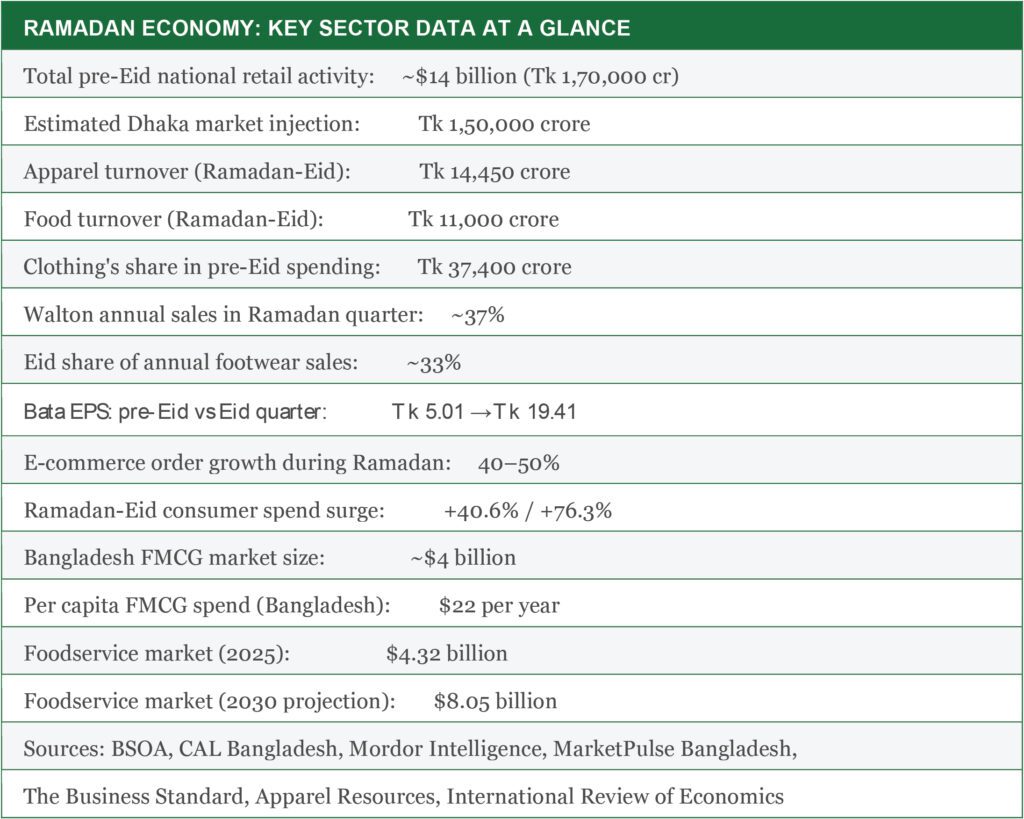 The aggregate effect is substantial. Remittance-receiving households have higher Eid consumption than non-remittance households across all income levels. The concentration of remittances in rural areas means that the Eid consumption surge has a meaningful geographic breadth — it is not confined to Dhaka and the divisional cities but extends into the district towns, upazila centres, and villages where formal retail is thin and informal markets are dominant.
Yet despite the predictability and scale of this annual income surge, neither brands nor retailers have developed systematic strategies to capture it. The Eid remittance arrives in tens of millions of mobile banking accounts — bKash, Nagad, Rocket — in the weeks before the holiday. It represents a concentrated, identifiable, and geographically distributed pool of purchasing power. Digital commerce platforms, particularly those with mobile-first architectures, have the infrastructure to reach these households. Very few have built the Ramadan-specific product offerings, payment flexibility, and last-mile delivery capacity to convert the remittance inflow into structured retail transactions.
This is perhaps the most significant untapped opportunity in Bangladesh’s Ramadan economy. Following the December 2025 launch of wallet-to-wallet interoperability between bKash and Nagad — creating a unified digital payment ecosystem for approximately 90 million users — the infrastructure to capture the remittance-driven consumption surge has never been better positioned. The commercial strategy to exploit it has yet to materialise.
SECTION 5: THE UNTAPPED UPSIDE — WHAT BANGLADESH LEAVES ON THE TABLE
The global Islamic economy is large, growing, and underserved. Muslim consumer spending worldwide is projected to approach $2.8 trillion. The youth demographic — Muslim populations under thirty — is estimated at 540 million by 2030, digitally native, mobile-first, and driving demand for halal goods, digital services, and culturally aligned products. Ramadan retail globally generated $66 billion across MENA markets in 2025. Spending in the UAE, Saudi Arabia, and Egypt increases by fifty-three percent overall during Ramadan. In the UK alone, Muslims spend upwards of £200 million on Ramadan-specific purchases each year.
Bangladesh, with 170 million Muslims — the world’s fourth-largest Muslim population — sits at the intersection of a domestic consumption story and a global Islamic economy opportunity. It is doing relatively little with either.
The nocturnal consumer is a related opportunity. Global research on Ramadan consumer behaviour has established with considerable consistency that the centre of gravity of Ramadan consumption shifts dramatically toward the evening and night. More than forty-eight percent of daily consumer movement in GCC markets happens after Iftar, compared to eighteen to twenty-two percent on ordinary days. Peak digital browsing, shopping decisions, and e-commerce order placement occur between eight PM and two AM. Food delivery, dessert shops, gaming, and convenience retail all surge post-Taraweeh. In Bangladesh, the rhythm is comparable — anyone who has walked through Dhaka’s commercial streets at eleven PM during Ramadan knows the nocturnal economy is real. But no Bangladeshi brand has built a formal strategy around it. Operating hours, promotional windows, delivery capacity, and marketing spend are not adjusted to reflect the fundamental inversion of consumer time that Ramadan creates.
The global halal economy offers a third dimension of missed opportunity. Bangladesh produces halal food, RMG, pharmaceuticals, and increasingly personal care products. The country’s pharmaceutical sector, which meets ninety-eight percent of domestic demand and exports to approximately 150 countries, enjoys a WTO waiver allowing production of patented drugs — a competitive advantage that expires when Bangladesh graduates from Least Developed Country status in November 2026. The Active Pharmaceutical Ingredients Industrial Park is being developed to create domestic manufacturing capacity. But the country lacks a coordinated halal branding and certification ecosystem that would allow it to position Bangladeshi-made goods — food, fashion, personal care — in global Muslim consumer markets in the way that Malaysia and Indonesia have done.
Malaysia and Indonesia have each built national halal export ecosystems — regulatory frameworks, certification bodies, international marketing campaigns, and dedicated trade promotion infrastructure — that have transformed Ramadan from a domestic consumption event into an export branding platform. For a country that is simultaneously graduating from LDC status, facing new trade barriers in its largest export markets, and seeking to diversify its export base beyond garments, the halal economy represents a natural strategic frontier. Ramadan, the global spotlight on Islamic consumption values, is the most compelling annual moment to build that positioning. Bangladesh has not yet begun to use it that way.
“Bangladesh has 170 million Muslims — the world’s fourth-largest Muslim population. It is doing relatively little with either its domestic Ramadan opportunity or the global Islamic economy.”
SECTION 6: WHAT BANGLADESH BRANDS GET WRONG ABOUT RAMADAN MARKETING
If the economic side of Bangladesh’s Ramadan story is characterised by structural underperformance, the marketing side is characterised by a strategic deficit that the global evidence on Ramadan consumer behaviour makes increasingly difficult to justify.
The global picture is instructive. YouGov’s 2026 Ramadan consumer research, conducted across Indonesia, Malaysia, the UAE, Saudi Arabia, and Turkey, finds that advertisements featuring celebrities or influencers are among the least likely to be seen as authentic during Ramadan across all five markets. In Turkey, emotionally driven family storytelling leads by a wide margin — thirty-four percent of consumers identify heartfelt family narratives as the most authentic form of Ramadan advertising, compared to just nine percent for celebrity-led messaging. In Indonesia, the equivalent figure is thirty-seven percent. In Malaysia, family storytelling leads at thirty-seven percent, with local culture and heritage at twenty-six percent.
The authenticity hierarchy during Ramadan is consistent and clear: genuine community representation, heartfelt human stories, and cultural grounding outperform promotional mechanics and celebrity endorsement. The ArabyAds and Ipsos 2026 Ramadan Consumption Report reinforces this: brands invest millions in Ramadan campaigns and see muted returns not because Ramadan consumers are unresponsive, but because the campaigns fail to meet the emotional register that the holy month demands.
Bangladesh’s Ramadan marketing landscape has not absorbed these lessons. The dominant campaign formats remain celebrity endorsements, promotional discounts, and product-feature advertising — the exact toolkit that global research consistently identifies as underperforming during Ramadan.
The timing problem is equally persistent. Ramadan is treated as a promotional calendar event rather than a cultural season — campaigns launch in the first week rather than building awareness in the three to four weeks before Ramadan begins, when consumer intent is already forming. Brandwatch data shows that online mentions of Ramadan jumped seventy-six percent in the three months before 2026 compared to the same period in 2025. The conversation is already happening, loudly, before the first crescent appears. Brands that wait until Ramadan begins to launch their campaigns have already ceded the awareness window to those that launched earlier.
The digital channel strategy is similarly reactive. During Ramadan, more than 90% of e-commerce transactions globally are mobile-led, peaking between 8 PM and 2 AM. In Bangladesh, where smartphone penetration has grown rapidly and mobile banking is near-ubiquitous, the mobile-first nocturnal consumer is a reality. Yet most Bangladeshi brands continue to run their digital campaigns on daylight schedules, with morning and afternoon advertising peaks that correspond to their internal working rhythms rather than the rhythms of the consumers they are trying to reach.
The opportunity that remains most consistently undercaptured is also the most straightforward: 81% of Ramadan consumers globally try new things inspired by Ramadan-related content. This is the highest new-product receptivity of any season. For consumer goods companies operating in a market as undersaturated as Bangladesh’s, a well-executed Ramadan content strategy — one that introduces new products through educational, aspirational, and community-embedded storytelling — could deliver lasting behaviour change beyond the thirty-day window. Almost no Bangladeshi brands use Ramadan this way.
“81% of Ramadan consumers globally try new things inspired by Ramadan-related content — the highest new-product receptivity of any season. Almost no Bangladeshi brand is using Ramadan this way.”
THE BIGGER QUESTION: A MIRROR AND AN OPPORTUNITY
The economics of Ramadan in Bangladesh are simultaneously a success story and an indictment. The success is real: $14 billion in retail activity, Tk 11,000 crore in food turnover, electronics manufacturers earning a third of their annual sales in a single quarter, brands built and broken in the six weeks between mid-February and Eid-ul-Fitr. The country’s Ramadan consumer economy is large, culturally embedded, and dynamically growing.
But the indictment is equally real. A country whose consumer economy surges forty percent in a single month and then subsides has not yet built the institutional infrastructure — the inventory and demand forecasting systems, the price stabilisation architecture, the year-round retail penetration, the Ramadan-specific brand strategy — to convert a seasonal windfall into permanent commercial development. The surge does not stick. The lessons from one Ramadan do not systematically inform the next. The price crisis that traumatised lower-income households in Ramadan 2024 unfolded again in 2025 and appears to be unfolding again in 2026.
The question Bangladesh’s business community should be asking is not ‘how big is Ramadan?’ but ‘what should we be building between Ramadans?’ The answer involves at least three things: first, genuine investment in retail infrastructure that reaches the sixty percent of FMCG outlets that even the largest brands cannot currently serve; second, a structural reform of commodity import and distribution systems that eliminates the timing gaps, logistics bottlenecks, and intermediary markup layers that produce annual price crises despite adequate global supply; and third, a fundamental shift in how brands think about Ramadan — from promotional calendar event to cultural investment, from peak-season sprint to year-round relationship.
The global Islamic economy is growing. The Muslim youth demographic is expanding. Bangladesh’s 170 million Muslims — young, increasingly connected, and gradually more prosperous — represent one of the largest and most underserved consumer markets in the world. The country’s diaspora sends billions of dollars home every year, concentrated in precisely the weeks that precede Eid.
The ingredients for a Ramadan economy that does more than surge and subside are present. What is missing is the strategic imagination to assemble them into something that lasts beyond thirty days.
The crescent moon that rises over Dhaka every February tells Bangladesh’s brands, retailers, policymakers, and entrepreneurs the same thing it always has: the season is here. The country that can finally build an economy worthy of its Ramadan will not be the one that merely survives the surge — it will be the one that learns, at last, to sustain it.
SOURCES & REFERENCES
- Bangladesh Shop Owners Association (BSOA) — Pre-Eid retail estimates
- CAL Bangladesh — Ramadan-Eid sectoral turnover analysis
- MarketPulse Bangladesh — Eid 2025 e-commerce inventory study
- International Review of Economics (2024) — Consumer spending during Ramadan and Eid in Bangladesh
- Mordor Intelligence — Bangladesh Foodservice Market Report 2025–2030
- The Business Standard — FMCG market analysis and Unilever Bangladesh interview
- Dhaka Tribune — Eid shopping trends and e-commerce data 2025
- Apparel Resources — Eid 2025 retail and fashion sector analysis
- YouGov Surveys — Ramadan 2026 consumer insights (5 markets)
- Brandwatch — Ramadan 2026 global consumer intelligence report
- ArabyAds & Ipsos — 2026 Ramadan Consumption Report
- Bangladesh Bank — Remittance data FY2025–FY2026
- Muslim Ad Network — Complete Ramadan 2026 Marketing Guide
- The Daily Star — Balancing faith and commerce during Ramadan
- LightCastle Partners — Bangladesh startup and digital economy reports