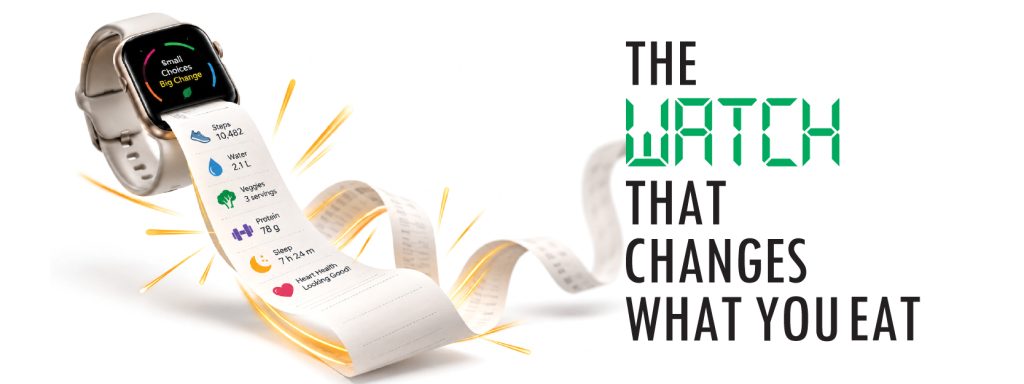
There is a claim making the rounds this year that sounds both plausible and slightly magical. NielsenIQ surveyed consumers across 17 countries in March and found that people who use wearables consume more water, more protein and more fresh produce than people who do not. The firm’s conclusion goes further than the numbers: technology, it argues, is no longer just reflecting habits, it is shaping them.
If that is right, then a device sold as a measuring instrument is quietly functioning as an intervention, and the wellness industry has stumbled into something more powerful than it was selling. It would explain a great deal about why the category keeps growing.
It would also require the arrow to point in a particular direction, and this is where the story gets more interesting.
Which came first, the watch or the salad?
NielsenIQ measured an association. People who wear trackers eat better. What the survey cannot tell you is whether the tracker produced the behaviour or simply found it.
Consider who buys one. Somebody who spends a meaningful sum on a device that counts their steps has already decided their steps are worth counting. They were, in all likelihood, the sort of person who buys fresh produce before the box was opened. The watch may be less a cause of the habit than a receipt for it.
Fortunately this is a testable question, and researchers have been testing it for years using the only method that settles causation: give trackers to some people, withhold them from others, and see what happens.
What the trials actually found
The most comprehensive answer comes from an umbrella review published in The Lancet Digital Health, which pooled the systematic reviews and meta-analyses rather than the individual studies. Its verdict is sobering. Across most health outcomes, the effect sizes were small to very small and often not statistically significant at all.
There were exceptions, and they are worth knowing because they are real rather than imagined. Weight-loss outcomes showed moderate effects: roughly one kilogram of weight, half a point of body mass index, and about one and a half centimetres off the waist. A separate meta-analysis of 23 trials involving 4,566 older adults found a clear increase in daily step count, but only over short-term follow-up.
So the device does something. It does considerably less than the marketing suggests, and what it does tends to fade.
The fading is the part that rarely appears in a product launch. Effects that show up strongly at eight or twelve weeks tend to shrink by six months, and the pattern repeats across enough separate reviews that it looks structural rather than accidental. Novelty carries people for a while. Then the number becomes wallpaper, which is roughly what happened to the step counter on every phone sold since 2015.
The experiment where they lied about the numbers
One study deserves special mention, because its design gets at exactly what the NielsenIQ finding implies.
Researchers gave 162 adults an Apple Watch to wear for five weeks, running an app that recorded their real step count and displayed a number on the face. After a baseline week with no feedback, participants were randomly assigned to four groups. One saw their accurate step count. One saw a figure deflated by 40 percent. One saw a figure inflated by 40 percent. The last group saw accurate numbers plus a short course on thinking more positively about their own activity levels. Nobody knew which group they were in.
In other words, the researchers separated the number from the behaviour and moved the number on its own. If the display is what shapes conduct, the inflated and deflated groups should have diverged sharply.
They did not find robust evidence that it worked that way. Believing you are more active than you are turns out not to reliably make you more active.
Which is a genuinely useful result, because it isolates what the device is actually doing. The watch is not persuading anybody. It is supplying information, and information only changes conduct when the person receiving it has already decided to act on it.
The bit that keeps getting skipped
A trial in Melbourne makes the same point from another direction. Researchers ran a twelve-week programme with 275 teenagers across 18 schools in disadvantaged areas, combining a Fitbit with digital coaching materials and weekly challenges delivered through social media. It was, by design, a serious attempt rather than a device handed over and forgotten. Physical activity did not increase, either immediately afterwards or six months later.
None of this means wearables are useless. It means the device is a measurement tool, and measurement changes behaviour only when somebody is already motivated to act on what it says. The trackers work best as an accessory to an intention that already exists, which is precisely why the people who own them look so healthy in survey data.
What this is worth knowing
For anyone buying one, the sensible expectation is modest and specific: a kilogram, a centimetre and a half, a few thousand extra steps for a while. That is a genuine return and not a transformation.
It also suggests the money is better spent on the intention than the instrument. A tracker attached to no particular plan measures a life you were going to live anyway. Attached to a specific target, with a reason behind it, the same device becomes the feedback loop that makes the target visible, and that is when the small effects in the trial data start showing up in a real person.
For anyone selling into this market, the finding matters more. A category built on the promise of behaviour change is resting on evidence that is thinner than the advertising, at exactly the moment consumers have become sceptical of health claims generally. The safer position is the honest one. The watch is a very good mirror. It was never a coach.
Sources: NielsenIQ Global Consumer Tech and Durable Goods survey, March 2026, covering 17 countries · Ferguson et al., “Effectiveness of wearable activity trackers to increase physical activity and improve health”, umbrella review, The Lancet Digital Health · Longitudinal randomised controlled trial of wearable fitness trackers and activity adequacy mindsets, Journal of Medical Internet Research (2023), 162 participants · Meta-analysis of wearable activity tracker interventions among community-dwelling older adults, 23 trials and 4,566 participants · Raising Awareness of Physical Activity (RAW-PA) cluster-randomised controlled trial, 275 adolescents across 18 Melbourne schools.
Author: Ariful Islam