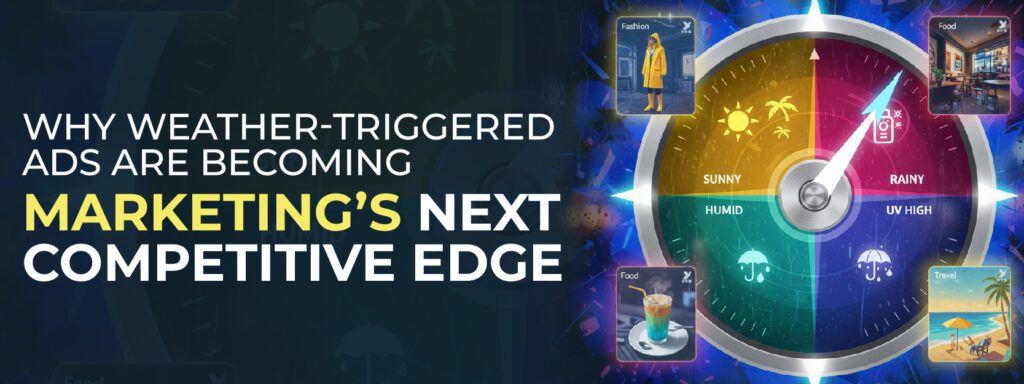
On an unusually rainy Wednesday evening in Dhaka last September, a local café chain triggered a push notification promoting hot lattes and cozy seating just minutes after showers began. The result? A noticeable uptick in footfall compared with similar days earlier that month. That simple alignment of message with moment — real-time conditions outside — is no longer a novelty. It’s emerging as a strategic lever for marketers worldwide. Today’s consumers are inundated with ads; the differentiator isn’t budgets but contextual relevance — and weather is one of the most accessible and powerful contextual signals marketers can use. Integrating weather into advertising isn’t guesswork; it’s a data-driven way to meet audiences where they are — literally.
The Real Business Logic Behind Weather Triggers
Weather-triggered advertising uses forecast and real-time conditions — temperature, rain, UV index — to decide which ads run, where, and when. Instead of generic ads served everywhere, creatives change dynamically based on local climate. A summer cooler ad during heatwaves or raincoat promo during monsoon downpours feels more relevant than a static message that ignores what people are experiencing outside.
That relevance isn’t trivial. According to performance benchmarks, weather-specific ads can deliver up to 89 % higher click-through rates compared to generic ads, with lower cost per click — an elegant way to boost ROI while reducing wasted impressions.
Global Campaigns That Moved the Needle
Leading brands have already tested and proven this approach:
- Molson Coors used weather triggers in their digital campaigns during hot weather and achieved significant uplifts in engagement, especially on social platforms.
- La Redoute, a European fashion retailer, saw 34 % more traffic and 17 % increase in sales from DOOH signage that adjusted messaging in response to local weather conditions.
- Bravissimo’s swimwear PPC ads — activated when sunny conditions appeared — drove a nearly 600 % surge in sales revenue for specific segments over three months.
- Dulux’s weather-triggered programmatic billboards in Australia increased store visits by 130 %, showing that even traditional retail can benefit.
These outcomes aren’t isolated anecdotes — they’re evidence of a repeatable strategy that aligns consumer intent with the external environment.
How Weather Triggers Change Campaign Strategy
For business leaders and CMOs, weather-aware campaigns bring strategic layers beyond simple triggers:
1) Define Weather Logic With Business Outcomes
Rather than generic triggers (e.g., “hot day”), map weather conditions to specific KPIs: sales lift, footfall, or app conversions. For a beverage brand, this might mean increasing bids on cold drink ads when temperatures exceed a local threshold. For apparel brands, design creatives for seasonal swings and automate triggers based on forecast windows.
2) Use Forecast + Real-Time Signals
Most platforms now allow integration of both forecasted and current weather data. A five-day forecast can trigger campaign adjustments before conditions arrive, giving marketers time to seed promotions ahead of demand spikes.
3) Dynamic Creative Optimization (DCO)
Build variations of creative for different weather conditions — sunny, rainy, cloudy — and automate delivery. Tools like marketing clouds or DCO engines can serve the right creative as weather conditions change hour-by-hour.
4) Channel-Specific Triggers
Weather targeting isn’t only for display ads. Push notifications, email, social, audio streaming platforms, and DOOH can all be weather-aware. For example, storm alerts can trigger rain gear promos via push, while a music streaming partner might push upbeat summer playlists with sponsored offers in high UV zones.
5) Measure With a Weather Lens
Traditional campaign metrics matter — but adding weather segmentation (e.g., ‘performance on rainy days vs. sunny days’) reveals actionable patterns. Brands can invest more confidently in conditions that historically drive conversion.
Why It Matters Now
Two forces are accelerating adoption of weather-aware advertising:
- Privacy shifts: As cookies fade, contextual signals like weather provide a non-intrusive but powerful way to personalize without tracking individuals.
- Climate volatility: Unpredictable weather patterns — from heatwaves to unseasonal storms — make static campaigns less effective. Weather-responsive ads adapt in real time, keeping relevance high.
For Bangladesh’s bustling urban markets, this matters. Dhaka’s summer temperatures often hover above 30 °C for months, triggering spikes in demand for cooling products, while monsoon bursts can shift consumer behaviour dramatically on a daily basis. Aligning campaign timing with these cycles isn’t just smart — it’s necessary for cutting through urban advertising noise.
Getting Started: A Practical Playbook
- Select reliable weather API data sources — accuracy matters for triggers.
- Map product categories to weather triggers — e.g., heat → cold beverages, rain → delivery promotions.
- Build modular creatives keyed to weather conditions.
- Automate triggers but review weekly performance — refine bid strategies and messages.
- Test across channels — a push notification may work better during sudden rain than a static social ad.
What Leaders Should Consider
Weather-triggered advertising isn’t a silver bullet, but it’s a strategic amplifier of relevance and timing. It demands cross-functional collaboration between analytics, creative, and media teams — and a test-and-learn mindset. The payoff is a more responsive, more engaging advertising ecosystem that meets consumers in the moment that matters.
In an era where attention is the rarest currency, the brands that harvest the immediate context — the weather outside your customer’s window — will be the ones leading conversations and conversions in 2026 and beyond.