A Miniso store in Times Square is stocking a Barbie collection that sold out within five days of its global launch. Urban Revivo’s flagship on London’s Neal Street sits directly next to Zara and Uniqlo. It opened there not to sell clothes but to be seen in that company.
This is a wave of Chinese retail brand expansion moving faster, cheaper, and with more strategic clarity than the Western incumbents; it is challenging. Zara took decades to go global. Starbucks spent years in the market before achieving real scale. The Chinese retail brands now entering international markets are skipping several of those steps entirely. The marketing strategies behind that acceleration are worth looking at closely.
IP licensing in Western retail has mostly been a tactic — a character collaboration layered on top of a brand that already knows what it is. Miniso and Pop Mart have made IP the brand’s core logic, not its decoration.
Miniso rotates IP seasons every six to eight weeks. Disney, Marvel, Sanrio, Barbie, Pixar — each rotation lands as a product launch event, not a quiet shelf update. The Barbie series introduced over 120 co-branded products globally. Within five days, nearly half had sold out, and the dedicated Barbie store in Changsha recorded 170% sales growth in its opening week. The logic is simple: Disney and Barbie already carry decades of emotional investment from consumers worldwide. When Miniso launches that collaboration, it enters a relationship already in place between the consumer and the IP and attaches itself at the moment of purchase.
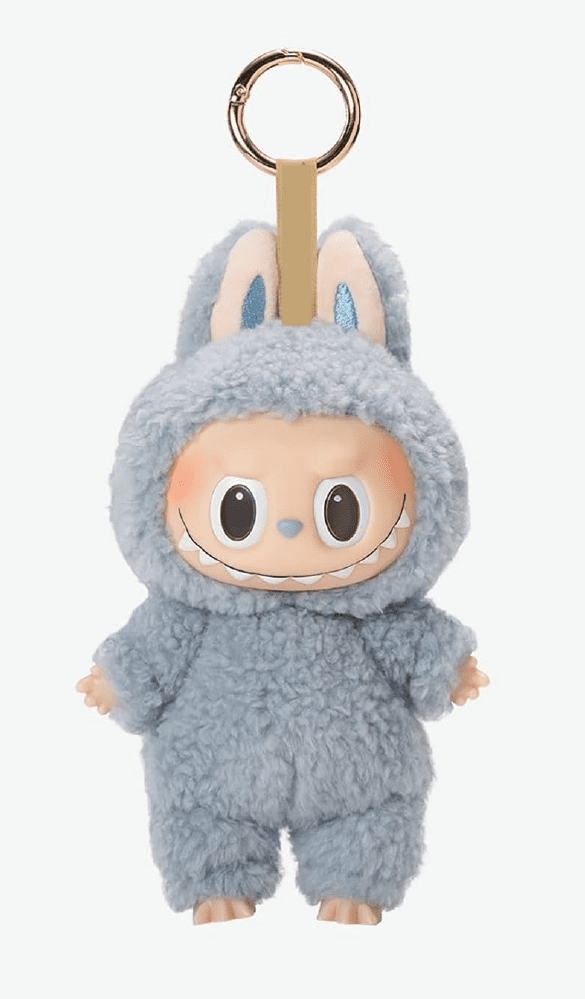
Pop Mart has run a more ambitious version of this by creating original IP rather than only licensing it. Labubu — the wide-eyed, fanged monster designed by Hong Kong artist Kasing Lung — became one of the world’s most recognised toy characters without advertising. The blind box did the work instead: sealed packaging that hides which character you receive, turning every purchase into anticipation. Entry prices are low enough to be impulsive. Rare variants drive secondary markets and resale premiums. In one 2025 campaign, Pop Mart sold 300,000 Labubu toys in a single livestream, generating over 500 million yuan in a month. Every unboxing video, every resale listing, every celebrity photograph with a Labubu keychain is media the brand never paid for.
When the mascot becomes the medium
Mixue built its global reach on a single character with a theme song. Snow King — a round, good-natured snowman — became one of the most shared pieces of branded audio in Chinese social media history, then spread internationally in multilingual versions adapted for each market without losing what makes it work.
Snow King is built to be remixed. His personality invites participation. Fans produce their own animations, stickers, parodies, and regional versions, pushing the brand into communities Mixue itself could never reach directly. Mixue does not make this content. It makes the conditions in which people want to. Each fan-made video costs the brand nothing.
“These brands have been particularly adept at sustaining consumer interest through relentless product innovation, often launching new items monthly. These launches are tied to limited-time promotions, exclusive merchandise and viral campaigns, which build excitement and urgency.”
Chagee’s jasmine green milk tea sold over 600 million cups as of August 2024, with 300 million sold in that year alone. Ninety-one percent of Chagee’s China revenue comes from its fresh milk tea series; 61% from just three products. That concentration is a strategic choice. When a product is that trusted, it sells on reputation. The marketing job becomes sustaining the ritual around it, not persuading anyone it exists.
The flagship is the message
Urban Revivo’s founder Leo Li has said it plainly: if his brand earns acceptance in London and New York, Chinese consumers will believe in it more at home too. The flagship is a credibility signal aimed at two audiences at once.
The stores Urban Revivo has opened in London’s Covent Garden, Westfield Stratford City, and New York’s SoHo sit deliberately alongside Zara, Uniqlo, and premium boutiques. Each location says: we belong here. Inside, the stores are built as experiences first — digital displays, curated capsule drops, VIP fitting rooms, weekly design rotations. Where Zara and H&M have pulled back from physical retail toward e-commerce, Urban Revivo is going the other way. In markets where the brand is new, the store is the most powerful communication tool it has.
Miniso applies the same logic at a lower price point. The Times Square flagship was not chosen for unit economics. A high-rent Manhattan location makes no sense at these price points. It was chosen because Times Square communicates global legitimacy in a way digital advertising cannot. The store costs money. The earned media and the brand association with the world’s most visited retail address are the return.
Chagee’s Paris pop-up during the 2024 Olympics was designed to generate global earned media during the highest-attention fortnight of the calendar year, not Paris revenue. The Los Angeles store that followed in 2025, positioned at Westfield Century City, was chosen partly for footfall and partly because the surrounding entertainment industry ecosystem amplifies a well-executed retail space in ways that most other cities do not.
Pride of origin as competitive advantage
Earlier Chinese brands going global often obscured their origins. Miniso’s early positioning as a Japanese-inspired lifestyle brand is the clearest example. The working assumption was that Chinese origin needed to be softened abroad.
That assumption has been dropped. Chagee’s brand proposition is built on Chinese tea culture as something globally desirable — presented directly, without filtering through a more palatable cultural lens. Its name references historical Chinese warrior kings. Its Southeast Asian stores benchmark against Starbucks, not local tea shops. In Indonesia, it secured halal certification before opening. In Malaysia, it became the first brand of freshly made tea to receive the Health Ministry’s Healthier Dining designation. The cultural confidence is paired with market-specific attention, which is what makes it credible rather than arrogant.
Urban Revivo’s founder described the global flagship strategy as a loop: international acceptance builds domestic prestige, which earns the brand deeper access to premium global markets, which generates further international acceptance. To enter Covent Garden with conviction and hold a position next to Zara, you need to believe your design is competitive on its own terms. Urban Revivo does.
For Bangladesh, this matters on two levels. Several of these brands are already present or heading toward South Asia, with Miniso expanding its Bangladesh footprint and Southeast Asian expansion sequences completed by others in the group.
The more lasting relevance is strategic. The playbook these brands are running does not require a Chinese manufacturing base. It requires a different way of thinking about what a brand is for.
Author: Marzia Islam
Sources: PortersFiveForce / MatrixBCG — Miniso Growth Strategy (2025–26) · ChoZan — What Is Pop Mart? (Feb 2026) · FullIntel — Pop Mart Case Study: Labubu Mania (Feb 2026) · CKGSB Knowledge — Mixue Low-Cost Business Model (Dec 2025) · Brandpipers — Mixue Marketing Strategy (Mar 2025) · European Business Magazine — Urban Revivo Strikes Global Ambitions (Oct 2025) · AInvest — Urban Revivo Global Expansion Strategic Bet (Sep 2025) · KR-Asia — China’s Zara Challenger Urban Revivo (May 2025) · RockFlow — Chagee IPO: Tea Revolution (Apr 2025) · China Daily — Tea Brands Push Toward Global Presence (Mar 2026) · China Daily — Beverage Chains Expand Overseas (Jul 2025) · Reuters — Chinese Consumer Brands Test US Market (Dec 2025)