Trader Joe’s has no app. No delivery service. No partnership with Instacart, DoorDash, or any third-party platform. In 2025, despite this stubborn refusal to participate in the convenience economy, its tote bag became a status symbol in London — a city where the brand has no stores at all. Hermès produces approximately 15,000 to 20,000 Birkin bags a year in a world that wants millions. Louis Vuitton moved its iconic Neverfull onto a waitlist in 2023; its secondary market value rose from 136% to 158% of retail the following year. A small fashion label named Knitwrth announces its collection release dates weeks in advance, sells out within minutes, and enforces a strict no-returns, no-exchange, no-refund policy. It is perpetually in demand.
None of these are operational limitations. They are strategic decisions — deliberate acts of restraint in a market where the prevailing logic has been, for the better part of a decade, exactly the opposite: remove every barrier, make everything faster and more immediately available. The reintroduction of friction — purposeful, designed, grounded in a specific reading of consumer psychology — is one of the stranger turns in brand strategy right now.
The hidden cost of making everything easy
The frictionless design movement, pioneered in Silicon Valley and adopted across every category that cared about customer experience, was built on a single assumption: the less effort a consumer expends, the more they will buy, and the more loyal they will become. For mass-market transaction volume, this was largely correct. One-click purchasing, same-day delivery, and seamless checkout flows produced extraordinary growth for a decade.
But optimising exclusively for completion rate is not the same as optimising for brand. The metrics frictionless design improved were transactional. What it quietly eroded was experiential: the sense that a purchase involved something beyond a tap. When every brand deploys the same frictionless interface, the interface stops differentiating anyone. The consumer who buys from a seamless app and the consumer who buys from a seamless competitor’s app have had identical experiences. The brand, in the moment that mattered most, was invisible.
| “Think about the last few things you bought frictionlessly. One-click orders that materialise twelve hours later. Subscriptions that renew invisibly in the background like digital mould. How many of those brands can you recall unprompted? How much loyalty do you feel beyond ‘it turned up and it wasn’t terrible’?”
Kit Altin, Strategy Director, The Gate — January 2026 |
The frictionless era optimised for completion. It forgot to optimise for meaning.
The principle is called effort justification: when people invest effort into something — time, attention, a process that requires patience — they assign greater value to the outcome. The brain elevates the thing being worked toward, because the effort needs to make sense. A meal cooked over four hours tastes different from one assembled in ten minutes from identical ingredients. Relationships that required persistence carry more weight. Skills developed over years feel more genuinely owned.
In brand experience, this plays out in specific ways. The wait before access. The consultation before a purchase. The appointment before entering the showroom. The packaging that takes sixty deliberate seconds to open. Each is a small investment that deepens commitment before the transaction is complete. Anticipation — wanting something you cannot yet have — is a powerful driver of perceived value. Desire grows in the space between intention and fulfilment. Fill that space with instant gratification and the desire goes with it.
Selective friction also functions as a signal. When a brand makes everything immediately available to everyone, it communicates abundance — which, in most categories, reads as ordinariness. When a brand makes something harder to obtain, it communicates selectivity. The extra step tells the consumer that not everyone gets this far. The barrier is a credential, and it changes not just behaviour but self-perception. They are not simply buying. They are qualifying.
| 250% — value retention of a Hermès Birkin on the secondary market in 2024
Scarcity built into the brand experience — controlled production, relationship-based access, opaque allocation — creates a resale premium that functions as free advertising. The inflated secondary market amplifies desire without the brand spending a penny on it. |
It is not just a luxury story
Hermès is an obvious example, but the strategy is not confined to luxury or dependent on decades of inherited mythology. Porsche’s 2025 holiday film was produced entirely without generative AI tools — a choice announced openly. It drew more than 10 million Instagram views. The film was not remarkable for production quality. It was remarkable for what it refused: the faster, cheaper, algorithmically assisted route any competitor could have taken. In a content environment saturated with frictionlessly generated imagery, doing it the harder way became the story. Visible effort was the differentiator.
Liquid Death took a related approach at the Super Bowl — an advertisement built from papier-mâché chaos, so overtly handmade it could not be mistaken for AI output. Hermès rebuilt its digital presence with a deliberately hand-drawn, wobbly interface. These are responses to a specific market condition: when frictionless production has made everything look identical, the visible marks of human effort become a form of scarcity. The mark of the maker is, in 2026, a differentiator because fewer things carry it.
The principle scales into retail across categories. Appointment-only shopping, drop-release models with announced dates, consultation-led purchase flows, limited-run product lines — all create the conditions for anticipation, selectivity, and desire that convenience cannot generate. What these share is not difficulty for its own sake. It is difficulty that communicates something about what lies behind it.
McCann Singapore strategists Naomi Low and Tatiyana Emylia have documented the broader cultural current beneath these brand decisions, naming it friction-maxxing — the deliberate embrace of effort and analogue experience as identity. People are returning to vinyl when streaming is available. Baking sourdough. Swapping smartphones for simpler devices. Taking long-haul flights without headphones or screens — now called rawdogging — as a form of reclaimed presence. “Effort is no longer just a behavioural choice — it is a marker of identity,” they wrote in April 2026. “In a world where algorithms anticipate every need, effort becomes a way to stand apart.” When the cultural current and the brand strategy run in the same direction, the strategy is harder to resist.
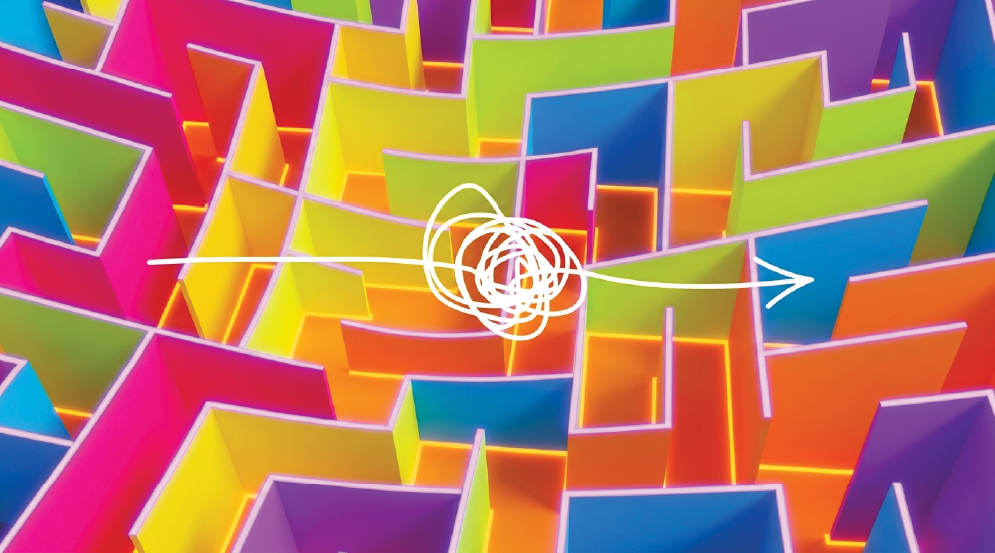
In a world where algorithms anticipate every need, choosing difficulty is how consumers assert that they are more than the sum of their preferences.
The one mistake that turns this strategy against you
The risk in this argument is clear and worth addressing directly: it could be misread as a justification for making things difficult. It is not — and brands that read it that way will damage themselves faster than frictionless convenience ever could.
Accidental friction — the checkout that requires eight steps when three would do, the policy that is unclear, the delay that is unexplained, the customer who must repeat information because two systems do not communicate — is operational failure. It erodes trust and drives abandonment. It has no strategic name worth giving it.
Meaningful friction is different. It is deliberate, legible, and rewards the consumer for the effort they invest. The consultation before a custom order communicates expertise and personalisation. The packaging that takes a minute to open communicates care. The waitlist signals that what is behind it is worth waiting for. The appointment means you will be treated as an individual, not processed as a transaction. In each case, the friction is a message — and the message raises the value of what follows.
Scarcity-based friction works when the scarcity is real — when the wait reflects genuine artisanal production time, limited capacity, or true curation. A waitlist manufactured purely to simulate exclusivity without underlying substance is detected quickly in 2026, and the backlash carries the specific toxicity of having been manipulated. Hermès has earned its mythology through decades of genuine craft. That inheritance makes the wait credible. A brand that introduces a waitlist to perform exclusivity without having built the craft beneath it will find the strategy accelerates the cynicism it was designed to prevent.
| “One is a UX bug. The other is a brand asset. Stupid friction is accidental, legacy, misaligned with any emotional value. Meaningful friction is deliberate and connected to an outcome — identity, pride, anticipation, care. The design intent is entirely different. Consumers can tell.”
Kit Altin, The Gate |
What this means for Bangladesh
The dominant investment direction in Bangladesh’s brand and retail landscape has been, rightly, frictionless — faster digital payment, simpler mobile checkout, more accessible e-commerce. This direction should continue; it is correct for mass-market growth and financial inclusion. But as the market matures and brand competition intensifies, a second question is emerging: not just how to make buying easier, but how to make certain brands feel worth wanting.
The evidence of informal friction strategy is already present, often deployed instinctively by the brands generating the strongest desire in their categories. The tailor who requires a fitting appointment and does not accommodate walk-ins. The restaurant that takes reservations by phone rather than app and is perpetually difficult to get into. The fashion label that does limited drops with announced dates and sells out in hours. The consultant whose calendar is always slightly hard to access. None of these are accidents. They are friction strategies — and they are producing exactly the outcomes their brands are seeking.
The move from instinct to deliberate design is where the value is. The brands in Bangladesh already running informal friction strategies — the tailor with the appointment-only fitting, the label that sells out in hours — are sitting on something worth understanding properly. The behavioural mechanics behind why these strategies work can be applied across product design, access, communication, and physical experience. The difference between stumbling onto a waitlist and knowing why it works is the difference between a tactic and a strategy.
The frictionless era is not ending. Speed and convenience remain essential for most of what most brands do. But for brands trying to build something that lasts — loyalty that survives a price comparison, desire that outlasts a promotional cycle — convenience alone is not enough. The brands that endure are the ones asking a harder question. Not just: what can we remove? But: what are we keeping, and why?