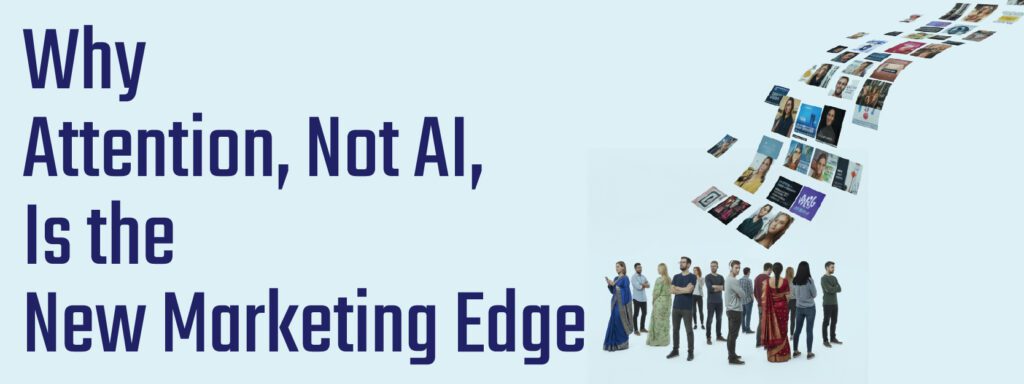
The internet has entered a new phase where content creation is effortless, instant, and limitless. AI tools can generate polished images and videos in seconds, turning every brand, creator, and startup into high-volume publishers. But while production has become cheap and frictionless, human attention hasn’t kept pace. Viewers already spend nearly an hour a day watching social video, yet their patience grows thinner with every swipe. With AI making professional-grade video effortless, production is no longer the differentiator. What truly matters now is understanding what makes viewers stop, trust, and remember a brand.
Content Creation Has Shifted from Scarcity to Saturation
Typically, a production means crews, lights, travel days, and a line item that had to fight its way through budget reviews. A single live-action brand piece could cost thousands of dollars per finished minute, which naturally limited how often teams hit the record button. Traditional shoots still sit in that range today, while AI-driven tools can cut the cost of a minute of video to just a few dollars, or even cents, once a subscription is in place. That shift changes everything about the supply side of marketing video.
We have seen this film before, with desktop publishing and later with early social platforms, which turned every computer and smartphone into a mini-studio. As the supply of glossy clips surges, the signal value of polish drops. Viewers now scroll through so many clean, edited pieces that production quality feels like table stakes. Brands are no longer competing on who can produce video, but on who can earn attention in a saturated stream. Attention is now scarce.
Attention Has Become the Main Currency for Brands
Recommendation feeds do not care how hard a creative team worked on a video. They care whether people stop, watch, react, and come back for more. AI tools now produce an endless supply of clips that look good enough to keep the scroll moving. The result is a river of “watchable enough” content that never runs dry. In that environment, frequency and volume tend to earn algorithmic favour because more posts create more occasions to capture a brief pause.
For viewers, this constant flow quietly rewires habits. People skim, tap, and swipe at the first sign of boredom. A slow opening, a generic hook, or a stale sound is enough to lose them in seconds. Patience shrinks, and so does the benefit of the doubt. At the same time, suspicion rises. Many viewers now assume heavy scripting, filters, or artificial faces even when a piece is completely genuine, which makes trust harder to win and easier to lose. Brands feel that pressure.
Visual Polish No Longer Guarantees Brand Differentiation
Cinematic transitions, smooth camera moves, and perfect lighting were used to signal that a brand had serious backing. Now they feel more like a default setting. AI editing suites and template-driven tools make it simple to add glossy overlays, colour grades, and motion graphics to almost anything. Viewers have grown used to this standard, so polish on its own rarely signals quality or honesty.
At the same time, AI voices, digital avatars, and synthetic presenters can pitch products that never existed or features that are still on a whiteboard. Mock demos look real enough to pass at a glance. The line between product reality and staged fiction starts to blur for anyone watching at speed.
Many teams pick from the same visual presets, stock scenes, and pacing, which flattens identity. When every clip feels interchangeable, “looking professional” without a clear voice, point of view, or promise turns into the fastest route to forgettable content.
Human Storytelling Now Sits Above Tools in Creative Priority
AI video platforms are impressive, but they are the easy part. Anyone can learn the prompts. What is scarce is judgment. Someone has to decide which story is worth telling, who should be at the centre, and what moment matters for the customer. That work cannot be automated with a preset.
At its core, marketing story craft is simple. There is tension, something the customer is trying to fix or achieve. There are stakes; what happens if they succeed or fail? Then there is a change in how their situation looks after they adopt a product or idea. Without that arc, the most dazzling clip feels shallow.
Good stories also sit inside culture. They speak in the local language, use references that groups share, and get humour and tone right. That is why teams should prize editors, planners, and researchers who can take rough AI output and shape it into a clear, coherent narrative.
Trust Is Under Pressure in an Age of Synthetic Stories
AI tools can now script, cast, and edit full testimonial videos without a single real customer in sight. Case studies can feature composite characters, tidy numbers, and staged “results” that were never actually measured. On screen, these clips look persuasive. They tick boxes in dashboards. They make campaign reports shine. Yet behind that shine sits a risk. Short spikes in click-through rates or sign-ups can come at the cost of long-term credibility if people later feel they were misled.
Brands need firm red lines. Fake social proof, invented customers, and fabricated quotes might win a quarter, then stain the brand for years. A better path is honest disclosure. State when AI helped with script drafts, visuals, translation, or voice. Keep real staff, partners, and customers visible at key points. Audiences can accept automation. What they rarely forgive is the feeling that a company tried to trick them.
Brands Need New Metrics for Measuring Video Impact
For a long time, impressions, views, and upload counts have passed as proof that a video strategy was working. In an AI-heavy landscape, those figures feel increasingly thin. A model can generate clips at an industrial scale, yet sheer volume says very little about whether anyone actually watched with care, remembered a message, or changed a decision.
More telling signals sit deeper in the record. Watch time inside key segments shows who stayed with the story. Saves, replies, and shares that carry a few lines of personal comment suggest that a piece landed with real weight. Even blunt criticism can show where content feels staged, hollow, or repetitive.
Across many AI-generated versions, brands also need to watch for narrative consistency. Does the same promise appear, in recognisable form, each time? Do tone, claims, and characters line up? Some teams already cut back on scattershot posts and instead build a small number of recurring series that invite habit and trust over time.

AI Video Works Best as a Copilot for Creative Teams
AI earns its place in video work by handling speed and variation. It can turn a brief into ten hooks, three layouts, and countless cuts in a fraction of the time a human team would need. People still set direction. They decide which audience matters, which story matters, and which risks are worth taking.
A simple workflow helps. Start with prompt-based ideation to generate angles, formats, and scripts. Move to quick prototypes so teams can see and hear ideas rather than argue in abstract. Then pause. Human reviewers step in to edit, combine, and cut until the piece reflects actual strategy, not just what a model guessed might perform.
Clear guardrails keep this process steady. Style rules for language, prompts for visual identity, and a short list of “never use” topics or claims. Final approval should always sit with people who check ethics, accuracy, and long-term brand impact before a clip goes live.
Brands Can Rebuild Attention through Honest and Repeatable Formats
Brands that accept attention as limited can structure video in two layers. The fast lane holds short clips for reach: hooks, product moments, quick answers to common questions. The slow lane holds episodes that take time, give context, and reward those who already care.
Repeatable formats help people know why to return. A weekly product clinic, a founder note, a customer spotlight, or a recurring character from inside the company can all create that rhythm. Audiences begin to expect the next instalment rather than waiting for an algorithm to decide.
Honesty matters in both lanes. Behind-the-scenes cuts, early drafts, and unscripted exchanges show that real people stand behind the brand. Invite customers, partners, and staff to share ideas or appear on screen. Co-created pieces often surface stories no off-the-shelf model would invent.
Leaders Must Treat Attention as a Strategic and Ethical Choice
Return to that early scroll on a marketer’s phone. One brand floods the feed with near identical clips, each polished, each forgotten. Another appears less often, but every sighting feels considered, quietly honest. The difference is more than style. It reflects a choice about how much of a viewer’s time a company is willing to consume.
Respect for attention now acts as an advantage. Brands that treat viewers as curious adults tend to earn patience when they need it. That calls for clear principles. Leaders can decide how much to release, which stories merit repetition, and which ideas do not need video at all.
AI video will keep expanding. The brands that hold attention will be those that use it to clarify, teach, and entertain instead of filling the feed.
Author: Nusrat Jahan