Digital teams and creative departments all over the world have been facing intense pressure to innovate quickly due to the boom in AI technology. Creative leaders and marketing people are aware that generative AI tools are shaking up their game. According to one of the surveys by StackAdapt and Ascend2, the production of creative content is at the top of the list of martech in which AI is likely to have the greatest influence.
Marketers go so far as to claim that 83% would reduce agency budgets should they be able to automate content creation completely. It is in this context that the digital leader should not only embrace AI to be fast but also protect the human strengths of the team. The trick is to have a human-oriented approach to leadership: use AI as an effective instrument and retain creativity at the same time. According to one of the authors of the Harvard Business Review, AI is not the guide but certainly a powerful tool. The author emphasized that the difference is made by leaders who possess social and emotional intelligence and are genuinely interested in the well-being of people.
Successful digital leaders doing this balancing act exercise transformational, people-centric leadership despite their efforts to bring about a technical change. The surveys conducted by the Viva platform of Microsoft reveal that when leaders promote the four traditional dimensions of transformational leadership, the AI savviness and trust skyrocket. The dimensions include encouraging experimentation, providing individual guidance, presenting a powerful vision, and exemplifying AI application. This could be achieved in practice by establishing a clear but adaptable vision and ensuring that no one feels left behind by the change.
Leaders can clearly specify what AI use should be good for the team (i.e., AI should inform and write the content, but humans edit final versions) and what situations require humans to override AI. This kind of clarity provides confidence and direction to the employees. In fact, Viva discovered that individuals who believed their leaders were actively supportive of them in the use of AI were 1.8x more likely to use AI tools on a daily basis than those who did not believe their leaders were supportive of them. That is, a supportive leadership style does not only speed up the process of adoption of AI but also encourages the team. Employees state that the collaboration with AI tends to increase their enthusiasm and confidence, rather than their anxiety.
How Digital Leaders Empower Hybrid Human-AI Teams
Digital team leads are moving beyond a conventional command-and-control model of organizing hybrid teams of people and AI. The days of micromanagement, when AI is applied to routine tasks, are over, as one innovation consultancy puts it. Rather, leaders leave power to subordinates in areas where it makes the most sense. They allow data specialists to feed AI systems and leave designers and strategists to create compelling stories or come up with strategies informed by AI insights. Practically, this would be pairing cross-functional talents like data scientists with creative leads in order to make the analyses of AI contextual to humans.
Leaders carry the ability to cultivate adaptability and education. They are promoting a growth mentality, providing workshops or even prompting bootcamps so staff can experiment with AI safely. According to a study at the Centre for Business Innovation (CBI), teams that obtained hands-on AI prompting training utilized the tools much better and implemented them more effectively. Another way that leaders create psychological safety is by openly soliciting feedback on AI outputs. Instead of silencing doubts, they celebrate the bravery to challenge the recommendations of AI.
For example, a leader can organize frequent check-ins to have designers review AI-generated drafts or marketers revise AI-generated copy. Such open communication fosters trust in the process. Employees will feel listened to and understand how to trust AI and be skeptical of it. It is essential to build such trust, since, regardless of how intelligent the algorithms are, accountability is a human factor. The leaders ensure that they clarify that ethical choices, brand values, and customer influence cannot be delegated to a machine. AI can suggest solutions, but human teams have to interpret, optimize, or dismiss them. And leaders have to make sure that metrics remain customer-focused as opposed to being efficiency-oriented.
Upskilling, Culture and Well-Being of Team
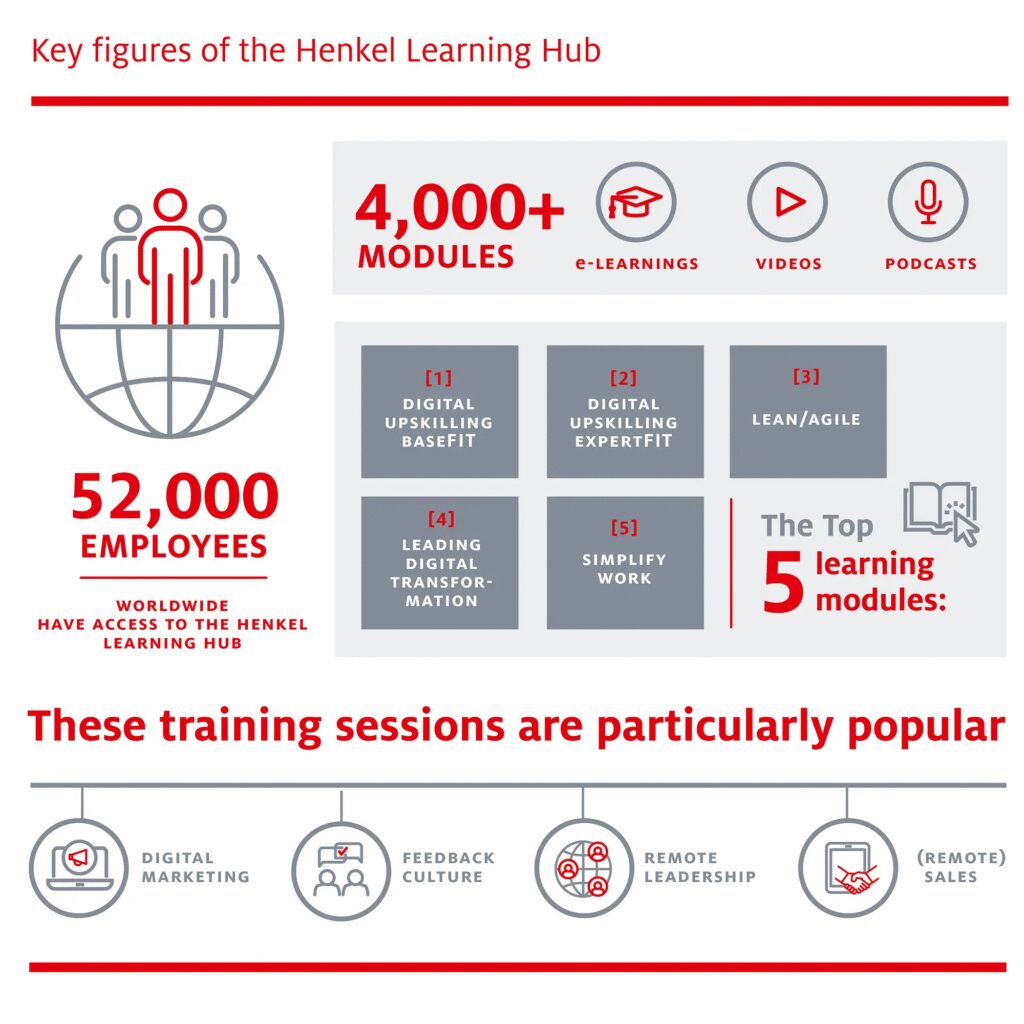
One of the fundamental means that digital leaders use to safeguard their staff is investing in skills and career development. AI should not be a risk when it is perceived as an empowering technology by employees. Companies like Henkel have initiated global upskilling initiatives to ensure that thousands of employees acquire new digital skills on a regular basis. Such a culture of lifelong learning is an indication that the organization cares about its people and wants everyone to develop.
Leaders can mirror this approach by carving out time to train, invite specialists, or establish mentorship groups with team members who are AI-savvy to guide others. Even minor measures, such as a weekly or monthly session of AI exploration, can help instill in them the idea that learning is promoted.
A motivated team is a well-trained team also. Employees are more interested when they feel that they are acquiring valuable skills. Millennials (who frequently lead the way in the use of AI) can be turned into change-makers if they believe that they can develop skills. Leaders must use this energy to make AI literacy widespread. It shouldn’t be siloed in IT or analytics. For instance, a product manager may study the fundamentals of prompt engineering, whereas a designer may study image-generation software. This disseminated knowledge makes everyone aware of the potentials and the drawbacks of AI. The best ideas, according to a Harvard study, are those that are generated by humans and machines collaborating with each other.
Simultaneously, leaders should be aware of burnout and well-being. Change can be draining, and even without technology, digital work is already stressful. Good leaders observe work loads and pace. They advocate a tradeoff: automating routine work with the help of AI. Regular check-ins, candid discussions on work-life balance, and acknowledgment of small victories are all helpful to maintain high morale. Notably, leaders themselves are role models of self-care and learning humility. Expressing what they are still learning about AI sends the message that it is okay to learn slowly, too.
Actionable Strategies for The Digital Leaders
In order to succeed in an AI-driven environment, digital leaders should begin by basing their technical ambitions on a common human vision. Rather than positioning AI as a cost-cutting instrument, it ought to be positioned as the means of refining creative insights.
Share a Common Vision: Link AI endeavors to specific team goals. For example, frame AI as a means of sharpening creative insights, not cutting corners, so that designers are aware that it is about quality and innovation, rather than merely cutting costs.
Specify the Roles and Expectations: Clarify what AI does and what humans do. Eg., explain that AI-written drafts are always reviewed by a human. This will help team members to understand the way their work will be integrated with AI.
Promote a Growth Mindset: Encourage experimentation with AI. Conduct regular AI innovation sessions, during which team members can present new tools or lessons learned. Even when it is not successful, reward initiative.
Invest in Skills: Train to develop digital and AI skills. Consider cross-training. Have tech-minded employees instruct others on how to use generative tools to ideate. Appreciate that the employees are better prepared for AI than their leaders can imagine. At the same time, provide them with the resources to harness their skills.
Measure and Adapt: Establish metrics that are indicative of human+AI performance. Rather than just monitoring efficiency (e.g., number of drafts produced), also monitor such things as customer satisfaction, creativity scores, or time spent on high-value tasks. Use indicators to re-evaluate. When AI is spitting out high volumes of content, but the customers are not interacting with it, reconsider the strategy.
A combination of these practices can be of benefit to the digital leaders, who can act swiftly and retain their people’s interest. The future is not AI vs. humans but AI and humans. One of the leadership analysts from CBI says that AI transforms the locus of work rather than the ultimate person in charge. The companies that win will be those that reform their culture to run as fast as AI and bring ethics, ambition, and human judgment to the table. Dynamic digital teams need to be steered with a clear vision, lifelong learning, and a focus on individuals behind the pixels. The leaders will keep their teams motivated through demonstrating empathy, resilience, and curiosity. Willingness to use the power of AI without losing the human touch will be the key to real innovation in the coming days for the digital leaders.