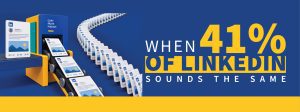
Every week, professionals open LinkedIn to find the same message sitting in their inbox: Hi, I’d love to pick your brain over a quick call. No context. No specific ask. No indication of what they actually hope to walk away with. Just a vague request, delivered to a near-stranger, with the quiet assumption that the recipient’s time is freely available.
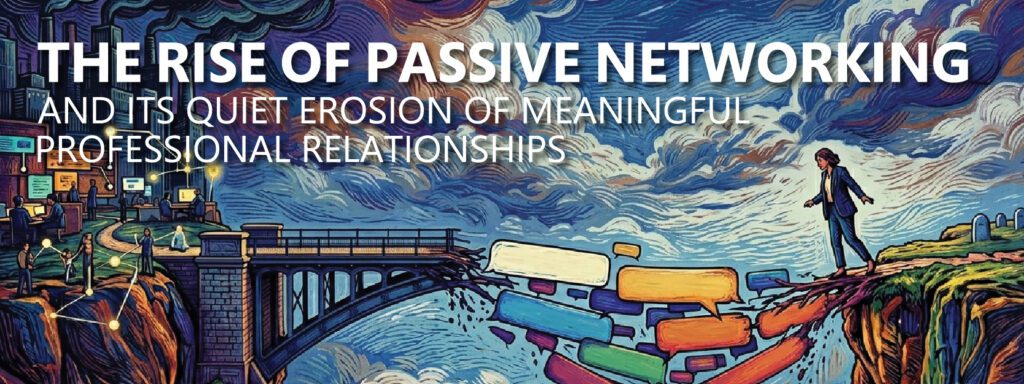
This is passive networking — the habit of reaching out without really trying. And while digital platforms have made it easier than ever to connect with virtually anyone, they have simultaneously created a culture where connection is confused with contact, and outreach is mistaken for genuine effort. The result is an epidemic of low-quality, high-volume networking that is leaving professionals frustrated, overlooked, and no closer to the relationships that actually move careers forward.
Structure Your Generosity
For any professional with visible expertise — a senior title, a public presence, a few speaking engagements — the volume of inbound advice requests can become genuinely unmanageable. The problem is not that people ask for help. Mentorship is foundational to professional growth, and most experienced professionals are happy to offer it within reason. The challenge is the sheer volume, the vagueness of each request, and the social pressure to respond warmly regardless.
A tiered response system helps considerably. Common questions can be addressed through a public resource library or an FAQ document. Broader engagement can be handled through a group format — a monthly Q&A, a community thread. Selective one-on-ones can then be reserved for those who demonstrate genuine preparation and clear intent. A simple intake question — ‘What specific challenge are you trying to solve?’ — filters signal from noise without being unfriendly. The professionals who manage inbound best have made peace with a counterintuitive truth: saying no, or saying not yet, is itself a form of mentorship. It models the self-management a junior professional will eventually need to develop themselves.
A Phrase That Has Become a Red Flag
The phrase has become so ubiquitous on LinkedIn that it has lost almost all meaning — and in losing meaning, acquired a quietly negative one. For many recipients, it signals poor preparation, a one-sided transaction, and a general disregard for their time. LinkedIn makes outreach frictionless for the sender. But frictionless for the sender too often means effortless — and effortless requests rarely produce valuable conversations.
The contrast between a passive and a prepared request is striking:
- Passive: ‘Hi, I’m looking to break into marketing. Can we chat?’
- Prepared: ‘I’ve been following your B2B content work for a while. I’m transitioning from journalism and have already completed a Google Analytics certification. I’d love to ask about two or three specific gaps you tend to see in candidates entering this space.’
The second message demonstrates prior research, limits the scope of the ask, and signals that the person has done the work before arriving. The first, despite feeling polite and casual, is paradoxically more imposing — it transfers the entire burden of structuring a useful conversation onto the recipient.
“Frictionless for the sender too often means effortless — and effortless requests rarely produce valuable conversations.”
‘Network More’ vs. How to Actually Do It
Career advice is abundant. Network more, build your personal brand, get yourself out there — these instructions are repeated so frequently in professional development circles that they have become ambient noise. What is conspicuously absent from almost all of this advice is the how. Networking is treated as a self-evident skill: something you either have or develop through osmosis.
The mechanics of effective networking — how to approach someone, how to follow up without badgering, how to offer value before requesting it, how to maintain a relationship over time — are rarely taught explicitly. Professionals who were not exposed to strong networking cultures early in their careers often develop the instinct to reach out but not the skills to do so effectively. They send the vague LinkedIn message not because they are lazy, but because no one ever showed them what a good one looks like. Teaching networking as a concrete skill, with real frameworks and real examples, would do more for career mobility than another workshop on updating your headline.
A Behavioural Problem With Real Consequences
At the heart of passive networking is a preparation problem. Most people reach out when they need something — a job, an introduction, a piece of advice — rather than as part of a sustained effort to build professional relationships. This reactive approach produces systematically poor outcomes. When outreach is motivated by immediate need rather than genuine interest, it tends to be generic, poorly timed, and one-directional. Recipients can usually sense this immediately.
Effective preparation means researching the person beyond their job title — what they have written, what problems they work on, what they care about. It means identifying a genuine point of connection. It means thinking about what you can offer, not just what you hope to receive. It also means timing: reaching out after someone publishes an article or announces a career move is far more natural than a cold message to a dormant connection. These moments of relevance are the networking opportunities most people miss simply because they are not paying attention. Preparation is not about performing effort — it is about demonstrating respect. And in a world where most people skip this step entirely, it is also one of the most effective differentiators available to any professional willing to slow down and do it.
Efficient, Honest, and More Useful Than You Think
As inbound networking requests multiply, template responses are emerging as a professional necessity — not a sign of impersonality, but a practical tool for managing time while remaining genuinely helpful. A well-crafted template acknowledges the request warmly, offers something of real value (a curated resource, a suggested next step, a direct answer to a common question), and sets clear expectations about what further engagement might look like.
The alternative — ignoring a message — leaves the sender uncertain and disappointed. A thoughtful template that says, in effect, ‘I receive many requests like this and have put together resources that address the most common questions; if you have reviewed those and have something specific I have not covered, I am happy to connect’ is both more honest and more useful than a rushed personal reply. The key is that a good template should never feel like a rejection. It should feel like a door partially opened — a helpful redirection rather than a closed gate.
The Bigger Picture
Platforms like LinkedIn have genuinely democratised professional access — a first-generation professional in a small city can now reach a senior executive at a global firm. These are real and significant gains. But when connection is easy and costless, it becomes abundant, and abundance often correlates with a decline in depth. Many LinkedIn connections are not relationships at all. They are digital acknowledgements between strangers who will never speak again.
Truly meaningful professional relationships are built slowly, through repeated genuine interactions, through reciprocal value exchange, through showing up consistently over time. Every hour spent on passive, vague outreach is an hour not spent deepening a relationship with someone who already knows and trusts you. The professionals who will thrive in this environment are those who resist the pull of passive networking — who choose quality over quantity, preparation over convenience, and long-term relationship building over short-term extraction. Real professional capital is not measured in connection requests accepted. It is measured in relationships where both parties genuinely want the other to succeed.