In the high-stakes, fast-paced world of marketing, creativity and collaboration aren’t just nice-to-haves—they are the lifeblood of performance. And yet, in many marketing departments across industries and continents, something insidious undermines these very qualities every day: fear.
Fear of being wrong. Fear of rejection. Fear of being seen as “not strategic enough,” “not experienced enough,” or “too junior to speak up.” This fear doesn’t announce itself loudly. It creeps in subtly. In the silence during brainstorms, in the nods of agreement to a flawed brief, or in the reluctance to say, “I don’t understand.”
That’s why psychological safety is not just a human resource concept. It is a strategic imperative—especially for marketing teams tasked with bold thinking, boundary-pushing, and brand-building in an unpredictable world.
Understanding Psychological Safety
The term psychological safety was popularized by Harvard Business School professor Amy Edmondson. She defined it as a “shared belief that the team is safe for interpersonal risk-taking.” That includes the ability to:
■ Speak openly without fear of humiliation,
■ Ask questions or admit mistakes,
■ Challenge ideas respectfully,
■ Offer creative suggestions—even if unpolished.
It’s important to note: psychological safety does not mean being “soft” or eliminating standards. It means creating an environment where people can be candid, curious, and courageous, without being punished for it. When people feel safe, they’re more likely to engage fully, contribute meaningfully, and solve problems collaboratively.
Why It Matters in Marketing
Marketing is inherently uncertain. It exists in the space between logic and emotion, data and instinct. Even with the most sophisticated tools, you never truly know how a campaign will land until it does. That uncertainty requires teams to take calculated risks, voice divergent perspectives, and embrace experimentation.
But if team members feel unsafe, what happens?
They play small. They echo popular opinions. They seek approval rather than challenge the norm. They protect their status instead of pursuing what’s right for the brand or audience.
And the result? Campaigns become safer, blander, and easier to ignore. Innovation stalls. Teams burn out. The very essence of effective marketing—daring creativity—gets buried beneath polite conformity.
Case Study: Google’s Project Aristotle
A powerful case study that underscores the importance of psychological safety comes from Google.
In the mid-2010s, Google launched an internal research initiative called Project Aristotle, aiming to discover what made certain teams excel. After studying over 180 teams across the company, researchers were surprised by the findings.
It wasn’t intelligence, seniority, or even strong leadership that made teams successful.
The most consistent predictor of high performance was psychological safety.
The best-performing teams were those where members felt safe to speak up, ask questions, admit mistakes, and take creative risks without fear of judgment or retribution. These findings led Google to rethink how they trained managers, structured feedback loops, and shaped team culture. Psychological safety became not just a value, but a metric of effectiveness.
If one of the most data-driven, innovative companies in the world anchors team performance on psychological safety, marketers across the board should pay attention.
Psychological Safety Drives Creative Risk-Taking
In marketing, creativity is currency. But creativity doesn’t emerge from closed minds or guarded mouths. It requires trust—trust that you won’t be ridiculed for a left-field idea or penalized for a failed experiment.
Psychological safety fosters:
■ Ideation without inhibition: Team members pitch bolder ideas when they know their voice matters.
■ Constructive dissent: Disagreement becomes a sign of engagement, not conflict.
■ Faster learning: Failures are analysed openly, and lessons are shared without fear of blame.
■ Deeper inclusion: Diverse voices, especially from junior staff or underrepresented backgrounds, are heard and integrated.
In environments without psychological safety, ideas die quietly. People self-censor. Risk is replaced with replication. And the result is often safe, forgettable marketing.
Balancing Safety with Accountability
One of the biggest myths surrounding psychological safety is that it lowers standards or encourages complacency. In fact, the most high-performing marketing teams marry psychological safety with high accountability.
In a psychologically safe team:
■ You can admit you’re struggling—and be expected to improve.
■ You can challenge the campaign brief—but you’d better have a well-thought-out rationale.
■ You can test bold ideas, but you track outcomes and iterate fast.
It’s not about coddling. It’s about creating space for open dialogue and mutual respect, while maintaining a clear focus on outcomes and excellence.
Edmondson frames this as a zone of learning, where people feel safe and challenged at the same time. That’s where growth happens. That’s where innovation lives.
The Hidden Costs of Unsafe Marketing Environments
What happens when psychological safety is missing?
■ Talent attrition: High performers often leave quietly when they feel unheard or stifled.
■ Mediocre ideas: Teams avoid risks and default to “what’s worked before.”
■ Inefficient execution: Roadblocks go unspoken. Questions remain unasked.
■ Siloed thinking: Departments compete instead of collaborating.
■ Burnout and disengagement: Constant pressure without the safety net of trust leads to fatigue.
None of these issues shows up overnight. They accumulate slowly. A team may still hit its numbers for a while, but it stops growing. It stops surprising. It stops making an impact.
How to Build Psychological Safety in Your Marketing Team
Creating psychological safety isn’t about installing a new platform or changing the office décor. It’s about consistent, intentional behaviors from everyone—especially leaders. Here’s how marketing teams can begin to build a culture of psychological safety:
- Model Vulnerability from the Top
If leaders never admit they’re wrong or unsure, no one else will either. Vulnerability signals trust.
Instead of saying “This is what we’re doing,” try:
■ “Here’s what I’m thinking—what do you all see that I might be missing?”
■ “This might not work, but let’s explore the idea together.”
■ “I made a call last quarter that didn’t land. Here’s what I learned.”
When leaders show that imperfection is part of the process, they give everyone else permission to be human, too.
- Create a Structured Space for Ideas
Not everyone processes out loud. Some people need space to think, reflect, and then contribute.
To foster inclusion in ideation:
■ Send prompts or questions before brainstorms.
■ Allow time for silent writing before group discussions.
■ Rotate facilitators so that dominant voices don’t always steer the room.
■ Use digital whiteboards or anonymous idea submission tools to let ideas speak for themselves before attaching names or ranks.
This levels the playing field, especially for introverts or junior staff who may not feel confident speaking up on the spot.
- Reward Curiosity, Not Just Certainty
Celebrate the person who asks a tough question or challenges the status quo, not just the person who nails the KPI.
When someone raises a “What if we tried…” idea, respond with curiosity:
■ “Tell me more.”
■ “What insight is that based on?”
■ “How might we test that on a small scale?”
These responses signal that curiosity is valuable, even when the idea isn’t immediately viable. Over time, this builds a culture of exploration, not just execution.
- De-stigmatise Mistakes
Every marketer has experienced a campaign that didn’t perform, a copy that flopped, or a media buy that missed the moment. But in psychologically safe teams, these missteps aren’t hidden—they’re harvested for insight.
Normalize failure by:
■ Conducting “after-action” reviews without blame.
■ Sharing failure stories in team meetings, paired with lessons learned.
■ Setting the expectation that experimentation implies some things won’t work.
This encourages people to take calculated risks and contribute to learning, rather than retreat into silence.
- Encourage Cross-Level Dialogue
Hierarchy kills innovation when it silences lower-level voices. Some of the freshest ideas come from interns, junior designers, or copywriters who aren’t yet boxed into “how things are done.”
Make it routine to invite input from all levels. Try:
- Reverse mentorship programs
- Cross-functional idea jams
- Project retrospectives that include every contributor
Show that every voice matters—not just during hiring or annual reviews, but in the everyday rhythm of the team.
- Define Shared Norms and Language
Psychological safety is easier to maintain when everyone understands what behaviors support it.
Co-create team agreements like:
■ “We challenge ideas, not people.”
■ “We don’t interrupt when someone is speaking.”
■ “We ask clarifying questions before offering critique.”
Make it explicit that these aren’t just aspirational—they’re expected norms. Write them down. Review them periodically. Hold each other accountable.
Final Thoughts
In marketing, we talk a lot about storytelling, authenticity, and connection. But we rarely look inward at the environment we’re creating for the people behind those stories.
Psychological safety isn’t soft. It’s not just about being “nice.” It’s about creating conditions where people can speak freely, think boldly, and collaborate deeply. And in a world where attention spans are short and consumer expectations are high, that is a serious business advantage.
The best marketing doesn’t come from the loudest voice or the biggest budget. It comes from teams that trust each other enough to think differently, challenge respectfully, and work vulnerably.
So here’s the challenge for all marketing leaders: Don’t just optimise your campaigns. Optimise your culture.
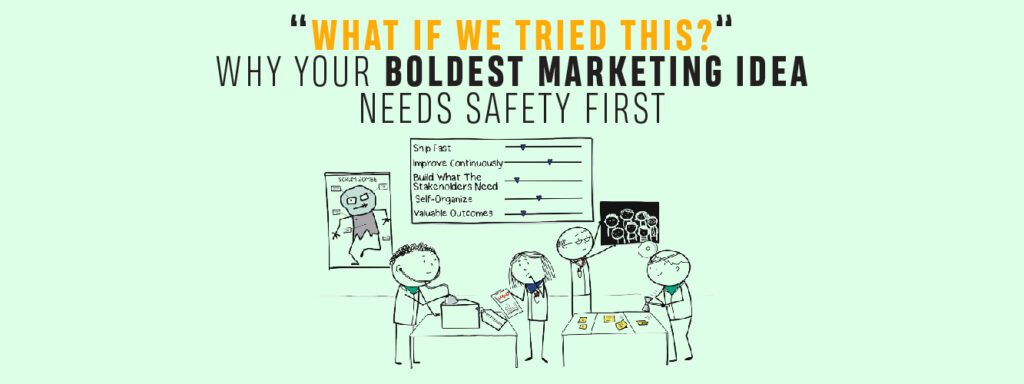
Because the next big idea won’t come from a brief—it will come from someone who finally felt safe enough to say, “What if we tried this?”
Author: Mohaimenul Solaiman Nicholas