There is a new person sitting across every boardroom table. We don’t always see them.
They are not carrying board paper. They don’t attend the product meeting. They are rarely invited to the brand strategy presentation. But they are already influencing the future of our businesses. They are Gen Z.
For years, companies have studied them as employees—how to recruit them, retain them, motivate them and prepare them for leadership. Perhaps we should spend equally serious time studying them as consumers.
Because the Gen-Z entering our workforce today is also the Gen-Z deciding what to eat, what to wear, which smartphone to buy, which bank to use, which pharmacy to trust, which restaurant to visit—and which brands deserve their money. And they are changing the rules.
The Customer Journey Has Left the Marketing Department
Not long ago, a brand could largely control the conversation. A television commercial created awareness. A billboard created visibility. A celebrity endorsement created aspiration. A retailer closed the sale. Today, that journey is far less predictable.
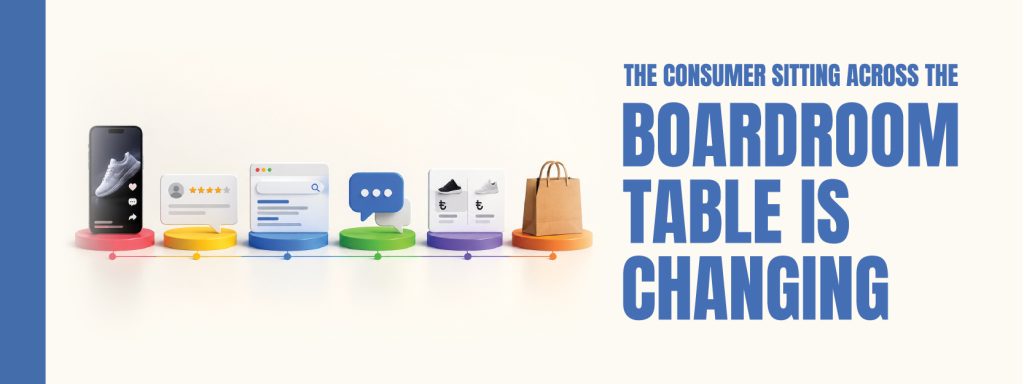
A 21-year-old in Dhaka may discover a product through a Reel, watch a creator review it, read the comments, search for another review on YouTube, send the product to a friend on Messenger, compare its price across pages, and only then decide whether to buy.
The advertisement may have introduced the brand. But the internet decided whether the brand was believable. That is a profound change.
Research on Gen Z consumers in Dhaka has found significant relationships between user-generated content, micro-celebrity posts, search behaviour and online purchasing.
In other words, the consumer is no longer simply watching our advertising.
The consumer is investigating us.
The Boardroom Question Needs to Change
Imagine a typical product development meeting. The team presents the product. The brand team presents the positioning. The media team presents the campaign. Finance presents the price. Sales presents the distribution plan. Everyone agrees. Then the product reaches the market. And a 19-year-old posts a 20-second video saying:
“Don’t buy this. Here’s why.”
Suddenly, the entire marketing plan has a new stakeholder. The customer.
This is why Gen Z is forcing companies to rethink what “brand control” actually means. We can control our packaging. We can control our television commercial. We can control our Facebook page. We cannot control what customers say about us.
And increasingly, what customers say may be more persuasive than what brands say about themselves.
Followers Are Not the Same as Influence
This is another uncomfortable lesson for marketers. We have spent years celebrating reach. How many followers? How many views? How many impressions? How many likes?
But Gen Z is reminding us that attention and influence are not the same thing. A micro-creator with 50,000 genuinely engaged followers may influence a purchase more effectively than a celebrity with five million followers. Why?
Because credibility has become part of the media value. A young consumer may not believe a celebrity saying, “This is my favourite product.” But they may listen to someone who looks, talks and lives more like them.
That is why the creator economy is becoming commercially significant in Bangladesh. Recent local research and industry observations point to the growing role of influencers, short-form video and user-generated content in shaping young consumers’ decisions.
For marketers, this means we may need to stop asking only:
“Who has the biggest audience?”
And start asking: “Who has the strongest trust?”
Price Still Matters
There is, however, a danger in romanticising Gen Z. They may want authenticity. They may care about purpose. They may prefer brands that reflect their values. But they are still Bangladeshi consumers. And Bangladesh is a price-sensitive market.
The young consumer who spends hours comparing smartphones may happily pay more for something they believe is genuinely better—but they will compare.
The student ordering food will look for value. The young professional buying fashion will compare quality against price. The family member choosing a consumer electronics brand will look at warranty, after-sales service and reviews.
Gen Z is not necessarily asking brands to become cheaper. They are asking brands to justify the price. That distinction is important.
Product Is Becoming Content
There is another shift taking place quietly. For Gen Z, the product itself can become media. A visually interesting food pack can become a Reel. A clever piece of packaging can become content. A new fashion drop can create a conversation before it creates a sale. A restaurant dish can become famous because somebody filmed it. This changes the relationship between product development and marketing.
The old sequence was:
Make the product → advertise the product → sell the product.
The emerging sequence is closer to:
Create something worth talking about → let people talk about it → make it easy to buy.
That is a very different philosophy.
The Experience Is the Brand
There is another lesson today’s C-suite should take seriously. Gen Z does not experience a brand through one department. They experience it as a whole. The Facebook page says one price. The website says another.
The salesperson knows nothing about the online offer. Customer service takes two days to respond. The packaging promises premium quality. The actual experience feels ordinary. The consumer doesn’t blame Marketing. They blame the brand.
This is why the next generation of brand management will increasingly require Marketing, Sales, Digital, Technology, Customer Service and Operations to behave as one system.
A broken customer journey can destroy a brilliant campaign.
And Then There Is Purpose
Gen Z also brings a different expectation of brands. They are more likely to ask what a company stands for. But purpose cannot simply be printed on a billboard. If a brand talks about sustainability but wastes excessively, consumers notice. If a company talks about inclusion but behaves differently internally, employees notice. If a brand says it cares about customers but hides behind automated responses when something goes wrong, customers notice.
The digital generation has an unusually powerful weapon:
Screenshots.
A brand’s mistake can become public in minutes. But the opposite is also true. A genuinely good customer experience can become a recommendation without the brand spending a single taka on media.
What Should the C-Suite Do Differently?
Perhaps the most useful exercise is remarkably simple. Put the next product presentation in front of five Gen-Z consumers before putting it in front of the board.
Don’t ask them whether they like it.
Ask them:
Would you buy it?
Why?
What would stop you?
What would make you switch?
What looks fake?
What would you tell your friends?
And most importantly:
What would make you talk about it?
The answers may be uncomfortable. That is precisely why they are valuable. Because the boardroom sees the business from the inside. The consumer sees it from the outside. And sometimes the outside view is the one that matters most.
The Chronicle Continues
Bangladesh is entering an extraordinary consumer era. Digital penetration is deepening. Social commerce is evolving. Direct-to-consumer brands are emerging. Young consumers are becoming more influential in household and individual purchase decisions.
For companies, this creates both opportunity and danger. The opportunity is enormous.
A brand that understands Gen Z can build relationships much earlier in the consumer’s life—and potentially retain that consumer for decades. The danger is assuming that Gen Z is simply another demographic segment to be targeted with a new media plan.
They are not. They are changing how brands are discovered. How products are evaluated. How trust is created. How loyalty is earned. And increasingly, how businesses are built.
Perhaps the most important question for today’s C-suite is therefore not:
“How do we sell to Gen Z?”
It is:
“What kind of company would Gen Z choose to buy from—even if we stopped advertising for a moment?”
That question may tell us more about the future of our brands than the next ten PowerPoint slides in the boardroom.
Author
Towfique Hasan FCIM
Chief Business Development Officer
Akij Resource