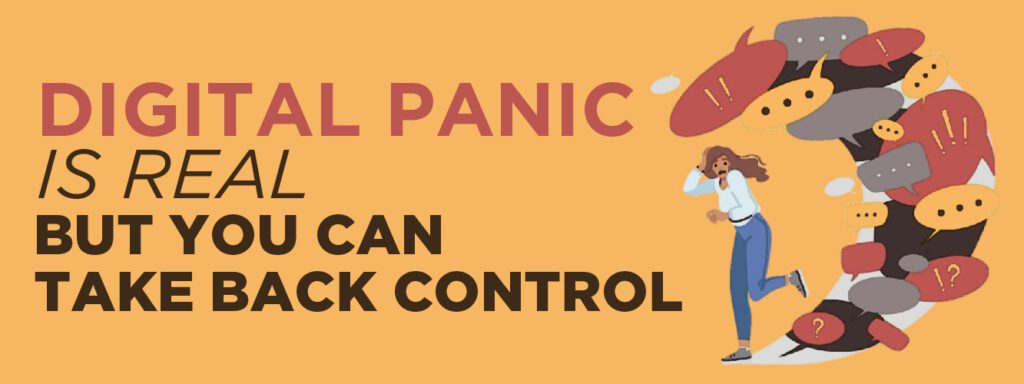
The internet has become a utility just like electricity or running water in the era of hyperconnectivity. It has become a source of our working lives, social lives, finances and even our healthcare. However, as convenient and interconnected digital tools are, there is a downside to it, the increased anxiety and panic that is connected to our online lives. Indeed, close to 8 out of every 10 internet users today have come out to say that they are at least experiencing some kind of digital anxiety. This tendency became so obvious that June 18, the International Panic Day, gained new topicality in the era of screens, applications and algorithms. Digital panic affects us deep down. Whether it is cyberattacks and identity theft to the constant stream of notifications and the feeling that someone is always watching, internet users are becoming increasingly unable to feel relaxed. Paradoxically, the more people learn about the threats of the digital world, the more hysterical they become. Social groups especially vulnerable to this phenomenon are professionals, Millennials, and Gen Xers who all rely much on digital tools. This article explores the origins behind this anxiety, the mental cost of digital existence, and how we can take back some semblance of calm in a world of the internet.
A Rising Digital Tide
The increasing cases of online threats are one of the most immediate causes of online anxiety. Whether it is hacking into personal data or phishing schemes, users today are more conscious than before that their personal details are in danger. Identity theft, that used to be a fringe concern, has become a legitimate source of fear. There is always a low level of stress as you know that your bank account, credit card, or even medical history can be hacked with just a single click. The other significant cause of digital panic is AI-generated misinformation. Deepfakes, fake news, and doctored news try to erase the border between what is truth and what is false. This loss of trust in online content may result in paranoia and decision paralysis, which are very much related to anxiety. As education makes people more vigilant, it also makes them more aware of the danger. After you realize how simple hacking is, you cannot really feel safe on the internet. Awareness of this imminent danger is couples with the burden of vigilance in mind. You can begin doubting all the links, all attachments, all Wi-Fi networks. This constant level of alertness makes one feel tired, anxious even, and eventually, panicked. Similarly, cognitive overload can cause individuals to reach the emotional limit just as physical exhaustion does.
An Era of Digital Integration
Digital stress is unlike other causes of anxiety, and most individuals cannot avoid it easily. We use our phones, laptops, and cloud services as a very vital part of our routines. Workers cannot simply afford to log out of work. When it comes to students, digital learning tools are impossible to avoid. Even medical care is available online. This is what makes digital anxiety unique and persistent, as the digital world is everywhere and almost all encompassing. Social media only deepens the problem of anxiety due to the creation of unrealistic expectations and the encouragement of the comparison. The platforms which are supposed to unite us, make us feel inadequate or lonely. The fear of missing out (FOMO), online bullying, and the necessity to build the perfect online image pile on the psychological burden that is not easy to get rid of.
Taking Control on the Web
Luckily, people can do a few things to minimize panic without losing their digital life. Examples of such effective methods are to integrate VPNs, password managers, ad blockers and threat detection. Through integration of digital defense tools, users will experience less cognitive load of having to deal with a variety of applications and settings and therefore will feel safer and more in charge.
Besides technology, minor behavioral adjustments can help a lot in reducing online anxiety. The limitation of notifications through deactivation of unnecessary alerts is the best way to reduce distractions and not to make users always overwhelmed. Not using public Wi-Fi and utilizing mobile data or VPN increases the level of security and lowers the chances of cyber snooping. With the inclusion of digital detoxes, planned screen-offs, even a couple of hours a day, resetting the nervous system and achieving mental clarity are possible. Having strong, unique passwords, especially with a password manager used, significantly reduces the likelihood of a breach of an account. Last but not least, the control can be regained by creating some digital boundaries, setting strict rules on the time and manner of utilizing the devices, etc. The tech firms also need to re-strategize their designs. User well-being should be more important than engagement with tools and apps.
Through knowledge of the origin of digital anxiety, cyber risks, misinformation, hyperconnectivity, and through the implementation of intelligent tools and practices, one can regain control of their lives. International Panic Day makes us realize that anxiety exists, and it should not be ignored, not only in real life but in the digital one as well.
Author: Jarin Subah Turaba