The World’s Creative Capital for One Extraordinary Week
Every June, the French Riviera town of Cannes turns from a beach resort into the working capital of the global creative economy. For one week the Croisette fills with marketers, agency chiefs, technology founders, artists and cultural thinkers, all circling the same question: where is creativity heading next? The Cannes Lions International Festival of Creativity has never been only an awards show. It is where the marketing industry goes to understand itself, the place where brands read how culture is shifting, agencies gauge what clients will want next, and technology companies show how their tools are changing the craft.
The 73rd edition, held from 22–26 June 2026, arrived at a real turning point. The industry has stopped debating whether AI will transform marketing; that argument is settled. The harder question now is how to use the technology to strengthen human creativity without stripping out the human qualities that make creativity worth anything. For the first time since generative AI entered boardroom conversation, the excitement came with some maturity, and with a recognition that innovation without responsibility can create as many problems as it solves.
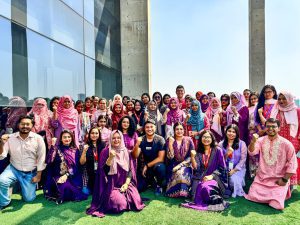
Bangladesh was not only in the audience this year. Mohammad Akrum Hossain, Chief Creative Officer, POP5, ASIA, represented Bangladesh at the Cannes Lions International Festival of Creativity not as an attendee, but as a Jury Member in the Direct Lions category, a seat at the table where the world’s best work is judged rather than merely watched.
A Festival That Chose Trust Over Volume
For years, the global creative community had grown uneasy about the honesty of award submissions: exaggerated case studies, manipulated campaign demonstrations, and work built for trophies rather than for real consumers. The deeper issue was trust. An award only means something if everyone believes the winning work actually happened and actually worked.
Cannes Lions answered by choosing credibility over growth. The 2026 festival raised entry standards, tightened verification, and demanded harder proof of execution and impact. Agencies had to show not only that an idea was brilliant but that it ran in the real world and moved audiences. Submissions fell sharply. In an industry addicted to scale, that could have looked like a setback; experienced jurors read it as an overdue correction. The worth of an award was never the number of entries chasing it. It is the confidence that the winner earned it.
That lesson matters for Bangladesh as its creative industry matures. As more local brands and agencies step onto international platforms, the goal should be to make work worthy of recognition, not simply to collect it. Impact builds reputation; trophies on their own do not.
Artificial Intelligence: From Hype to Human Partnership
AI was impossible to escape at Cannes 2026, present on the main stages, inside the pavilions, and woven into the creative workflows on display. The striking thing was the change in tone. Not long ago the conversation swung between extremes: machines would replace whole professions, or anyone with the right tool would become a creative genius overnight. This year the industry spoke about AI as a collaborator and an accelerator, something that helps professionals explore options faster and analyse more deeply, without pretending it supplies the meaning.
One measure of how far things have moved was the speaker list. For decades Cannes belonged to creative directors, filmmakers and copywriters. In 2026 some of the most anticipated voices came from artificial intelligence itself, with leaders from Google DeepMind, OpenAI, Meta and Adobe on the main stages. Their sessions kept returning to one principle: AI has become very good at generating possibilities, but humans remain the ones who decide which possibilities deserve to exist. The question had shifted from “Can we use AI?” to “Should we use it this way?”
That reframing changes the job. For agencies, prompting, curation and strategic thinking start to matter as much as execution. For brands, speed is no longer enough; they need governance and creative principles so the technology strengthens brand identity instead of diluting it. For young professionals entering the field, the durable advantage is not mastering a software platform that will change anyway, but building curiosity, judgment, and the ability to ask sharper questions than anyone else.
Bangladesh sits at an interesting point here. It has a young workforce comfortable with technology and a deep storytelling culture forged through resilience. The agencies and brands that treat AI as a creative accelerator rather than a replacement can leapfrog older models and compete more seriously across the region.
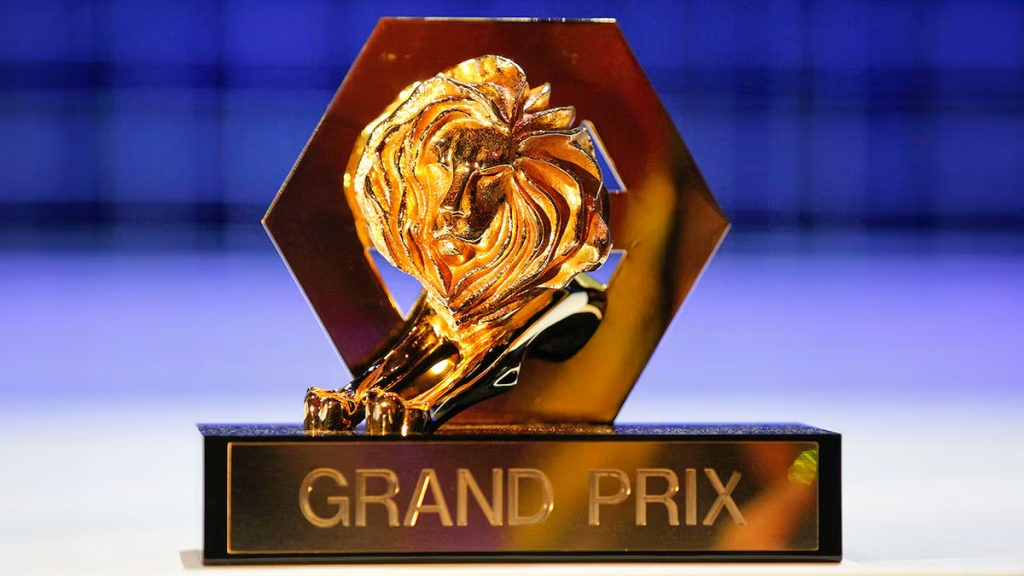
The Ideas That Won Were Still Human
For all the attention on AI, the campaigns that drew the most admiration shared an old-fashioned quality: they understood people and solved real problems.
The Film Lions Grand Prix, long the purest measure of advertising craft, went to Mother London’s work for the AI company Anthropic, with films such as “Can I Get a Six Pack Quickly?” and “How Can I Communicate Better With My Mom?”. An AI company taking the top film prize was pointed, because the work did not sell the technology. It explored something human: the wish to improve, to communicate better, to solve the small problems of everyday life.
adidas won the Innovation Grand Prix for “Supernova Adaptive,” a running shoe redesigned to help people with Down syndrome take part in sport. The brand treated inclusion as a design problem rather than a messaging opportunity, listening to the people affected and building the product around their needs.
“The KitKat Heist,” by Burson London and VML London, turned a crisis into a story. When a shipment of KitKat bars was stolen in transit, the brand did not bury the incident; it launched a public “KitKat Tracker” and invited audiences to follow the search, turning a potential embarrassment into a global conversation. In a market weary of flawless corporate messaging, personality and transparency built the connection.
Two social campaigns showed the same instinct. The Grand Prix for Good went to “600K Network” by Rainbow Lobster Mexico City, which turned a simple QR code into a decentralised way for citizens to verify election information. The Sustainable Development Goals Grand Prix went to “Paid Sick Leave for Cows” by The Partnership Agency Nairobi, which compensated Kenyan dairy farmers when their cows needed rest, tying sustainability to farmers’ incomes. In each case the technology was ordinary; the human problem was the point.
The Agencies and Brands That Led the Conversation
The winners’ board showed that creative power is no longer tied to one geography or agency size. Ogilvy was named Network of the Year. LePub Milan took Agency of the Year, and Rethink Toronto was named Independent Agency of the Year, a reminder that small independent shops keep unsettling the establishment. Heineken was recognised as Creative Brand of the Year, and the new Creative Brand Lion, which rewards a company’s sustained commitment to creativity rather than a single campaign, went to AB InBev in its inaugural year. The signal behind that award is plain: the strongest brands now treat creativity as an organisational capability, not an occasional campaign expense.
Beyond the Palais: Where the Real Festival Happens
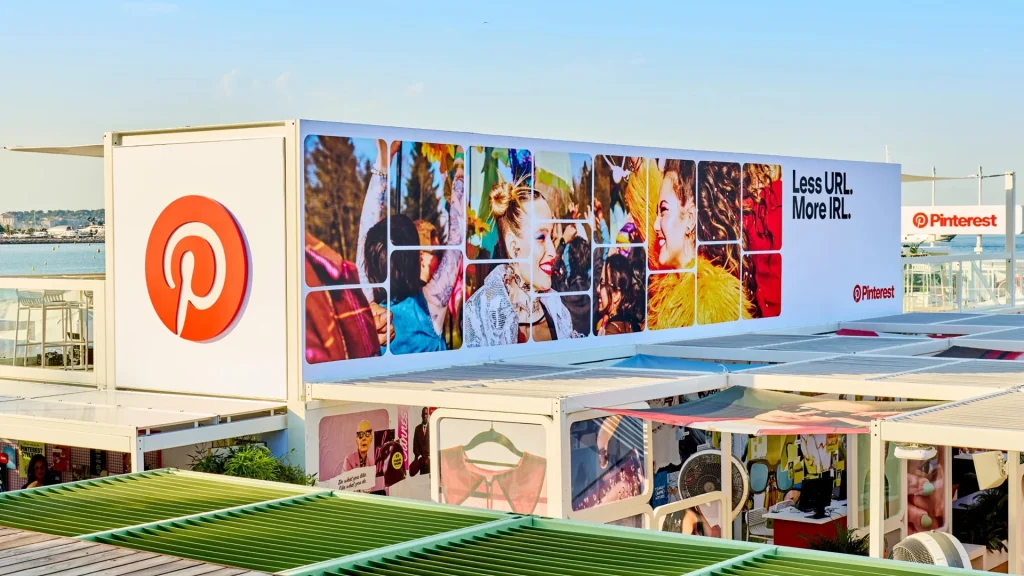
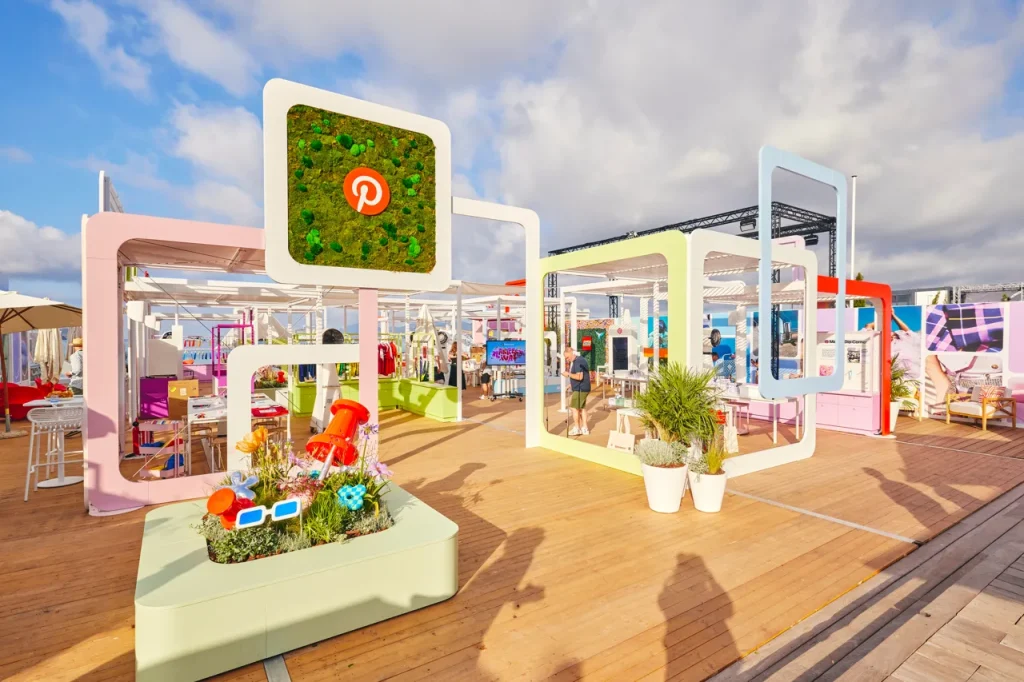
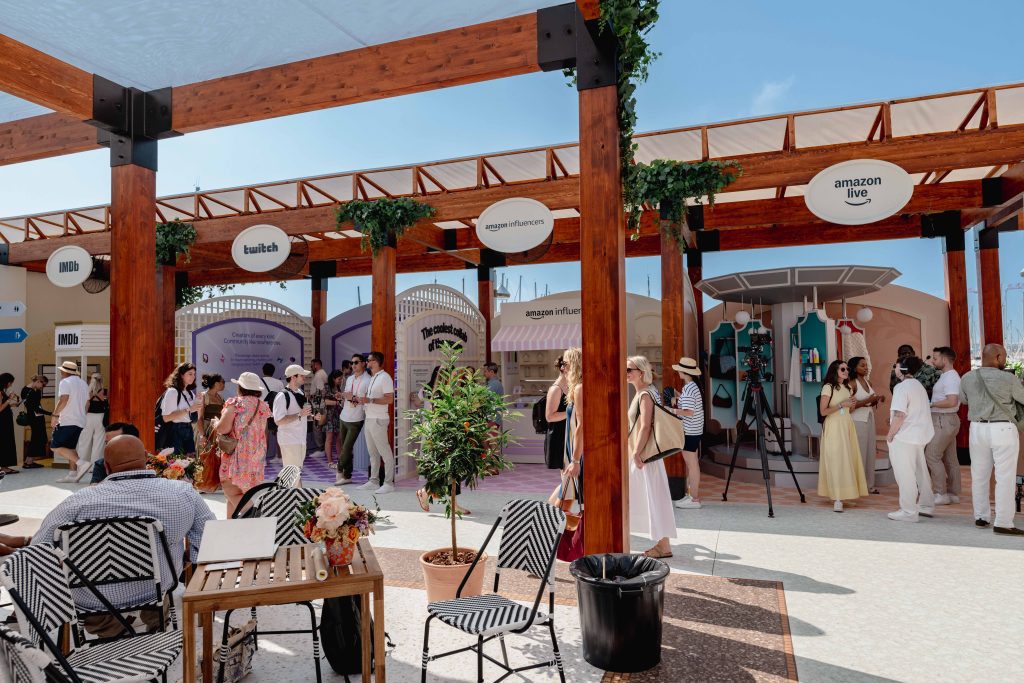
The awards are only one layer. Much of Cannes happens off the official programme, in the conversations that follow the keynotes, inside beach clubs, agency villas, hotel lobbies and late dinners where partnerships, investments and collaborations actually take shape. Every pavilion had become an immersive experience and every café an informal boardroom. The most valuable currency was rarely a Lion; it was an idea traded over breakfast between a startup founder, a Fortune 500 CMO and a filmmaker who would never otherwise share a room.
Two commercial forces ran through those conversations. Retail media has moved from a niche discipline to one of advertising’s fastest-growing sectors, as Amazon, Walmart Connect and others use first-party data to place brand messages at the moment of purchase; Cannes added retail-media subcategories to its Creative Strategy and Creative Data Lions to reflect it. The creator economy matured in parallel, with the LIONS Creators programme treating creators as entrepreneurs and community builders rather than as ad space to rent. For Bangladesh, where events still centre on speeches and where digital content creation has grown fast, both shifts carry a practical lesson about building ecosystems and durable communities rather than chasing short-term reach.
What Bangladesh Must Take Home from Cannes
The real value of Cannes is not the trophies but the questions delegates carry home. How do you prepare for technology that evolves faster than your org chart? How do you stay authentic while automating? And how can an emerging economy use creativity not only to sell products but to shape its national reputation?
For Bangladesh the timing is useful. As the country prepares to graduate from Least Developed Country status and pushes for stronger positioning in global markets, creativity becomes a national asset rather than a marketing line item, the intellectual capital that has to sit alongside manufacturing strength. The world already knows Bangladesh through its garment industry and its development story. The opportunity now is to be known for innovation, design and entrepreneurship as well.
The raw material is there: talented young creatives, ambitious founders, globally competitive companies, and a track record of solving hard problems under real constraints, from financial inclusion to climate adaptation. What is missing is not the stories but the confidence and craft to tell them on the biggest stages, in ways that travel across cultures and prove measurable impact. Akrum Hossain’s seat on the Direct Lions jury is a marker that Bangladesh has begun moving from the audience toward the table. The next step is to bring the work.
Cannes Lions 2026 made its clearest point quietly: as machines get better at generating almost anything, the advantage shifts to the people who understand other people well enough to create meaningful change. For a country built on resilience and invention, that is an encouraging place to begin.

By Sajid Mahbub, Group CEO & Executive Editor, Bangladesh Brand Forum
Festival Representative, Cannes Lions International Festival of Creativity